Archive for 2012

Keeping the Faith in Lucerne

Friday, September 7th, 2012

By Rebecca Schmid

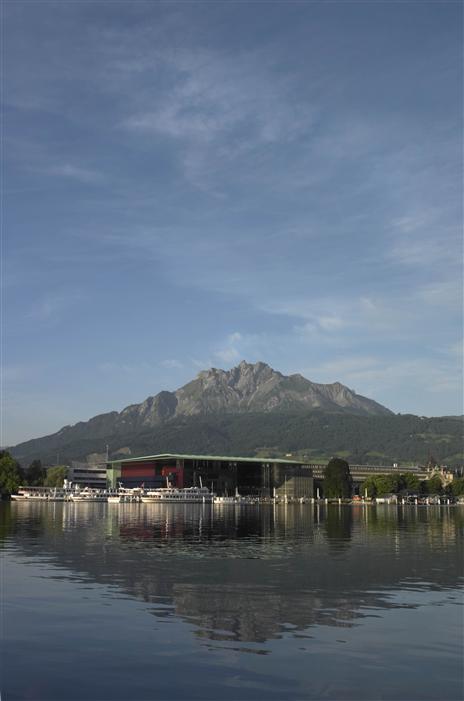
Reconnecting the spiritual with classical music might seem a controversial issue in an era of cultural pluralism, yet the hunger to unearth the spiritual has seeped into some of Europe´s leading festivals. As Jim Oestreich reported earlier this season in The New York Times, a wave of religiosity has spread from Lincoln Center´s White Lights Festival, now in its third season, to both Salzburg and Luzern. In what may be interpreted as an increased awareness of social responsibility, both picture-perfect cities have devoted attention to Judeo-Christian tradition and the ramifications of Holocaust—although Luzern was in fact founded as a non-fascist alternative to Bayreuth and Salzburg in Nazi times, bringing in composers such as Toscanini and Bruno Walter. While Luzern´s Easter Festival has already established itself as a sanctuary of religious music, the summer edition (August 8-September 15) hopes to explore the theme more deeply and thereby further integrate itself into the social fabric, as Intendant Michael Haeflinger explains in an interview with the festival magazine Più. A production of Schönberg´s biblical opera Moses and Aron was mounted in direct collaboration with a local church, while Lutheranism, Buddism and Islamic mysticism briefly received their due.

Programming around the theme of faith of course provides a wealth of dramaturgical possibilities. Maris Jansons and the Royal Concertgebouw Orchestra Amsterdam appeared in a program of Schönberg, Stravinsky, Barber and Varèse, as much a spiritual as geographic journey that had already travelled to the Salzburg Festival. The detached recitation of the speaker (Sergei Leiferkus) against the shrieking brass and raw strings of A Survivor from Warsaw, which Schönberg wrote in American exile upon hearing about the horrors of the Holocaust, ceded to Stravinsky´s austerely meditative yet playfully neo-classical Symphonie de Psaumes. The final chorus, which the composer described as a “calm of praise,” remained firmly trapped in the heavens against the ethereal dissonances of the orchestra, a choir of survivors singing down in the aftermath of destruction. The CBSO chorus, trained by Simon Halsey, dispatched its role in fine form.

The spirit of reconciliation found more worldly expression in the Adagio for Strings, which managed to escape its hackneyed identity in the context of this concert. Jansons coaxed the full-bodied strings of his orchestra into sensuous, sighing phrases. Closing the program was Amériques, a vast landscape of musical possibilities for which Varèse found inspiration from the window of his Upper West Side apartment shortly after leaving Europe. Siren-like brass, anxious, insistent winds, pounding percussion and metallic bursts into post-modernity capture both the harshness and chaos the composer must have sensed as well as his affection for this open-ended, untameable future. The Concertgebouw musicians played with combustible energy.

Mahler´s Resurrection Symphony, performed by Andris Nelsons—Luzern´s Artiste étoile this summer—and his City of Birmingham Symphony Orchestra was also amenable to the program´s goals, the music´s spiritual ambiguity retaining a powerful hold on the modern psyche. As program notes by Susanne Stähr point out, Mahler hadn´t yet converted to Catholicism when he wrote his Second Symphony. His bombastic affirmation of faith in an afterlife, replete with Wagnerian undertones, does not entirely mask the composer´s extreme ambivalence toward abandoning his Jewish roots in order to ensure more professional mobility: “Cease from trembling! Prepare thyself to live,” sings the chorus in the final movement. Nelson led the orchestra and the CBSO chorus with a clear sense of the music´s architecture, mastering sweeping phrases in visceral connection with the musicians, yet a sense of irony could have been more present in the Klezmer-like melodies of the third movement and quotes from the Knaben Wunderhorn song cycle. The performances of soloists Lucy Crowe and Mihoko Fujimura also verged on the melodramatic despite their polished execution.

Much as Mahler could not avoid undertaking a highly spiritually quest in his music, not least by subverting classical form with his free integration of popular melodies, Composer-in-Residence Sofia Gubaidulina, whose 80th birthday was celebrated internationally last year, considers writing music not a secular act but “a form of worship,” as she says in a statement. She has also testified in interview that music provided an escape from the politics of the former Soviet Union. Nelsons conducted fellow Latvian violinist Baiba Skride and the City of Birmingham Symphony the following evening in the Russian-Tartar composer´s First Violin Concerto Offertorium, an approximately 35-minute work which opens with the main theme of Bach´s Musical Offering, only to be stripped down and built back note by note. The violin remains trapped in its own quest to win back spiritual direction, as it were, against an orchestra ridden by uncertainty.

Skride played with humility and elegance throughout high-pitched harmonics and ethereal sketches, while the Birmingham players remained strong and on point under Nelsons. The notion of faith took on a directly political connotation with Shostakovich´s Leningrad Symphony, who famously thematicizes the German occupation of the Russian city in 1941, completed after the composer fled to Moscow. An ironically jovial theme marches on with a nearly farcical stride in the opening movement, while unusually simple harmonies quietly convey resignation and nostalgia before yielding to a tortured, C-major victory. Nelson led the orchestra in a clean, sincere performance that could have nevertheless brooded more under the surface.

Meanwhile, the young musicians of the Lucerne Festival Academy were busy rehearsing a wide range of contemporary repertoire, some with Academy Co-Founder Pierre Boulez, who in his earlier days with the Darmstadt School advocated a complete break with the musical values of the past due to the political horrors of the twentieth century. Yet even he admits in his own way that spirituality can transcend certain human and artistic polarities. “Faith in the broadest sense reveals itself in all music,” he tells the Swiss magazine Musik&Theater. “Whether a composer is conservative or progressive, he maintains his motivation to create art.”
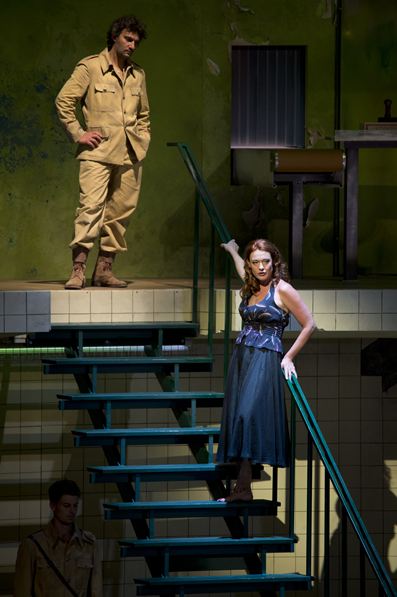

A prim ‘Carmen’ returns to the Salzburg Festival

Friday, September 7th, 2012

By Rebecca Schmid

The title role of Bizet´s Carmen is a milestone for mezzo-sopranos, setting them up for comparison with a pantheon of singers from Maria Callas to Jessye Norman. Magdalena Kozena, well-aware of the challenge, waited until this year to sing in her first fully-staged production, directed by the choreographer Aletta Collins and conducted by her husband, Simon Rattle, at the Salzburg Easter Festival. The premiere was widely criticized, mostly for the reportedly undercooked playing of the Berlin Philharmonic in its last residency before the orchestra packs it bags for a shiny new Easter Festival in Baden-Baden, while Collins and Kozena also had to contend with their share of negative feedback. Die Presse went as far as to call Salzburg native Genia Kühmeier the highlight of the production as the virtuous Michaela, hopelessly in love with the naïve solider Don José as he chases after Carmen.

The opera returned to the roster of the Salzburg Summer Festival (July 20-September 2), this time with the Vienna Philharmonic in the pit at the Grosses Festspielhaus. The ground was not terribly fertile for Kozena´s first entrance, seen August 25, following the onslaught of pseudo-gypsy contemporary dance during the overture, nor did the Czech native convey the sense of danger one associates with the ferocious gypsy. She brought excellent French diction and pliant phrasing to her opening aria “L´amour est enfant de bohème,” but her presence was almost too elegant to believe, nor do Kozena´s low notes have the bite to pull the listener into her seductive destruction. She warmed up a bit more to the role in the second and third acts, expertly playing the castanets in her aria “Là-bas tu me suivrais” in which she beckons José to ride off with her into the sunset, and brought touching vulnerability to the final scene in which José stabs her in a fit of desperate rage.

Jonas Kaufmann is, like Kozena, one of today´s most versatile singers in his Fach and has the star quality to lure audiences in practically any role. His throbbing tenor and steadfast presence made for an amiable José despite a constricted timbre that is not ideal for French repertoire. His single aria “La fleur que tu m´avais jetée” was moving in its earnest execution, although his diction was more understandable in spoken passages. I can´t help but agree with the Austrian press that Kühmeier outshines her more seasoned colleagues in this production. Her words floated effortlessly to the back of the theatre even in soft passages, with a purity of tone and technical control that reveal the greatest respect for Bizet´s lyrical nuances. The American baritone Christian Van Horn also impressed with round, authoritative singing as the lieutenant Zuniga.

Kostas Smorginas was commanding as the toreador Escamillo, José´s rival, despite a gravelly quality to his voice. The German soprano Christina Landshamer revealed fine musicianship in the role of Carmen´s friend, Frasquita, complimented well by Rachel Frenkel at her side as Mercedes. The remainder of the supporting cast similarly made a strong impression. The chorus of the Vienna State Opera lived up to its high musical standards, and the children´s chorus of the Salzburg Festival added some charm to the production. Rattle led the Vienna Philharmonic in an elegant but controlled account of the score, perhaps holding the reins too tight in order to realize his even-textured vision of the music. While the conductor underscored tender moments with great sensitivity, Bizet´s luxurious Romantic phrases did not always breathe idiomatically.

It is of course no easy task to make one´s stamp an opera that counts among today´s most hackneyed stage works. Collins´ production provides a fresh take through her background in dance, setting musical interludes to elegant if flashy contemporary moves and placing an emphasis on the physical interactions between characters, but the effect is more often contrived than revealing. Her direction shies away from the socially subversive qualities that made the opera so scandalous in the late nineteenth century, having Kozena aggressively push away both José and other soldiers ad nauseum while her giving her irresistible eroticism a polite veneer of civility. José murders Carmen tenderly but without the bestiality that blurs the lines between love and hatred, life and death. Sets by Miriam Buether and costumes by Gabrielle Dalton range indecisively between the realist and the post-modern. While the plush, red tavern of Lillas Pastia revealed fine craftsmanship, the oversized masks of the final act seemed desperate to create an original artistic brand. Kozena made a striking last appearance in a burnt orange silk dress and matching flower, perhaps more cover girl than street walker, but a fitting presence for a festival that loves its stars. The audience clapped enthusiastically between numbers and well after I had made my way out of the Festspielhaus.

DanceNOW Festival at Joe’s Pub

Thursday, September 6th, 2012

By Rachel Straus

Adam Barruch’s I Had Myself a True Love had my vote as the winner of the DanceNOW Challenge at Joe’s Pub. On September 5, Barruch’s competition was nine other choreographers. Just like a prime-time dance competition, the sold-out audience was invited to judge and pick a favorite. The challenge for the artists was  to create a work in under five minutes for the tiny cabaret stage which provides, in the words of producer Sydney Skybetter, “a clear concise artistic statement.” The odds were tipped toward Barruch. He was the only choreographer with two works on the program. Last year he was a DanceNOW winner. This year his new hyper-expressive solos to recorded music sung by Barbara Steisand opened and closed the hour-long evening.

At the smartly renovated Joe’s Pub, the boyish-looking Barruch danced from the gut. But his work wasn’t sentimental. It was intentionally overwrought. Like Pina Bausch, Barruch contasts sharp, vexed gestures with voluminous ones that wash over his body like a tidal wave. His small gestures—wrists curling up like a fern, fingers streching the lids of his eyes wide—become the places where Barruch dances a specific experience. To me it read as if he was seeing a horror and longing to transcend it. Barruch’s transcendence occurred through his loose-limbed body’s swirling and lunging and his speed that left behind distinct lines in space, like that of a painter’s brush. Barruch’s choice of Streisand songs I Had Myself a True Love and Lover, Come Back To Me grounded the two solos in a narrative. But unlike many Streisand dance tributes, Barruch’s didn’t stoop to camping this favorite diva. Instead, he channelled Streisand’s intensity and oddness through Charlie Chaplin-like facial expressions that expressed forlornness, hope and near madness.

Barruch studied for a year and a half at The Juilliard School and then launched himself as a choreographer-dancer in today’s hard knocks dance world. Multiple dance educational institutions have commissioned him to teach and make works. He has been a stand out in several group shows. Recently, the Alvin Ailey Foundation’s New Directions Choreography Lab invited him to be one of their initiative’s first recipients. Barruch is getting noticed.

As for the other artists, they made for an eclectic evening. Some were funny, others were earnest. If you feel like seeing new dance-theatre makers and voting for your favorite one, DanceNOW’s tenth anniversary Joe’s Pub festival continues (September 6, 7, 8 and 15). Producer-directors Robin Staff, Tamara Greenfield and Sydney Skybetter will help choose an overall winner of the DanceNOW Challenge. That artist will receive $1,000, a week-long creative residency, and twenty hours of New York City studio space. This prize is not Lotto, but these days dance artists need all the bits of help they can get.

Allan Kozinn: The Times Eats Its Own

Wednesday, September 5th, 2012

by Sedgwick Clark

The word spread like wildfire: Allan Kozinn, a classical-music reviewer at the New York Times for 35 years and a staffer since 1991 had been transferred from the reviewing staff to general cultural reporting. His last review ran on Monday, September 3, Labor Day – the same day that Norman Lebrecht broke the story (see link below), alleging that the change in Kozinn’s status was the result of Culture Editor Jon Landman’s poisonous office politics and a knife in the back delivered by longtime Classical Music Editor James R. Oestreich, his friend of three decades, who feared for his own job. (For the record, I know all of the dramatis personae except for Lebrecht and Landman, and have edited articles by all of the writers mentioned below except for Tommasini, Wakin, and Eichler.)

Classical-music fans are enormously loyal, but even so, the response to Kozinn’s sacking as a reviewer was astonishing, with musicians, writers, and readers in often vituperative discussion. Readers responding to Lebrecht’s blog wrote of Kozinn’s “lack of personal bias and agenda” and “trustworthy standard of intelligence, erudition, sensitivity, and judiciousness.” They called him “a truly eloquent lover of music” and “a tremendous loss for the Times [and for] the music world.” There was even a “Save Kozinn” petition that had over 500 signatures by midday Tuesday!

To me personally, the overriding merit of Kozinn’s reviews has always been his exceptional ability to describe what the music and performance sounded like, which is no easy task. I can’t get to every concert I wish, and I’ve counted on Kozinn to elucidate the baroque and contemporary repertory he had staked out at the Times. Kozinn covered more concerts than any of his colleagues, some 250 per year. He has always been there for his editors. (When John Cage died suddenly, Kozinn wrote a 3,000-word obit in four hours!) If I believed that the executive editors still give a damn about classical music in this time of newspaper death throes and the worldwide embrace of popular culture, I would suggest that they will regret this move.

Here’s the inter-office skinny: When staffer Bernard Holland (whose elegant pen is greatly missed) retired in 2005, his position was not filled, leaving only three full-time staffers (Anthony Tommasini, Oestreich, and Kozinn) and three stringers (currently Steve Smith, Vivien Schweitzer, and Zachary Woolfe) who are limited to three reviews a week and occasional features. Landman (who I had never even heard of before Labor Day) and Oestreich (whose grumpy reviews share Kozinn’s clarity) are dying to get Woolfe on staff – understandably so, as he is highly readable and controversial, especially in opera (whose aficionados detest him). But apparently the only way to finagle that was to banish Kozinn from a classical beat altogether because Dan Wakin does a superb job covering classical news. The Times has an abysmal record of late in keeping its best classical stringers: When the paper refused to put them on staff, Alex Ross left for The New Yorker, Anne Midgette for the Washington Post, and Jeremy Eichler for the Boston Globe.

Evidently, Landman and Oestreich have no wish to repeat such blunders. But Landman has already proven himself to be an ignorant judge of the Times’s classical readership. It may be small, but it’s loyal and buys newspapers – or whatever technological form the news comes in for the time being. The good grey lady as cannibal is a sad image for this Times reader of five decades to countenance.

Lebrecht blog:

http://www.artsjournal.com/slippeddisc/2012/09/exclusive-new-york-times-demotes-a-critic.html

Listen To Your Mother and Get It In Writing!

Wednesday, September 5th, 2012

By Brian Taylor Goldstein

Can you answer this question for us?  My soon to be son-in-law is a musician. He has written and recorded many songs, and is producing his first CD.  One of the songs on the CD, he had a female friend sing with him.  If he plans to put this song on his CD, doesn’t he need some sort of written permission or release from her?

Congratulations! It sounds like you’re not only gaining a son-in-law, but your son-in-law is gaining a manager. You are absolutely correct. Even though your son-in-law may have may have written the song and paid for the recording, his friend owns the rights to her performance. There needs to be something in writing confirming that your son-in-law has her permission to record her performance for the CD and distribute copies. As most everyone in the arts world would rather suffer a paper cut than deal with paperwork, its very common for musicians and others to take the position that, if a person is aware that they are being recorded, then permission is “assumed” or “implied” and no formal contract or agreement is needed. While this is technically true, an implied license can also be revoked at any time. This means that she could wait until the CD was a big commercial success, revoke her license, and use the threat of a copyright infringement lawsuit to negotiate for a large royalty or payment.

While written permission or a release is better than nothing, if he really wants to make sure there are no future problems, the written permission (also called a “license”) needs to specify that it is “irrevocable, perpetual, and worldwide.” Even better, skip the license and have her confirm that she is assigning (ie: granting) all rights and ownership in the recording of her performance to him. Either way, in order for the “writing” to be enforceable as contract, it also needs to confirm what she is getting in exchange for the license or assignment. A flat fee? Royalties from sales of the CD? Even if she agreed to do the recording out of friendship in exchange for nothing, the writing should confirm that she will be given credit and acknowledgement “in exchange” for the assignment or license. While this may seem like an unnecessary formality for a first CD, it’s far wiser to plan for success rather than have it derailed by someone else’s plan.

__________________________________________________________________

For additional information and resources on this and other legal and business issues for the performing arts, visit ggartslaw.com

To ask your own question, write to lawanddisorder@musicalamerica.org.

All questions on any topic related to legal and business issues will be welcome. However, please post only general questions or hypotheticals. GG Arts Law reserves the right to alter, edit or, amend questions to focus on specific issues or to avoid names, circumstances, or any information that could be used to identify or embarrass a specific individual or organization. All questions will be posted anonymously.

__________________________________________________________________

THE OFFICIAL DISCLAIMER:

THIS IS NOT LEGAL ADVICE!

The purpose of this blog is to provide general advice and guidance, not legal advice. Please consult with an attorney familiar with your specific circumstances, facts, challenges, medications, psychiatric disorders, past-lives, karmic debt, and anything else that may impact your situation before drawing any conclusions, deciding upon a course of action, sending a nasty email, filing a lawsuit, or doing anything rash!

In Bayreuth, Persisting with the New

Friday, August 31st, 2012

By Rebecca Schmid

„Kinder, schaff Neues,“ (Children, create something new) Wagner wrote in an adage frequently quoted by stage directors in Germany. In Bayreuth, 136 years after the founding of his festival, the spirit is alive and well. Provocatively-minded Regietheater, for lack of a better blanket term, has come to stamp the recently installed administration on the Green Hill, which despite widespread criticism to the contrary sees itself as simply carrying on a long-standing tradition. “The artistic point of view is not much different,” said Co-Intendant Katharina Wagner in interview with reference to the previous administration under her father, Wolfgang. “It´s the continuity of the festival and just trying to get interesting interpretations here. That´s also what our father did and tried to do. But of course if you see the Chéreau Ring now, it´s not as strong as it was, and that´s the point.” She went on to compare its power to that of last year´s new Tannhäuser in a contemporary context.

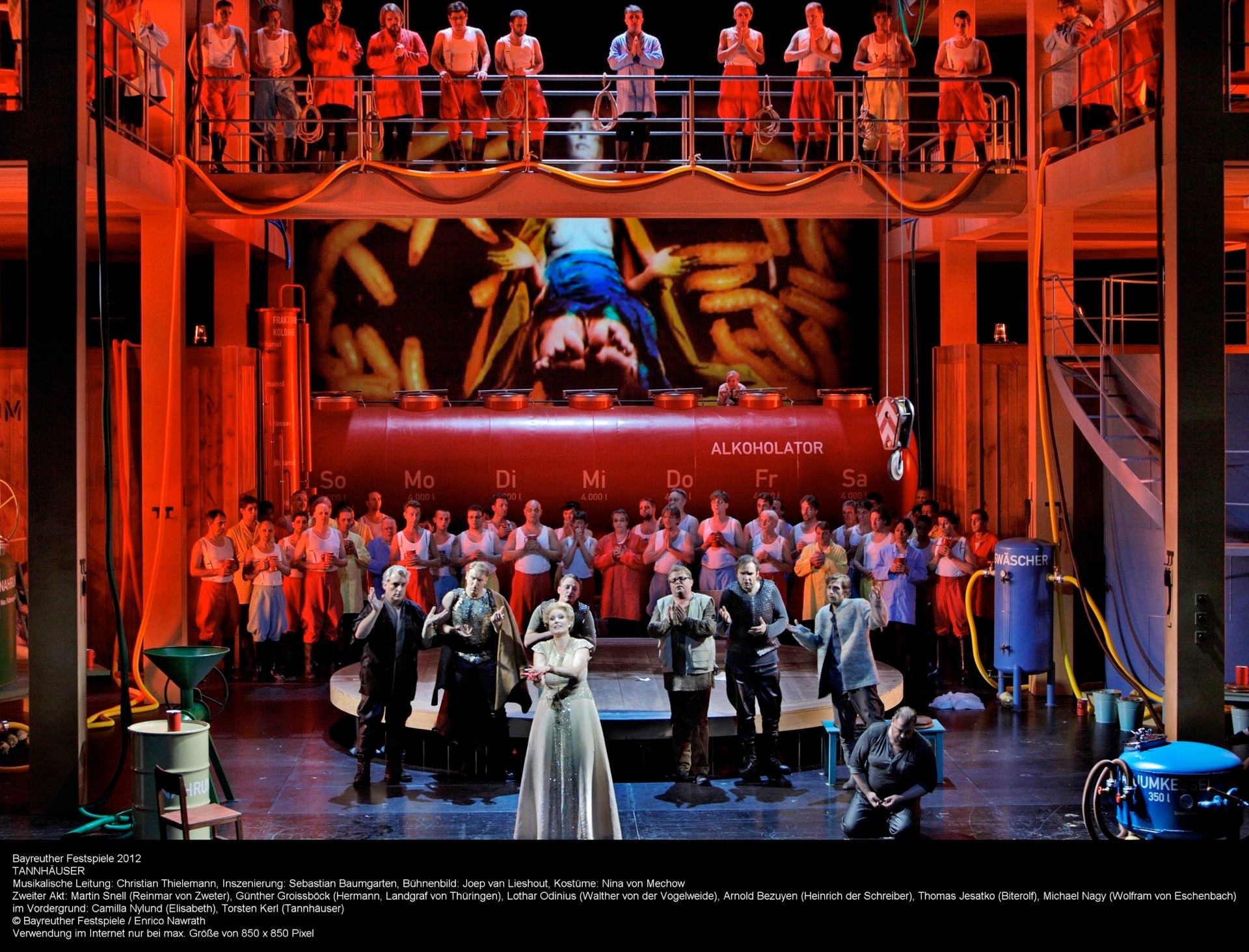
Sebastian Baumgarten´s staging certainly reaffirms the notion of Bayreuth as a Werkstatt, a place where new ideas can be test-driven to give operatic works fresh relevance. The stage director attempts to transcend the dichotomy between the divine Venusberg and the mortal realm of the Wartburg by confining the action to an industrial plant that is meant to represent a self-contained community founded on ecological awareness, indirectly echoing Wagner´s Artwork of the Future in which he envisioned a society liberated from capitalist values where the Gesamtkunstwerk could thrive. Probing as the concept may be, it has no direct connection to the opera at hand, nor does an installation by Dutch artist Josep van Lieshout that doubles as a set design have any aesthetic or philosophical value. In what may be intended as a humoristic touch, alcohol abounds but is recycled daily in an “Alkoholator,” while a biogas tank will ultimately become Elisabeth´s death chamber (something which did not go down well in the German press last year given the notorious sensitivity to such direct World War Two references). A pregnant Venus cavorts freely onstage, at one point dancing with Wolfram von Eschenbach, after her mountain—caged in metal bars—descends into the basement. The audience members sitting on the sides of the stage in Brechtian fashion did little to compensate for the lack of dramaturgical arc.

Program notes by Edward. A Bortnichak argue that Baumgarten integrates Wagner´s “criticism of the natural sciences, technology and medical research of the 19th century,” an over-intellectualized idea which, even if it made itself at all apparent, would do nothing to tell the story of Tannhäuser´s renunciation of the pleasures of the flesh for redemptive love in Elisabeth. The production effectively creates total ambiguity when the goddess gives birth to what is presumably the title character´s baby at the end of the opera. Sperm-like amoebas also crawl around intermittently, but most tasteless is video art by Christopher Kondek. The x-rayed vision of a man drinking milk (oh, right! Venus is pregnant) nearly ruined Wagner´s sublime ouverture, performed exquisitely under the baton of Christian Thielemann. This year´s audience may be lucky that the production has caused such a scandal. Thomas Hengelbrock refused to conduct this season after complaining that he had to constantly rehearse with a different set of orchestra players, and word has it that the cast is a notch up from the premiere.

I have never heard a German opera in which diction was so clear throughout. Torsten Kerl maintains a healthy voice despite having sung all of Wagner´s roles for tenor and consistently demonstrated clear dramatic purpose. Camilla Nylund was a lovely Elisabeth, with a creamy tone whose occasionally squally high notes were easily forgiven. Michelle Breedt was a rich voiced Venus, and the Hungarian baritone Michael Nagy demonstrated impeccable dynamic shading in the role of Wolfram von Eschenbach. Günther Groissböck brought a powerful bass to the role of Hermann, the Thuringian Landgrave. The remainder of the supporting cast and choruses left little to be desired. If only the staging hadn´t reprocessed the archetypal underpinnings of Wagner´s opera to such crass effect.

Christian Marthaler´s Tristan und Isolde, a 2009 production, represents a more understated approach that nevertheless falls just as flat. Any eroticism is stripped bare, much in keeping with drab sets by Anna Viebrock that appear to reference a 1920s luxury ship. This year´s revival, presided over by German director Anna-Sophie Mahler (rumor has it that Marthaler refused to return because of limited rehearsal time), apparently added a bit more physical contact between the ill-fated couple, but the love potion still seemed to have more of a disenchanting than aphrodisiac effect. The duet “O Sinke Liebe Nacht” featured Tristan and Isolde sitting side by side like retirees in front of a television. Fluorescent lighting is assigned special prominence to illuminate the night and day theme so central to the clandestine romance, yet it hardly took on enough symbolic meaning to animate the action. Marthaler saves some interesting moments for the last act when Kurnewal waves his arms as if trying to swim out of the nothingness, and all the characters except for the dying couple end up facing the walls of the ship´s barracks. Isolde covers herself with a sheet on the same bed where Tristan lay dying from Melot´s wound, a demystifying touch.

If it weren´t for conducting by Wagner veteran Peter Schneider, returning to the festival for the twentieth time, one might have secretly wished for the production to have ended sooner. Schneider´s taut, restrained reading was much in keeping with the vision onstage despite his swift pace. The level of technical perfection and power he cultivated from the orchestra often put the singers to shame, with a transcendent Liebestod that compensated for the magic lacking onstage. To be sure, uninspired as Marthaler´s production is, a more polished cast might have better risen above the odds. In this case, Robert Dean Smith was staid and underpowered as Tristan, while Irène Theorin—one of today´s best Wagnerian sopranos—was not in her best voice, nor did she make the text understandable. She still produced some touching piannissimi in the final scene and ripped through the score´s charged moments. Breedt did not disappoint as Brangäne, Isolde´s maid, but it was Jukka Rasilainen who commanded consistent attention with his smooth bass in the role of Kurwenal, Tristan´s servant. Kwangchul Youn was a powerful King Mark, and Ralf Lukas a vengeful Melot.

The finest production this season is hands down Stefan Herheim´s Parsifal, the only opera on the roster commissioned by Wolfgang Wagner. Herheim´s breathtaking allegorical vision begins at the Villa Wahnfried in the 1880s and ends at parliament in the Federal Republic of Bonn a century later. The story integrates elements from a medieval saga by Wolfram von Eschenbach that served as a source for Wagner´s libretto, inserting a silent actress as Parsifal´s mother, Herzeleide. Most likely with reference to Cosima Wagner, she lies in bed at the center of the Villa´s living room, copulating with her son in dream-like visions (namely when Amfortas holds up a glowing grail) and giving birth to a baby which then appears to be circumcised. Such moments were perplexing and somewhat gratuitous, but Herheim´s keen attention to the dramatic structure of Wagner´s score and the impeccable handwork of his team (sets by Heike Scheele and costumes by Gesine Völlm) redeems even what bordered on the offensive. The walls of Wahnfried were recreated verbatim yet haunted in a surrealist vision of black-winged beings and Parsifal as a young boy, only morphing slightly with hospital beds and mirrored walls for Klingsor´s magic castle, a brothel for the wounded.

Herheim is mostly a genius of subversion, effectively sublimating Christian and inherently anti-Semitic references into a commentary on German politics, such as when a chorus of World War One soldiers passes around bread in the Knight´s chorus, “Nehmet vom Brod/wandelt es kühn,” of the first act or when Amfortas, his head still crowned in thorns, takes the podium in the final tableau and utters “Wehe” to a room of bureaucrats while Kundry and Gurnemanz stand outside a proscenium reproducing the pillars lining the stage of the Festspielhaus—a re-consecration of the stage. Despite the politicization of the opera, a film interlude imitating the credits of the black and white era (video by Momme Hinrichs and Torge Moller) asks audience members to refrain from political debate, quoting the Wolfgang and Wieland Wagner adage “Hier gilt`s der Kunst” (Art reigns here)—a value which helped restore the festival to family hands following the American occupation. This will be the last revival of the 2008 production, but much like Chéreau´s Ring, one imagines that subsequent directors will have a very hard time overcoming its legacy—although Jonathan Meese is likely to stir up his own (succéss de) scandale with his 2016 rendition of Parsifal.

Musically, Herheim had a solid cast with Burkhard Fritz as Parsifal, whose reliable Heldentenor and portly presence were well suited to the role within this artistic vision. The dramatic demands were even higher on Susan Maclean as Kundry as she magically changed forms, and although her voice revealed some strain, her keen expressive powers served to pull off the role effectively. Kwangchul Youn was the vocal stand-out of the evening as the veteran knight Gurmemanz, anchoring the production with his mellifluous bass, while the vocal weaknesses of Detlef Roth only made him a more vulnerable, pious Amfortas. Thomas Jesatko brought crisp singing to the role of the magician Klingsor, promiscuously appearing in pantyhose and a tuxedo shirt, and Diogenes Randes rounded out the cast well as Titurel. The Swiss conductor Philippe Jordan, in his Bayreuth premiere, lived up to the family name (his father, Armin, being a well-known champion of the opera at hand) with an account of Wagner´s score as elegant and sensuous as one might dream, transparent, mysterious, and enchanting. Orchestra playing like this deserves a staging as aesthetically ravishing and intellectually challenging as Herheim´s, reminding us that the creation of something new is not enough: great art has always had the power to move not only its contemporaries but generations centuries later.

Vivat Boulez

Wednesday, August 29th, 2012

by Sedgwick Clark

It’s not often that one can gratefully quote British musical mudslinger (or “gadfly,” depending upon your point of view) Norman Lebrecht. But his report on Sunday (8/26, Arts Journal) that Pierre Boulez had begun rehearsals in Lucerne months after “an eye operation that went wrong” was the best news I’ve heard all year. Boulez had cancelled concerts in Chicago and Cleveland last season due to failing eyesight, and fear among friends and followers was that he would never conduct again because of his invariable use of a score. (He told me in an interview that he never fails to learn new insights from the score during performance.) Lebrecht publishes a photo of the French maestro congratulating Franz Welser-Möst after a Cleveland Orchestra concert in Lucerne on Sunday, commenting that “he looked tanned, relaxed, happy, and far younger than his 87 years.” Vivat!

A Reader Responds

I often wonder, especially when faced by a deadline, who reads this stuff? Snail mail resoundingly replied on Tuesday (8/28) with a new CD from ECM’s Tina Pelikan, who had read my favorable review last week of Louis Langrée’s Mostly Mozart performances of Lutosławski’s Musique funèbre and Bartók’s Third Piano Concerto. She kindly sent me Dennis Russell Davies’s Stuttgart Chamber Orchestra recordings of the Lutosławski work and Bartók’s Romanian Folk Dances, Divertimento, and Seven Songs, featuring the Hungarian Radio Children’s Choir in the songs (ECM 2169). Davies’s softer textures contrast markedly with Langrée’s slashing attacks; in fact, with the Frenchman’s interpretation so vividly in mind, I barely recognized Luti’s Funeral Music. There being no such thing as a “definitive” performance, I’m happy to have heard both.

Non-Profit and Tax-exempt: What’s In a Name?

Wednesday, August 29th, 2012

By Robyn Guilliams

What is the difference between a “non-profit” organization and a “tax-exempt” organization?  I hear these terms used interchangeably – do they mean the same thing?

Great question!  These terms do not mean the same thing.  All tax-exempt organizations are non-profits; however, not all non-profits are tax exempt.

When an organization wishes to be classified as “non-profit”, it must register with a state – usually the state in which it operates.  Every state has different classifications for non-profit organizations.  For instance, New York and some other states have a type of business classified as a “Not-For-Profit Corporation.”  Other states have corporations that are classified as “Non Stock Corporations.”  What all of these corporations have in common is that they do not have any owner, and the business of the organization is run by a board of directors.

Once an organization formally registers as a non-profit company with the state, the organization can request federal tax-exempt status with the Internal Revenue Service.  If granted tax-exempt status by the IRS, an organization will not have to pay federal taxes on its income (provided that income is related to the organization’s “charitable mission”), and donations made to the organization generally will be tax deductible for the donor.

States often have additional requirements for organizations to qualify for tax-exempt status.  Some states will grant tax-exempt status automatically to organizations that have been granted federal tax-exempt status, while others require the organization to complete a separate request.

Some businesses elect to become non-profits without also being tax exempt. They do so for many strategic, marketing, and organizational reasons. However, the important take-away here is that not all non-profits are tax exempt. A tax exempt non-profit is subject to far greater government oversight and operational restrictions than a regular non-profit. Unless a non-profit organization is granted tax exempt status by the IRS, that organization is subject to the same tax and filing obligations as any other business!

_________________________________________________________________

For additional information and resources on this and other legal and business issues for the performing arts, visit ggartslaw.com

To ask your own question, write to lawanddisorder@musicalamerica.org.

All questions on any topic related to legal and business issues will be welcome. However, please post only general questions or hypotheticals. GG Arts Law reserves the right to alter, edit or, amend questions to focus on specific issues or to avoid names, circumstances, or any information that could be used to identify or embarrass a specific individual or organization. All questions will be posted anonymously.

__________________________________________________________________

THE OFFICIAL DISCLAIMER:

THIS IS NOT LEGAL ADVICE!

The purpose of this blog is to provide general advice and guidance, not legal advice. Please consult with an attorney familiar with your specific circumstances, facts, challenges, medications, psychiatric disorders, past-lives, karmic debt, and anything else that may impact your situation before drawing any conclusions, deciding upon a course of action, sending a nasty email, filing a lawsuit, or doing anything rash!

Impressions from the Green Hill: Tattoos, Rats and Embryos

Friday, August 24th, 2012

By Rebecca Schmid

The Bayreuth Festival has had its share of scandal to contend with as Wagner’s bicentenary approaches next season. An international investigation into exclusive ticketing practices; the publicized struggle to find the director for a new Ring cycle; administrative policies that have reportedly shortened rehearsal time; widely reviled productions; and—most recently—the last-minute withdrawal of Russian baritone Evgeny Nikitin from the title role in a new production of Der Fliegende Holländer due to an alleged swastika tattoo have marred the regime of Katharina Wagner and her half-sister Eva Pasquier-Wagner, who took the reins from their father Wolfgang in 2008. It will be a test next year when Frank Castorf, intendant of the Berliner Volksbühne and a notorious enfant terrible on the German theatre scene, stages his tetralogy, which he has revealed will center upon the “race for oil” as a turning stage revolves between a post-modern socialist vision of East Berlin and Wall Street on the other—an allegorical concept that is eerily reiminscent of Patrice Chéreau´s seminal 1976 production, commissioned by Wolfgang for the centenary of the cycle´s first performance in Bayreuth.

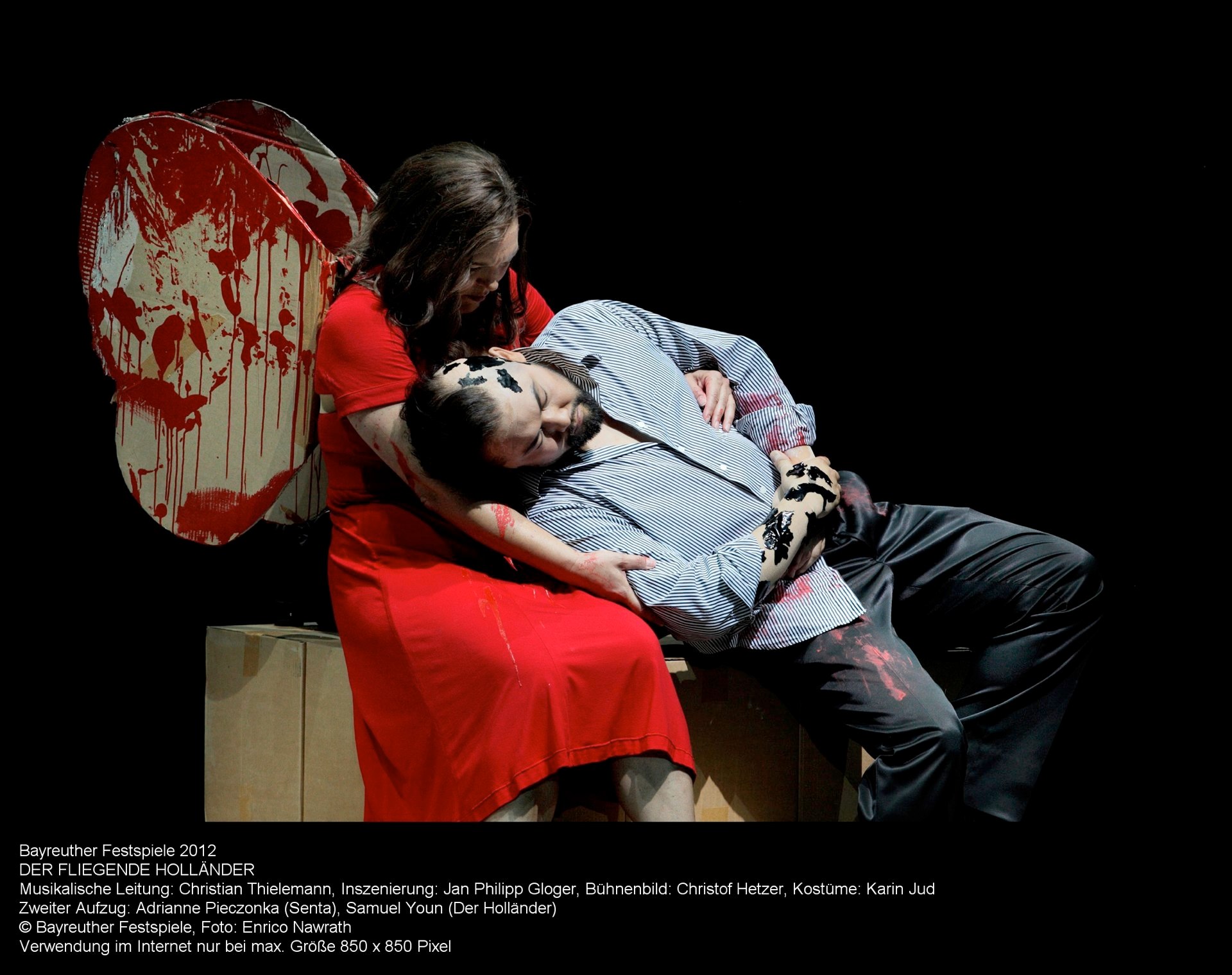
This season´s new Flying Dutchman, much like the protagonist himself, struggles to find redemption as it sails on into the final weeks of the festival. Jan Philipp Gloger, in his third opera staging, has opted for a capitalist critique that posits Daland and his sailors as Wall Street manipulators, while the Dutchman appears with his scalp branded by some kind of technological degeneration. Senta is a lowly factory worker, packaging fans until she takes a can of red paint and devises a sculptural cardboard podium on which to greet her sailor. She even holds a torch alluding to the Status of Liberty, as if we didn´t understand the references to consumerist culture. Instead of jumping overboard, she stabs herself in the final scene, and the Dutchman bleeds as she releases from the curse of eternal wandering. Mass production continues after their death as the factory churns out blinking sculptures of the couple in their final embrace—a hyperbolic, hokey, if sardonically amusing, final touch.

While Gloger generally does not stray from Wagner´s libretto, he fails to give his social commentary depth and coherence. Sets by Christof Hetzer start off promisingly, with a sleek black motherboard of sorts that flashes with stock market numbers and lights up in time with the music, but the cardboard play world of Senta and the Dutchman looks amateurish at best. Most disappointing was the lack of compelling inter-personal dynamics onstage: the romance between the two main characters was as two-dimensional and alienating as the set itself. Costumes by Karin Jud were underinspiring with the exception of the unidentifiable skin disease on the heads of the Dutchman and his crew which left viewers racking their brains to no avail.

A musically indomitable Dutchman might have saved the evening, but Samuel Youn—who stepped in last-minute to replace Nikitin—was vocally bland. Adrianne Pieczonka brought a lush, expressive voice to the role of Senta, and yet she suffered from occasional intonation problems and a slightly steely edge to her booming climaxes. Franz-Josef Selig sang the role of Daland handsomely despite a slightly husky quality, blessed with clear diction. Michael König was an appropriately menacing Erik as he struggle to pin down Senta, while Christa Mayer did not leave a strong dramatic impression as Mary, Senta´s nurse. In the role of the Steersman, Benjamin Bruns´ ringing tenor opened the opera on a pleasant note. The most redeeming aspect of the evening came from the pit as Christian Thielemann conducted the festival orchestra in a sleek, streamlined reading that was well-matched to the more elegant moments of Gloger´s production, driving the sailor´s choruses at a swift pace while allowing for expansive exchanges between Senta and the Dutchman.

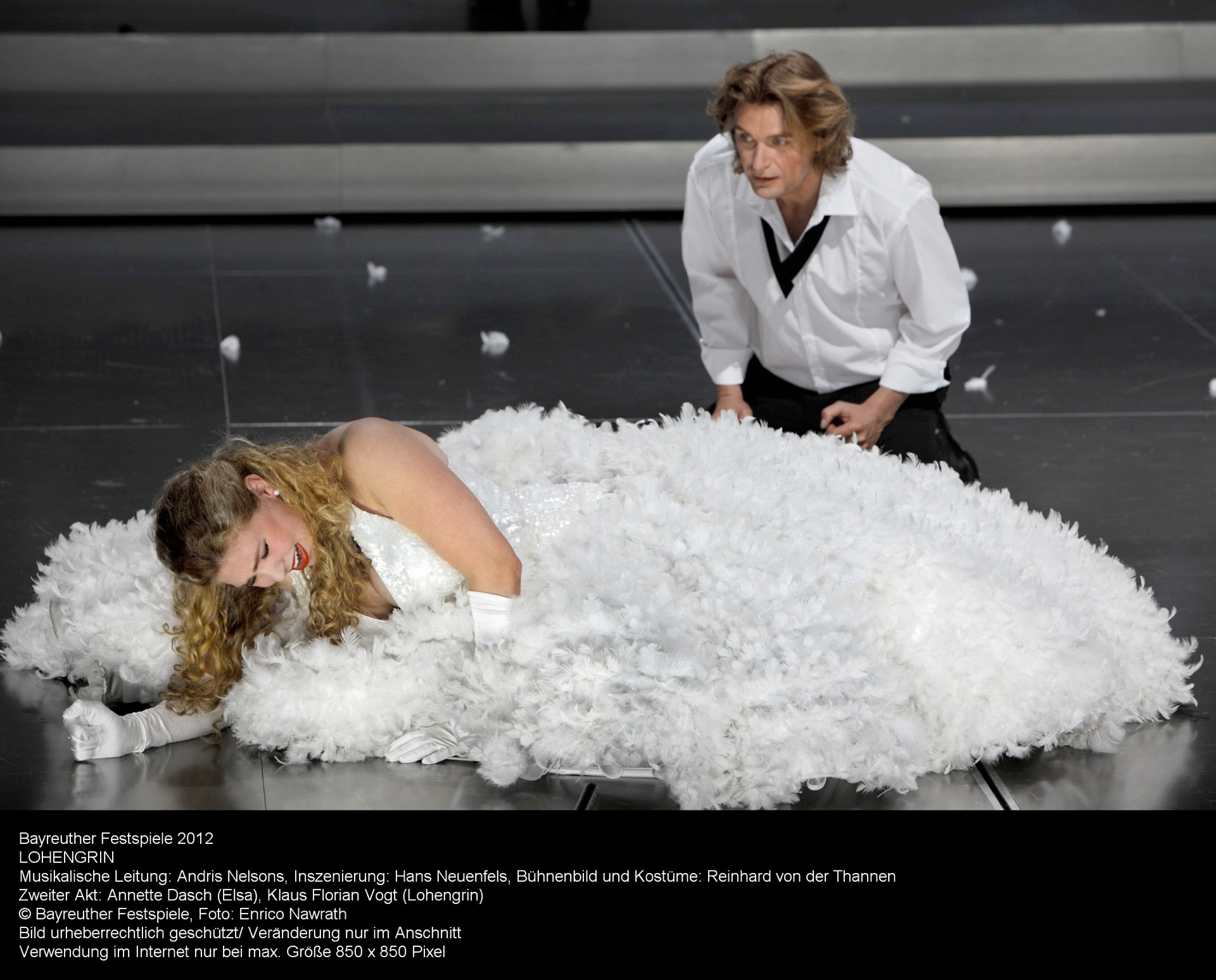
Hans Neuenfels´ Lohengrin has further confirmed the German stage director as a master of controversy, inspiring a passage in Woody Allen´s last film, To Rome with Love, while perplexing critics. The notion of the Brabantians as a pack of slowly mutating rats may sound more far-fetched than it appears within the larger context of the opera, although the staging is full of tasteless gestures—namely presenting Gottfried, Elsa´s abducted brother, as an embryo who tosses pieces of his umbilical cord when Lohengrin departs. Yet the swan knight is not just pureness and virtue. He is also a skilled manipulator, and the laboratory-like setting of Neuenfels´ production (sets and costumes by Reinhard von der Thannen) is as comical—and inane—as it is thought-provoking. One could do without the kitschy video art by Björn Verloh, cartoons which only over-saturate an already visually dense production. The only slightly meaningful moment occurred in the image of a rat skeleton running as smaller rodents fell off its ribs during the famous line “Für deutsche Land, das deutsche Schwert” (for the German land, the German sword), although the willingness of these creatures to abide by deceptively God-given precepts was more than clear at this point. The rat-tailed flower maidens in the wedding scene may not deserve profound reflection, but they were certainly amusing in a self-conscious manner that was severely lacking in Gloger´s Dutchman.

Musings on Regietheater aside, the revival of Neuenfels´ 2010 production mostly profited from having Klaus Florian Vogt in the title role. The seduction is immediate when the German tenor, who also saved Kaspar Holten´s recently unveiled Lohengrin at the Deutsche Oper, utters the opening line, “Nun sei bedankt, mein lieber Schwan” (Now you can express gratitude, my dear swan). The voice is at once angelic and virile, pleading yet authoritative. He was unfortunately not well matched by Annette Dasch, charming but underpowered in this Wagnerian role. Something of a star in Germany, the soprano nevertheless received thunderous applause. Thomas Mayer and Susan Maclean were well cast as the sinister couple Friedrich von Telramund and Ortrud, and Wilhelm Schwinghammer brought a powerful bass to the role of King Heinrich. Youn fared better as the King´s Herald than as the Dutchman the night before. Shimmering tremolo and sumptuous harmonies emerged with grace and passion under the baton of Andris Nelsons despite some minute technical imperfections, confirming Bayreuth´s tradition of superior musical standards despite a recent tendency toward wayward stagings.

Stay tuned for more on Parsifal, Tannhäuser and Tristan…

Mostly Mozart’s Genial Firebrand

Wednesday, August 22nd, 2012

by Sedgwick Clark

I ran into Mostly Mozart’s music director, Louis Langrée, prior to Yannick Nézet-Séguin’s concert that I reviewed last week, and told him how much I was looking forward to hearing the Lutosławski and Bartók works he was conducting a week later. His eyes widened and he smiled broadly, saying how much he loved their music. New Yorkers are used to this genial maestro’s elegant performances of baroque and classical repertoire, but now I suspect that Langrée’s restrictive MM connection has caused us to lose out on a more well-rounded musician than we realized.

The conductor’s demonic fervor in Lutosławski’s Bartók-flavored Musique funèbre (1958) was palpable. No less so was the surprisingly rich tone that he drew from the MM Festival Orchestra strings – no non-vibrato nonsense here! Equally stirring was Bartók’s Piano Concerto No. 3 (1945), with Jean-Efflam Bavouzet in the solo seat. The Third was once thought inferior to the composer’s more aggressive First and Second; program annotator Paul Schiavo’s descriptive weasel words are “user-friendly,” placed in quotes so we won’t accuse him personally of condescension. True, Bartók was dying of leukemia and tailored the concerto for his wife to play when he was gone. But its standing in the composer’s oeuvre is no less distinguished than the first two: It’s just different.

György Kroó, in his insightful A Guide to Bartók, refers to the “free, airy atmosphere of morning” in the concerto and “the chattering chirping birds, meadows and fields seen in the bright spring sunlight” – a change from the characteristically Bartókian “night music” slow movements of many earlier works. Kroó draws an analogy “to the work of the greatest of geniuses, the graceful lightness of the work composed by Mozart on his death-bed.” Continuing his Mozart analogy, he compares the finales of both Mozart’s and Bartók’s final piano concertos: “Both works seem to dance and soar in a strange state of euphoria towards eternity. . . .” 

The Bartók certainly did under Bavouzet and Langrée, zipping along joyously with breathless delight – certainly more vivace than the last two performances I’ve heard in concert, by the mummified Radu Lupu and anemic András Schiff, and equaling my favorite recording, by Julius Katchen and István Kertész. Only the cackling woodwinds seemed underplayed. The composer did not live to orchestrate the last 17 bars of the Third, leaving the task to his student, Tibor Serly. Perhaps for this reason, Langrée felt free to add a bass drum to the final chord, à la Ravel’s Piano Concerto in G. Very effective.

Following intermission, the maestro turned in an impeccable Mozart 39th. Makes me look forward to the coming season.