Archive for 2012

What Attorneys Won’t Tell You

Wednesday, July 25th, 2012

By Brian Taylor Goldstein

I recently attended an arts conference where there was a panel discussion on music contracts. An attorney said that artists don’t really need to read or review contracts because you can always declare them null and void later and get a new contract. Is this true?

This is why 99% of most attorneys give the rest of us a bad name. No. It’s not true. That is, its bad advice. However, there are many attorneys out there who like to believe otherwise.

You may…or may not…be surprised to learn that any attorney with even the most minimal amount of skill can create some plausible “theory” on which to sue someone else. That’s all it takes to file a lawsuit in a US court: a plausible “theory.” Your theory might be the world’s dumbest theory, but everyone is entitled to his or her day in court. And, under what’s called the “American Rule”, unless there is a contract requiring the loser to pay for attorney’s fees and costs, everyone is responsible for their own attorney’s fees regardless of who wins or loses. So, unless you and I have a contract requiring the loser in a lawsuit to pay the winner’s attorney’s fees, I could technically file a lawsuit against you right now (assuming I knew who you were) and you would have to spend your own money to defend it. (If you don’t like the “American Rule”, blame George Washington. The “English Rule”, of course, is the exact opposite!)

Because of this situation, many attorneys believe that the answer to every conflict is to file a lawsuit and use that as leverage to get a better deal. The argument goes something like this: If an artist signs a contract and later wants to get out of it, just file a lawsuit claiming that the other side is in breach. Even if the artist has absolutely no legal basis for such a claim, the other side will need to hire their own attorney, file a motion, appear in court, and have the claim dismissed. As this will cost them thousands of dollars, the other side just might re-negotiate with rather than spend all that money. Here’s the catch: the artist will ALSO have to spend all that money hiring an attorney to file the lawsuit in the first place. And if you think that a large recording label, or a successful producer, or even a presenter with access to a free board attorney is simply going to roll over to avoid a lawsuit, think again. Why? Because their own attorneys will advise them to fight.

There’s another consideration, too: your reputation. One of my clients once received a letter from an attorney who represented an artist who was part of my client’s roster. Even though his contract was not up for another year, the artist wanted to be released early so he could negotiate a potentially lucrative deal directly with one of the producers we were already working with on his behalf. His lawyer raised several legally weak arguments and threatened a multi-million dollar lawsuit. After several efforts to resolve the matter ended in screaming phone calls and more threatened litigations, we decided to release the composer, even though, ultimately, I felt we would win in court. It simply wasn’t worth it. My client had other artists and business to focus on and could afford neither the money nor the time and distraction. While you may conclude that the artist got what he wanted and won, think again. There’s more: of course, we had to advise the producer that we no longer represented the artist and what had happened. As a result, the producer determined that the artist’s talents were not worth the risk of dealing with someone who sues their way out of a dispute and selected another artist for the project. It wasn’t long before word spread that this artist would sue anyone at anytime and other producers refused to work with him either. In the end, the artist’s lawyer wound up suing the artist for unpaid attorney’s fees. Not a happy ending.

If you haven’t figured out the game yet, an attorney will always advise you to file a lawsuit. However, regardless of the outcome, only the attorneys win. So, unless you have an endless supply of money, energy, time, and spirit do not play this game! Take the time to draft meaningful contracts, take the time to read them, and take the time to establish a relationship with the people you will be working with. You may not always get what you want in a negotiation, but at least you can make an informed decision by asking questions and evaluating the pros and cons of the deal before you. While there are many reasons you might agree to unfavorable terms, believing that you can sue your way out of a bad situation is not among them…unless you’re an attorney!

__________________________________________________________________

For additional information and resources on this and other legal and business issues for the performing arts, visit ggartslaw.com

To ask your own question, write to lawanddisorder@musicalamerica.org.

All questions on any topic related to legal and business issues will be welcome. However, please post only general questions or hypotheticals. GG Arts Law reserves the right to alter, edit or, amend questions to focus on specific issues or to avoid names, circumstances, or any information that could be used to identify or embarrass a specific individual or organization. All questions will be posted anonymously.

__________________________________________________________________

THE OFFICIAL DISCLAIMER:

THIS IS NOT LEGAL ADVICE!

The purpose of this blog is to provide general advice and guidance, not legal advice. Please consult with an attorney familiar with your specific circumstances, facts, challenges, medications, psychiatric disorders, past-lives, karmic debt, and anything else that may impact your situation before drawing any conclusions, deciding upon a course of action, sending a nasty email, filing a lawsuit, or doing anything rash!

Feldman’s ‘Neither’ gets a Virtual Orchestra; A l’Arme! Festival for Contemporary Jazz

Friday, July 20th, 2012

By Rebecca Schmid

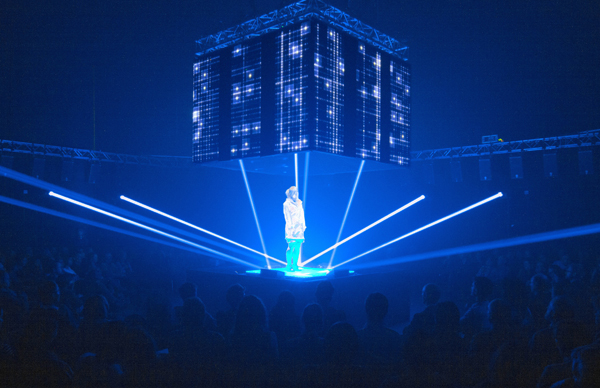
In an age of pervasive digital technology and avatars, it was only a matter of time before virtual experience infiltrated the concert hall. No handmade reeds, no tailcoats. Instead, over 70 synthesized speakers encircling the audience. The Berlin-based ensemble phase7, for a new production of Morton Feldman’s opera Neither, has replaced the live orchestra with 3D surround sound created through the spatial audio production procedure of wave field synthesis. The soprano Eir Inderhaug, trapped in a cage of light beams, provides the only human presence. The production premiered at the Festspielhaus Hellerau in Dresden last March before coming to the Radialsystem this month as part of the festival “The Art of Listening,” which included a conference chaired by the University of Potsdam.

A panel discussion following the concert, seen June 13, concluded that new formats were instrumental in preserving the classical tradition as it struggles to assert its value in today’s society, emphasizing that individuals’ different ways of listening must be addressed both in education and in the concert hall. The Radialsystem, founded in 2006 as a creative arts space, champions experimental modes of presentation such as late-night listening in which audience members can stretch out on yoga mats and musical wine tasting. As a positive sign for the future—even for those who prefer certain formalities of the concert hall—the Kreuzberg venue also attracts listeners who do not constitute a regular following for Berlin’s mainstream classical institutions.

A casually-dressed crowd filled the small back space of the Radialsystem’s main concert hall for Neither, given a clubby atmosphere with the help of smoke machines. Whirring surround sound amplified the static, high-pitched tones of Feldman’s opening bars as the first beams of light broke through the darkness. Inderhaug, a very pregnant figure dressed in all white, crouched silently on her platform at the center of the room. Yet the screeching faded mysteriously after about five minutes. A woman in a backpack emerged matter-of-factly to inform the audience: “as you know, there is a small technical problem,” as if such occurrences were par for the course. “Where is my conductor when I need him?” Inderhaug joked to the audience.

The experience was slightly demystified as the opera recommenced a few minutes later, this time traveling through churning industrial sounds and what sounded like a giant percussion set before yielding to the soprano’s existentially unresolved opening line, “to and fro in shadow from inner to outer shadow.” Neither, true to its name, is a negation of operatic convention and emerged after Feldman and Samuel Beckett discovered a mutual distaste for the genre upon meeting at Berlin’s Schiller Theater in 1976. Shortly thereafter, Feldman received a postcard with an 87-word verse that would provide the libretto for his monodrama, which premiered at Rome Opera the following year. Feldman’s economic, or minimalist, use of material—unsettling atmospheric drones, spiraling melodic figures, cavernous echoes—found an outlet in Beckett’s terse yet open-ended poetry.

As an “anti-opera,” the approximately 50-minute work lends itself well to phase7’s forward-looking concept, and yet the digitally-generated orchestra rarely proved its advantages over the more visceral experience of hearing live music. The metallic timbre of Feldman’s swelling chords, while often larger than life with this technology, took on a slightly digital quality that disengage the music’s emotional core, even as the sounds ricochet strategically from one speaker to the next. Visually, the isolation of the soprano, who hovers through an internal passage to an “unspeakable home,” is an effective dramaturgical solution to a work that does not lend itself easily to stage direction, yet holographic projections surrounding Inderhaug at times dehumanized the experience. On one occasion her stratospheric, incomprehensible tones made me think of the alien opera singer in The Fifth Element (vocal writing lies consistently above the treble clef, making it difficult to pronounce consonants, although a 1997 recording with Sarah Leonard and the Frankfurt Radio Symphony Orchestra at least makes it clear throughout that she is singing in English).

It is a paradox that such events are touted as an innovative means of reviving classical music when orchestras throughout the western world are fighting to prove their raison d’être, and in some cases struggling to survive. As it happens, the same orchestral technology employed by phase7 was just on display at the Sydney Opera House for a production of Korngold’s Die Tote Stadt. That classical formats must evolve along with certain contemporary social trends is without question—video projections, DJ shows, and some degree of genre-bending will likely become standard fare for orchestras in future decades—but digital technology is no replacement for a gathering of trained musicians who rely on their brains rather than a circuit board. It is of course counterproductive to fight a certain amount of inevitability: the iPod and internet aesthetics may have already influenced the way we experience all kinds of music. 3D surround sound could provide a myriad possibility of tools to composers and be combined with live orchestra to powerful effect, but as Leonard Bernstein once said, music is about “flesh and blood.”

A l’Arme!

Despite Berlin’s growing reputation as the European mecca of the avant-garde, a platform for contemporary jazz was nowhere to be found until A l’Arme!, or Alarm (July 18-21) debuted at the Radialsystem this week. Bringing together artists from the U.S., Asia and across Europe, the program boasts artists such as the singer Neneh Cherry, returning from a 16-year hiatus in a new collaboration with the Scandinavian quartet The Thing, and German saxophonist Peter Brötzmann, something of a jazz icon on the continent. “There’s no better place than Berlin to burst open the cocoon of an entire scene whose self-absorbance is misunderstood as innovative,” state the program notes in a somewhat awkward translation. Indeed, it is no easy task to define free jazz. The movement emerged in the 1960s as a reaction to predetermined tonal structures, regulated timbres, and rhythmic conventions, eventually digging roots in Europe when the genre proved itself commercially untenable in the U.S.. Starting in the 70s, the term ‘avant-garde’ emerged as an alternative to describe this restless yet organized music, pioneered by figures such as John Coltrane, Sun Ra, and Ornette Coleman.

As evidenced by Alarm’s opening concert on July 18, a fine line often lies between what we call ‘new’ music in the classical realm and contemporary jazz. A trio formed by festival founder and pianist Louis Rastig with American clarinetist/saxophonist Ken Vandermark and Korean cellist Okkyung Lee opened with serialist patterns that were met with wild, meandering melodies and sawing, scampering motives. The musicians’ disparate improvisations managed to create a satisfying whole as frenetic, insistent patterns interwove with electric energy. A quieter middle section featured a repeated two-note figure in the piano, eventually picked up by a bass saxophone before Vandermark moved into squeaking slides and mechanical whirring. Rastig anchored the group with a charged physical awareness and strategic spontaneity, hitting across the keyboard with flat hands in child-like rebellion on more than one occasion, while Lee contributed a rumbling, shivering interlude that was sensitively echoed by Vandermark.

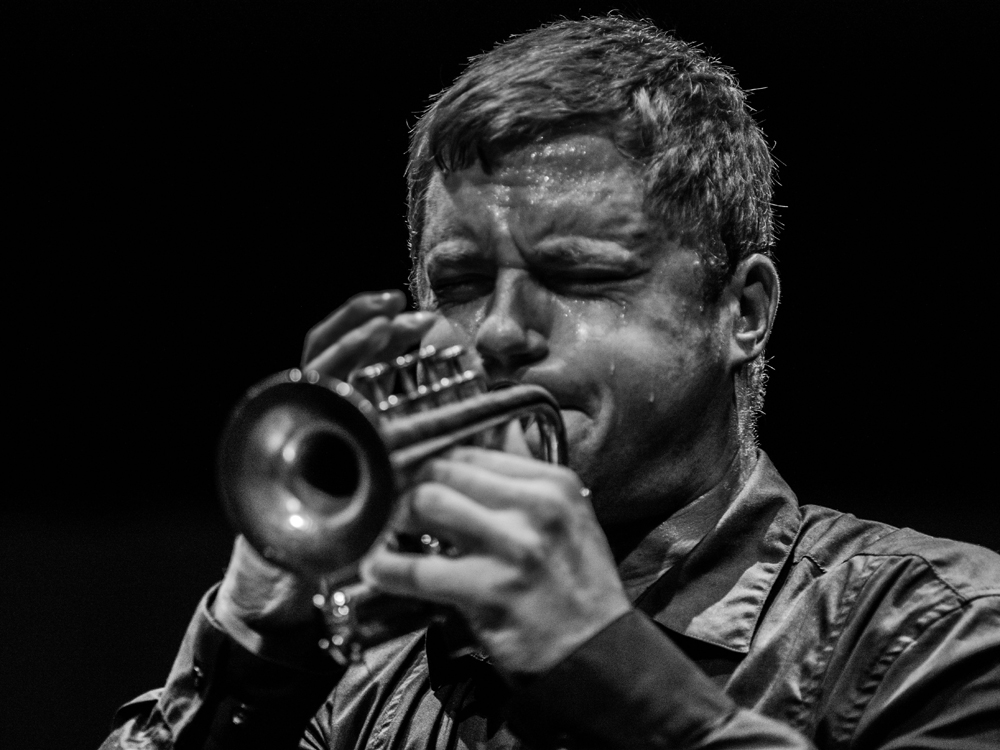
New York-based trumpeter Peter Evans opened the program with free improvisation demonstrating a virtuosic range of contemporary technique and multi-phonics. Muted trilling, wispy reverberations, exasperated blaring, raspberry blows—there is nothing Evans can’t create with his mouth and the valves of this instrument. The most impressive was his performance with a piccolo trumpet in which he broke out into traditional jazz melodies before reverting suddenly to gasping and sucking noises, creating an ironic halo of nostalgia around the sanguine 1950s style. His last act involved the simultaneous playing of a normal-sized trumpet against the piccolo, fluttering the valves of one instrument against the siren-like blare of the other. When Evans pushes through the call of the trumpet in full force, it is as if the instrument’s internal force has been stirring anxiously behind decades of experimentation.

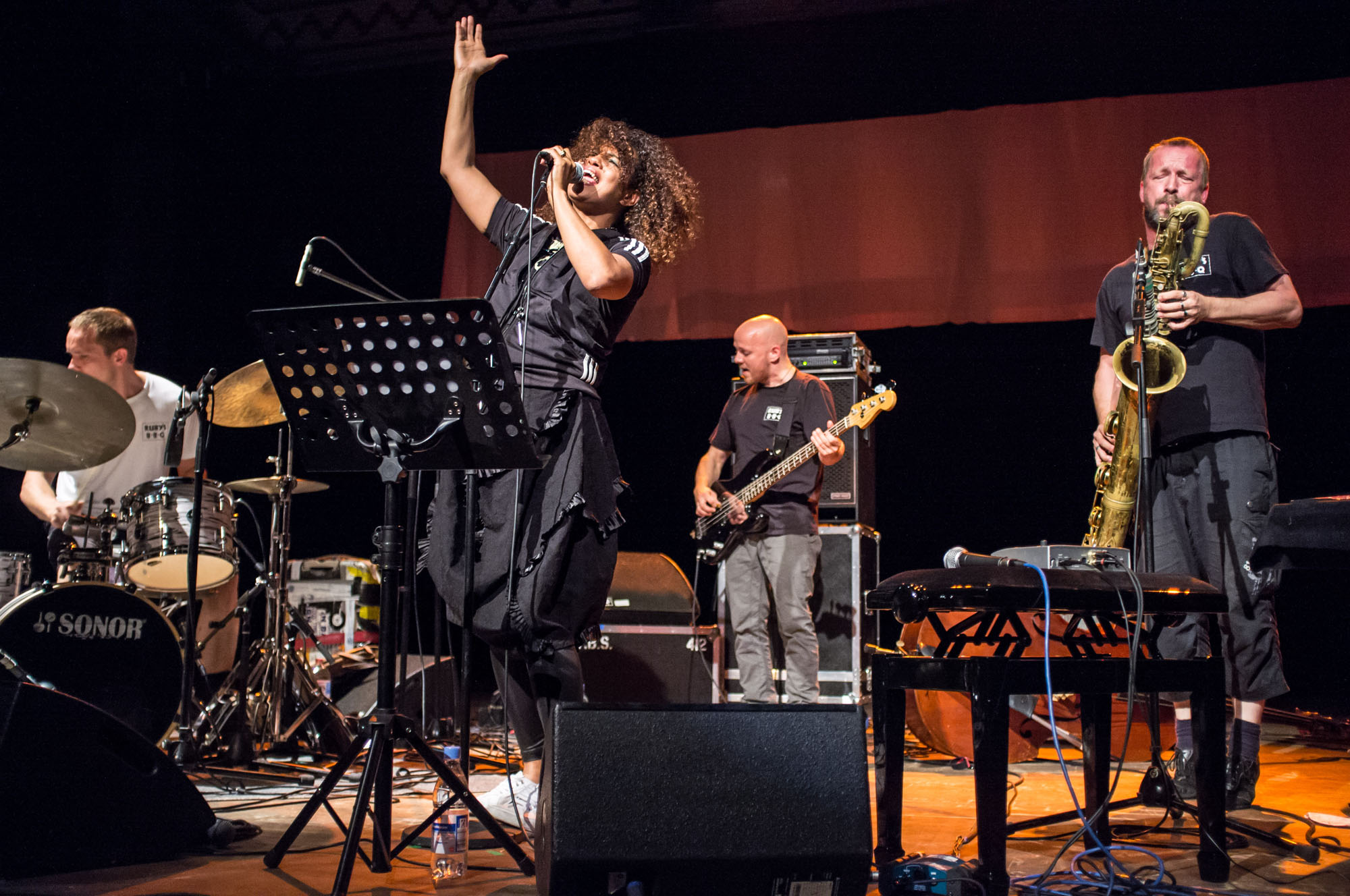
The main hall of the Radialsystem spilled over with fans for The Cherry Thing, as one-time blockbuster Neneh Cherry dubbed her appearance the with The Thing in reference to their album which was released last month. The ensemble’s jazz-rock idiom is not an obvious match for Cherry’s smooth, hip-hop grooves, but she proved herself fearless enough to give a raspy (and slightly inaudible) scream over the cacophony of Mats Gustafsson’s indomitable saxophone, Paal Nilssen-Love’s across-the-board drums and the electric guitar of Ingebrigt Haker-Flaten in the opening number. The following song “Dream baby dream,” with its cooing vocals over saxophone and double bass in a unison melody that yielded to tonal counterpoint over soft drumming, proved a more effective blend. The Thing’s angry riffs lent themselves well to “Cashback:” you eat me for breakfast when you feed me… you spend me like money, sang Cherry over a catchy beat, her curls bouncing freely as she moved around stage in a black dress and sneakers. Ultimately it was unfortunate to experience this music in a seated hall; such danceable fare lends itself better to a small club, where listeners can chat quietly or sway with the music, and more vehement rock passages were too loud for the space. Still, it is exciting to have more intellectually challenging avant-garde fare combined with music of more popular appeal under one roof. A l’Arme has filled a niche that is likely to grow as jazz musicians of all breeds experiment with new outlets of expression.

Epiphanies and Masochism

Wednesday, July 18th, 2012

by Sedgwick Clark

An Irresistible Concert  

So soon after declaring my relief at being able to put my concert calendar on hold in the summer, Le Poisson Rouge presented a program too irresistible to miss, with three well-known chamber musicians at the top of their form: violinist Harumi Rhodes, cellist Caroline Stinson, and pianist Molly Morkoski in Ravel’s Sonate posthume pour violon et piano, Messiaen’s eight Préludes pour piano, Takemitsu’s Distance de Fée for violin and piano, Debussy’s Sonate pour violoncello et piano, and Piazzolla’s Verano Portena for piano trio, from The Four Seasons.

One of the best concerts I heard all year.

A Modest Epiphany

There’s a moment in Woody Allen’s new film To Rome with Love when a woman lost in Rome and late for an appointment drops her cell phone down a sewer grate. The unison gasp of horror from a full house at Lincoln Plaza Theaters was my biggest laugh of the evening.

Masochism on Broadway

Tracie Bennett’s all-stops-pulled portrayal of Judy Garland’s last three months of drugs, drink, and depression in Peter Quilter’s End of the Rainbow at the Belasco Theatre is a study in masochism—although whose I’m not sure—and she relives it eight times a week. Most of us raised on The Wizard of Oz are aware that Garland’s brief glimpse of the rainbow ended in tragedy, but for many, this Who’s Afraid of Virginia Woolf treatment may be too much to bear in a night on the town.

Bennett is remarkably convincing, the supporting cast is first-rate, the five musicians are excellent, the restored Belasco is a beauty to behold, but this is definitely not Mary Poppins.

Do We Need Visas For Orchestra Support Staff?

Wednesday, July 18th, 2012

By Brian Taylor Goldstein

Dear Brian:

We are touring an orchestra in the United States next season and have been grappling with the idea of whether the staff from the concerts team need to have visas for this tour, regardless of whether they are employees or freelance (we’ve had different opinions expressed). In the past, we have always included our orchestral manager on the visa petition because she is a full time employee, but the concerts team staff are rather different, not least because they are usually hired only for the tour, nothing else, and will not be on tour for the whole time and are therefore not an intrinsic part of the artistic production. They receive no payments or salary in the US and, thus, earn no income in the US. Do you have any thoughts on this? If we get them visas, would they all have to travel together? Would we need two separate petitions? Does this cost more depending upon the size of the concerts team?

The need for a US work visa (O or P) is triggered by work, not payment. Anyone who provides services in the US, whether on the stage as a performing artist, or behind the scenes as part of the technical crew, administrative staff or tour support team, all require work visas–regardless of whether or not they are paid in the US or whether or not they are even paid at all. Whether or not they are an intrinsic part of the artistic production doesn’t change this.

In the case of orchestras, each of the musicians will require a P-1 visa and each of the non-performing support staff require a P-1S visa. To obtain these visas, you will need to file two visa petitions: a P-1 petition for the performers, conductor, musicians, etc. and a P-1S petition listing the technical crew, management team, administrative support, etc. Filing fees are charged “per petition”, so it costs the same whether the P-1S petition contains 2 people or 20 people. Once approved, each individual listed will need to appear personally at the US consulate and pay a visa fee before being issued his or her visa by a brusque and surly consulate official. P-1 and P-1S visas are valid for the duration of the approved classification period. So, the support staff is free to travel in and out of the US during the tour as needed. Everyone neither has to travel together nor do they have to remain for the duration of the entire tour.

Without exception, in the visas we prepare for our orchestral clients, we simply put all the musicians on a P-1 and all non-musician staff on a P-1S and eliminate the ability of a border guard to frustrate a process already fraught with enough risk and unpredictability from other areas.

_________________________________________________________________

For additional information and resources on this and other legal and business issues for the performing arts, visit ftmartslaw-pc.com.

To ask your own question, write to lawanddisorder@musicalamerica.org.

All questions on any topic related to legal and business issues will be welcome. However, please post only general questions or hypotheticals. FTM Arts Law reserves the right to alter, edit or, amend questions to focus on specific issues or to avoid names, circumstances, or any information that could be used to identify or embarrass a specific individual or organization. All questions will be posted anonymously.

__________________________________________________________________

THE OFFICIAL DISCLAIMER:

THIS IS NOT LEGAL ADVICE!

The purpose of this blog is to provide general advice and guidance, not legal advice. Please consult with an attorney familiar with your specific circumstances, facts, challenges, medications, psychiatric disorders, past-lives, karmic debt, and anything else that may impact your situation before drawing any conclusions, deciding upon a course of action, sending a nasty email, filing a lawsuit, or doing anything rash!

Infektion! ‘Europeras 3&4’ and Rihm’s ‘Dionysus’ at the Staatsoper

Thursday, July 12th, 2012

By Rebecca Schmid

Infektion!, the name of the Staatsoper’s annual Festival for New Music Theater could easily extend to describe the presence of John Cage in Germany this year. No other country outside the U.S. has planned as many events for his centenary of his birth, and Berlin is in some people’s minds already ‘Caged out.’ The Akademie der Künste has been holding a multi-disciplinary, year-long retrospective since last fall; the annual new music festival MärzMusik dedicated itself to Cage and Consequences, flying in Joan La Barbara and the entire Sonic Arts Lounge. Cage’s works will take center stage next week in Darmstadt, where his 1958 visit “swept across the European avant-garde like a natural disaster,” in the words of German musicologist Carl Darlhaus. His Europeras 1&2, which premiered in Frankfurt in 1987 and received their last U.S. performance at the MOMA in 1992 (the year of Cage’s death), will be revived next month at the Ruhrtriennale. Meanwhile, at the Berliner Staatsoper, Die Musik ist los—100 Jahre John Cage (July 1-15) features six-hour evenings of Cage in ad hoc programming that includes his Europeras 3&4. The German premiere of Wolfgang Rihm’s Dionysus, a Salzburg Festival commission from 2010; a revival of the Staatsoper production of Stravinsky’s The Rake’s Progress; and a recital with Ian Bostridge are also officially part of the festival, just founded last year.

Cage’s Europeras, of which he wrote five altogether, are intended as a negation of opera, particularly in its synthesis of the arts into a Gesamtkunstwerk. “For 200 years the Europeans have sent us their operas,” the composer reportedly commented. “Now I am returning them all to them.” The first two include ten and nine singers, respectively, in extracts from over 60 operas, with sets and costumes that are meant coexist independently like objets trouvés. The third and fourth, which premiered in London in 1990, are more modest in scale: Europera 3 features six singers in a capella arias of his or her own choice, two pianists in excerpts from Liszt’s Opera Phantasien and 12 record-players, while Europera 4 dwindles to two singers, a wind-up gramophone, and a pianist. A ticking digital clock substitutes for a conductor to synchronize the Happenings, which overlap comically and sometimes irritatingly into a non-linear plot of sorts that is left to the viewer’s imagination.

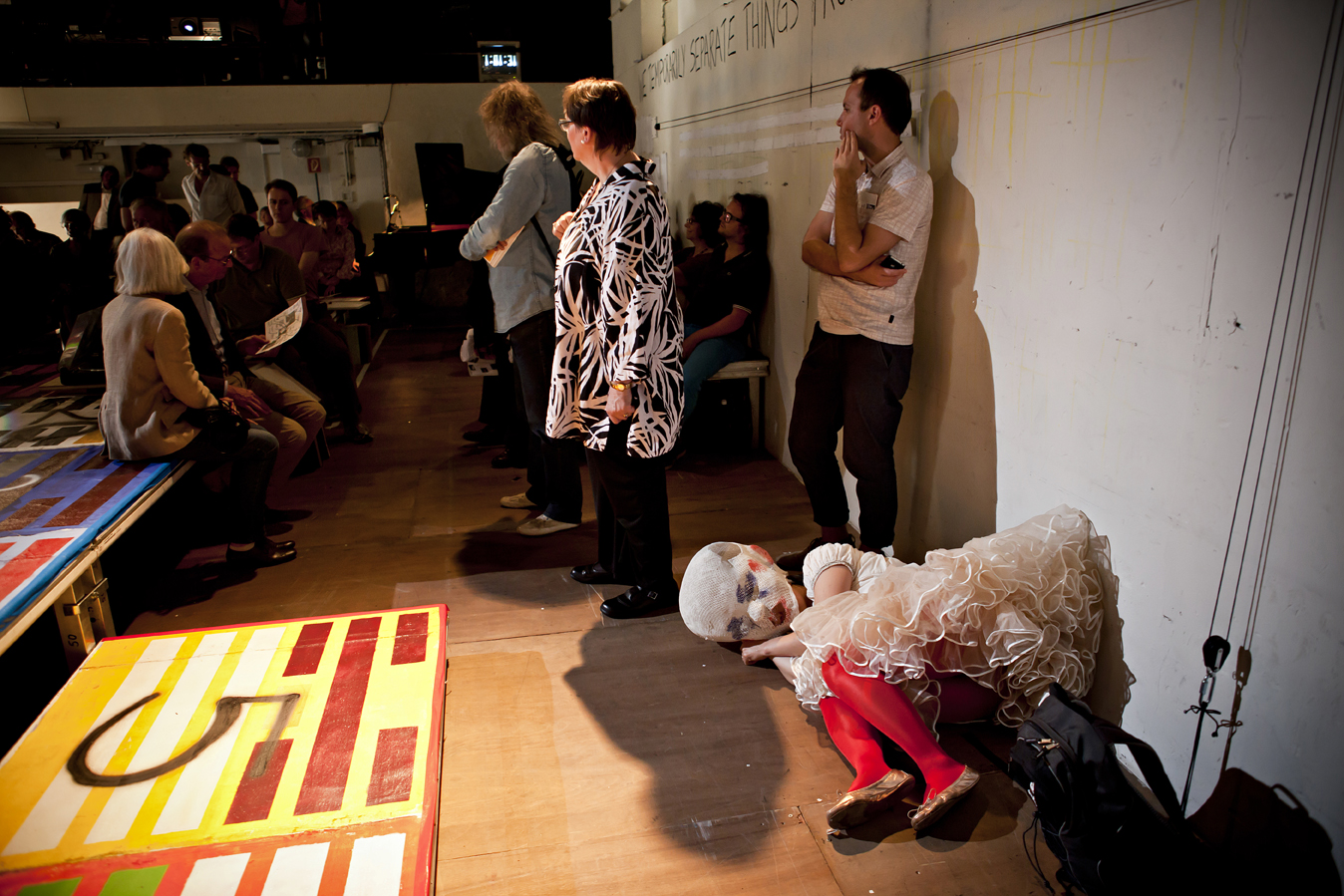
Seen July 11 in the Werkstatt of the Schiller Theater, a small wing which the Staatsoper uses to stage new music theater, the singers walked onto strategically numbered platforms that also served as seats for the audience (most moved around at will). Unfinished excerpts of Liszt’s at times schmaltzy transcriptions yielded to the entrance of well-known arias, which were sometimes sung over more than one album of opera music. The cacophony built into a messy  tapestry of sound that must be a challenge for even the best-trained singer; all were equipped with pitch forks, while the most prominent figure onstage, the soprano Esther Lee, in a tutu and giant plaster mask, had her iPhone (replete with a bunny-eared case) in hand for assistance. Singing one cameo aria after another, from “Dove Sono” to “Sempre Libera,” Lee eventually dropped dead, while a Papageno in leather pants (Roman Trekel) stepped over her in insouciance. This being anti-opera, the female heroine eventually rose for more drama (stage direction by Sophia Simitzis), although her booming timbre became increasingly metallic. Alfredo Daza assumed a kind of Don Giovanni figure as he cavorted around in a robe. He also broke out into the aria antica “O mio dolce ardor” so well-known to voice students, blocking his ear from the waves of Liszt emanating from the piano. Blaring record players intermittently asserted their dominance. Just toward the end of the 110 minutes, the theme from Die Walkyrie charged in unopposed, a satisfying close to an otherwise frustrating musical experience.

Esther Lee drops dead from singing too many arias (c) Staatsoper Berlin

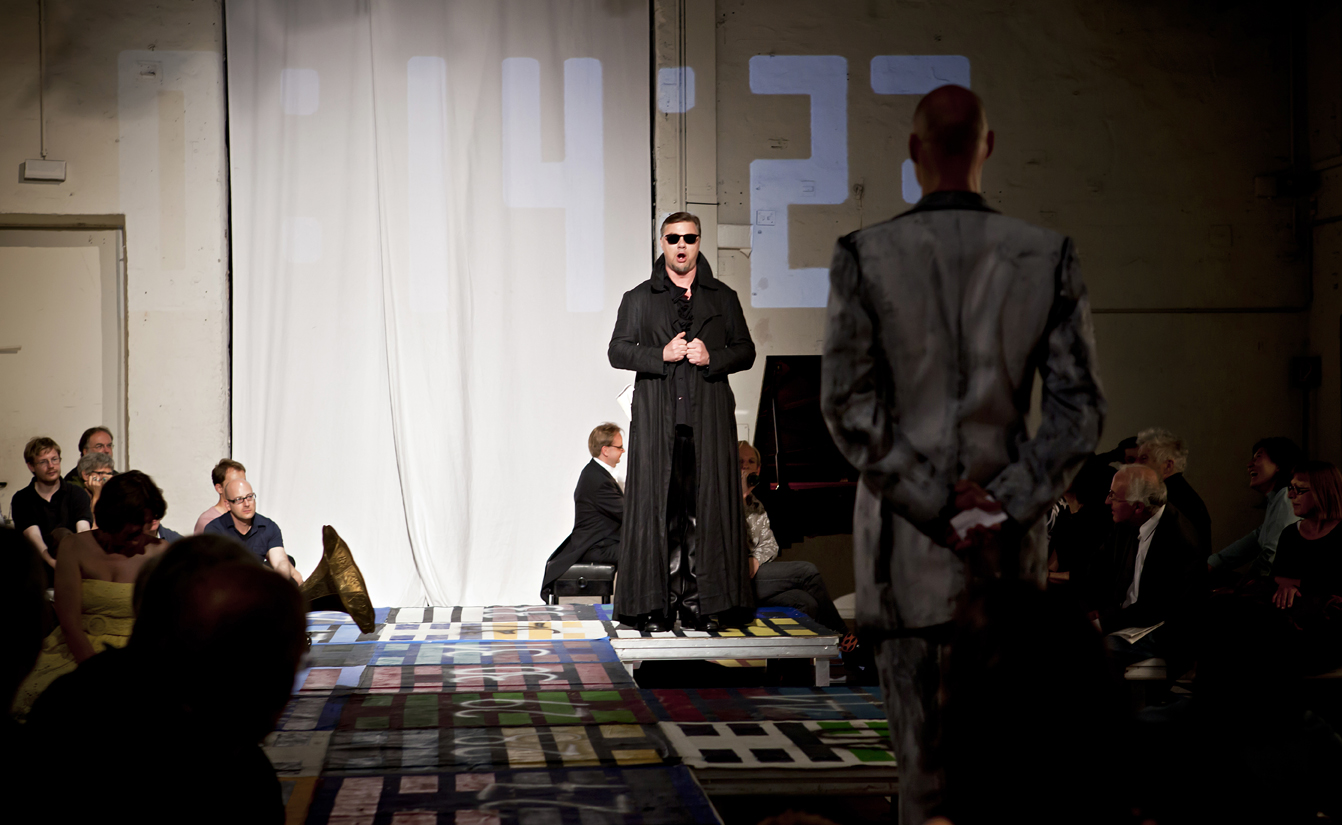
Europera 4 proved more redeeming in its simplicity (and brevity, clocking in at 30:00). The presence of René Pape was overwhelmingly powerful as he sang Sarastro’s arias from Die Zauberflöte, opening the production with “O Isis und Osiris” offstage. As he stood just inches away from the audience in a black cape at the center of the room, the immediacy of his rich, visceral tone, crisp diction, and emotional calm left this listener nearly speechless. The effect turned comic as he put on sunglasses and addressed Trekel with “In diesen heiligen Hallen” (stage direction by Isabel Ostermann). Trekel, emerging in an acid washed suit, had the audience in stiches as he sang through “Ra la la la, ra la la la, heisse Mutter, ich bin da.” The wind-up gramophone had its own comic appeal as old recordings interrupted wiltingly through the cylinder, while Pape continued to amuse as he sat at a baby grand to play air piano (a friend noted that everyone stopped paying attention to the actual pianist, Günther Albers, across the room). “Bella Figlia dell’Amore” was the last artifact to emerge from the gramophone before the lights fell.

René Pape in 'Europeras 4' (c) Staatsoper Berlin

The program continued unexpectedly with a Qi Gong session on the small lawn in front of the Schiller Theater, just in time for those emerging from the intermission of Dionysus to watch us in bewilderment. The non-hierarchical nature of the Happening, which transforms audience members into their own kind of spectacle, also fulfills the increasing demands on arts institutions for interactive audience participation. Despite some shades of absurdity, the fluid movement, stretching, and deep breathing (even if many weren’t wearing the right clothing) was in fact an ideal precursor to a performance of Nicholas Isherwood’s attempt at Japanese throat singing with a meditation bowl, echoed by another singer at the back of the Werkstatt theater space. One can only imagine how happy Cage would be to know that eastern forms of recreation are slowly finding common ground with European tradition, even if westerners continue to pose with their pretensions to worldly virtue, and that Berlin’s leading opera house indulges in such radical programming. The evening opened on a more clichéd note with a performance of 4’33’’ on a tiny toy piano outside the theater. Robert Farkas sat cross-legged playing silently as cars rumbled past, the original idea of mocking concert hall convention evolving into a more abstract, Cagean concept.

Dionysus

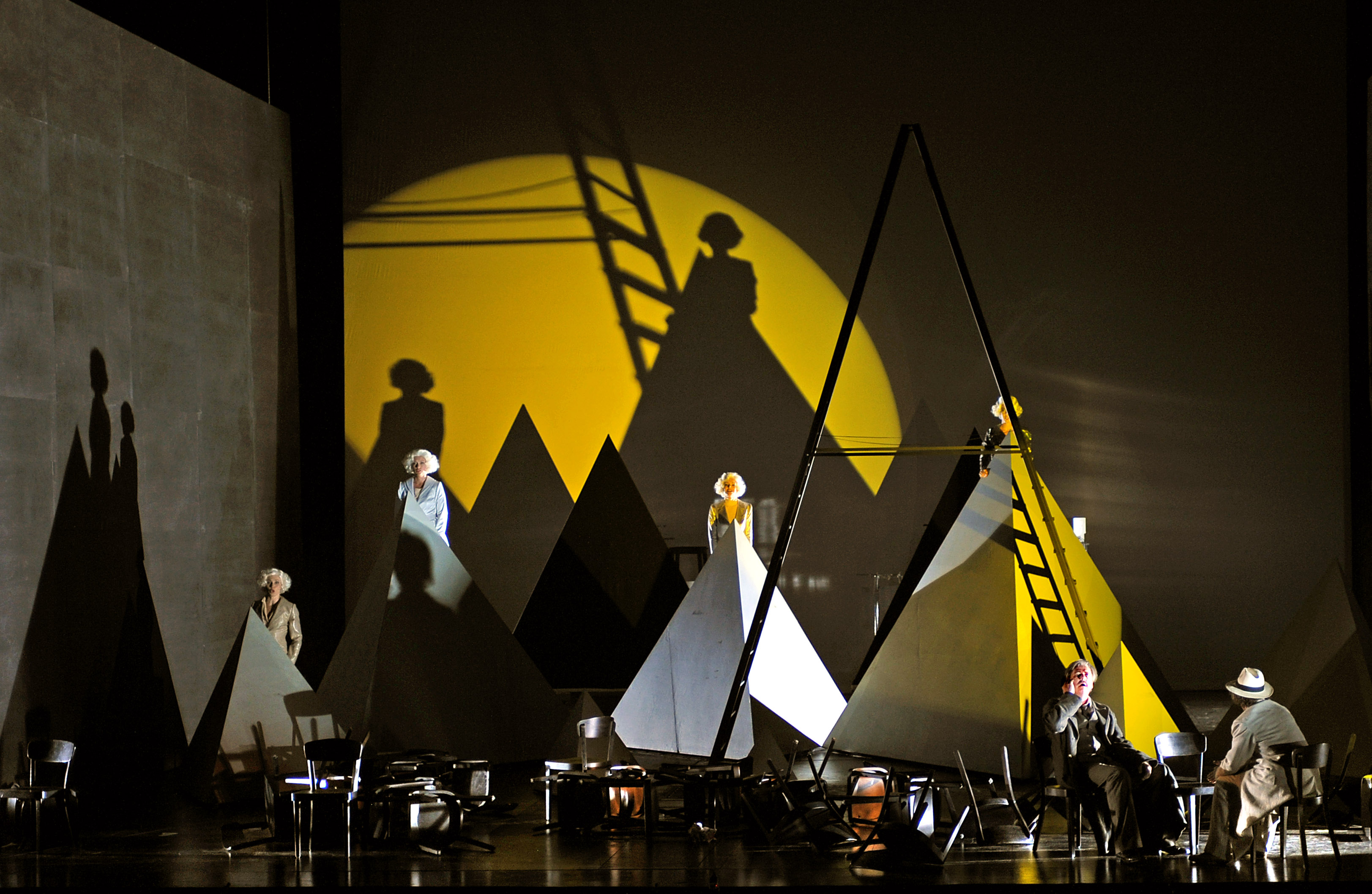
Wolfgang Rihm has become a familiar presence in the concert hall this season, starting with the Musikfest last fall and continuing with MärzMusik, which took his 60th birthday as an opportunity to posit his neo-Romantic idiom as an opposite ‘pole’ to Cage’s anarchic experimentalism—a perplexing bit of programming that nevertheless emphasizes both composers’ reactionary position with regard to the Darmstadt School. In contrast to Cage, who turned increasingly to chance operations and non-musical material in his last years, Rihm only seems to become more Romantic with age. His most recent stage work, the ‘fantasy opera’ Dionysus, takes Nietzsche’s Dionysus Dithrambs as well as the poem Klage der Ariadne as the basis for a self-devised libretto that explores the quest of N. (a character embodying both Nietzsche and Dionysus) for truth and in and out of his conflicted and, in this case, thoroughly nebulous relationship with Ariadne, whom according to Greek myth the god of wine and fertility seduced and deified. The opera, seen at the German premiere on July 8, opens to a sea where N. is taunted by nymphs, travels through Hades and ends on “A plaza. The horse. The skin.”—referencing Nietzsche’s exposure to the flogging of a horse that is said to have precipitated his mental breakdown. Apollo “a guest” accompanies N. only to taunt him: “I am also your labyrinth,” he tells Ariadne in the opening scene, while ensembles of sirens continue to reappear with teasing allure.

References to Mozart’s Die Zauberflöte appear in both the libretto and score, with a flute emerging prominently throughout the opera. The Wagnerian undertones also assert themselves from the opening scene (Rhine maidens) as well as in primordial, brooding harmonies, while Ariadne directly quotes Richard Strauss in the opening tableau. The opera’s quasi-philosophical precepts range from gripping to confounding. It is a journey through the mind of Nietzsche, his struggle to reconcile the destructive powers of an infinite quest for knowledge—“Selbsthenker (my own executioner)” N. repeats in the second tableau, while the ‘The Guest’ counters with “Selbstkenner (your own connoisseur)— yet Rihm also attempts to embed the highly erotic story of Dionysus and Ariadne into this dialectic, making the plot more labyrinthine than many viewers could handle. The music follows this pattern naturally, morphing freely from lush tonality into unsettling dissonance, such as in the female chorus “Tag meines Lebens” which suddenly transforms into a group of anti-sirens. The music in Hades teeters on the edge of insanity, yielding to a raw percussion interlude. As the conductor Ingo Metzmacher states in the program notes, no one knows his craft better than Rihm. The laughing staccato of nymphs in the opening tableau and sinister eroticism that emerges through his orchestration may place Dionysus firmly in the German Romantic tradition, and yet the score lacks the clear deliberation and cohesiveness of earlier stage works such as Proserpina , and even this score had a tendency to wind too freely through the rivers of Hades.

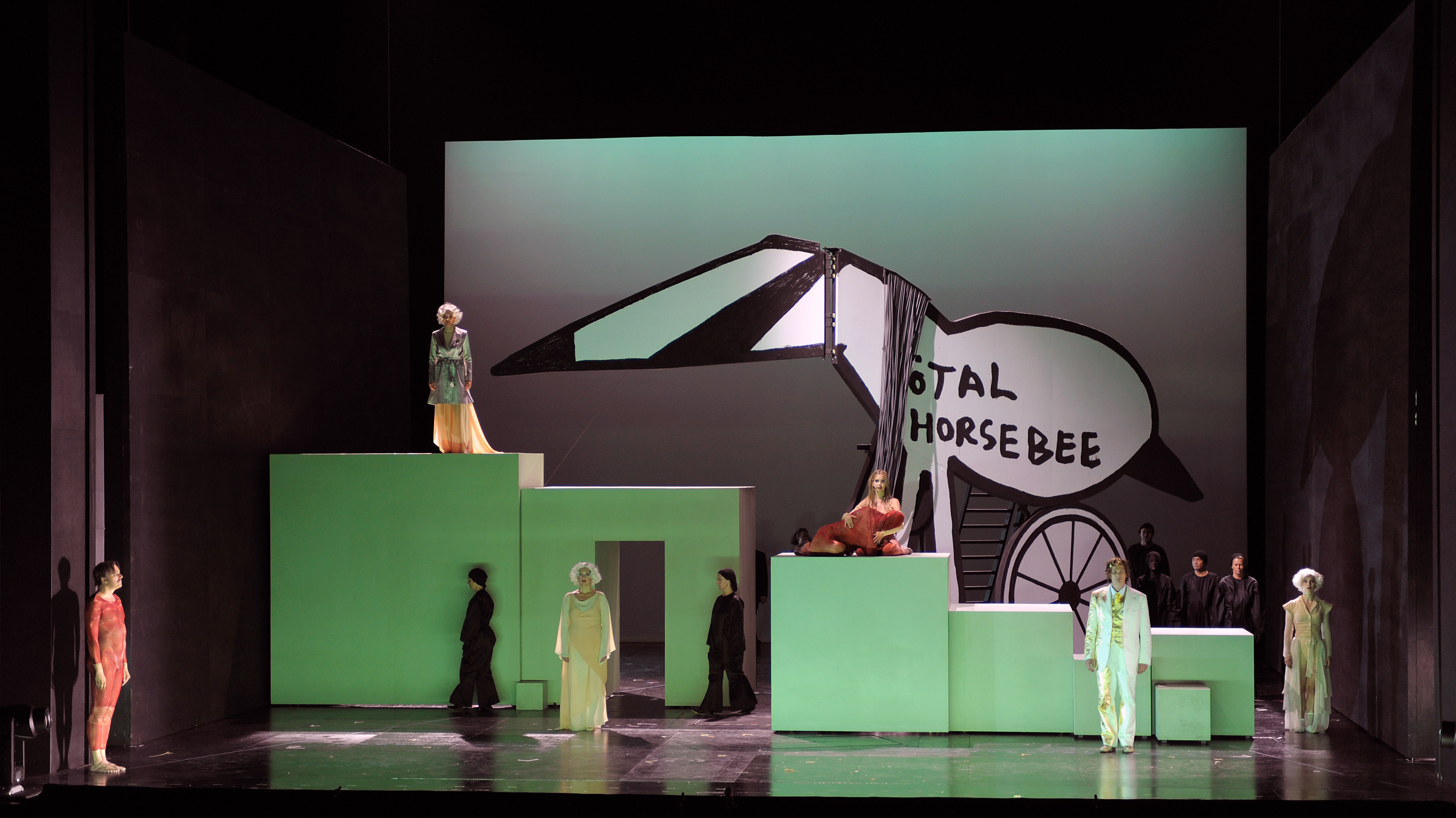
Sets by Jonathan Meese evoke a dark, expressionist fantasy world, drawing carefully upon the symbolism in Rihm’s text while bringing a provocative touch one would only expect from the German ‘enfant terrible.’ While the sloppy black and white drawings assigned to the Dionysian chorus and the “Total Horsebee” at the end are irritatingly tongue-in-cheek, the opening cliff on which N. rows to no avail and the giant bottle and beach balls in the brothel of the third tableau are deliciously imaginative despite the kitsch factor. Meese’s aesthetic was well-matched by Pierre Audi’s direction, who counters Rihm’s intellectual weight with subtly subversive humor. While the contrast was at times jarring and threatened to oversimplify the opera’s internal quest, Audi brought a fresh contemporary approach to a stage work that would have dragged its feet insufferably with a more cerebral approach. Costumes by Jorge Jara were at their height in the bulging female costumes of Hades; lighting by Jean Kalman created artful shadows and further propelled the opera into the realms of the unconscious.

'Magic Flute' references in 'Dionysus' (c) Ruth Walz

Mojca Erdmann, in the role of Ariadne, proved why Rihm has found inspiration in her stratospheric if somewhat soubrette-like soprano, razor-sharp musicality and dramatic flexibility. A sprite seductress throughout, she inhabited the opera’s mercurial terrain with poise. Replacing Georg Nigl as N., James Cleverton, who also sang at the Salzburg premiere, convincingly conveyed the character’s emotional frustration vocally and dramatically. The tenor Matthias Klink was an effectively jeering Apollo despite some strain in the upper range. And yet the female voices ultimately sang the men offshore, with Canadian soprano Elin Rombo bringing smooth, full-bodied tones to the stage, complimented gloriously by mezzo Virpi Raisanen and alto Julia Faylenbogen in ensemble numbers. The Staatskapelle performed incisively yet with calm expressivity under Metzmacher, Germany’s leading conductor for new music, also testifying to the quality that Daniel Barenboim has cultivated as music director of this orchestra. The musicians brought velvety phrasing to Straussian turns while following Metzmacher’s precise conducting through the unpredictable contours of Rihm’s score, which expired into dust after failing to help N. find his way.

Sets by performance artist Jonathan Meese (c) Ruth Walz

Summertime

Wednesday, July 11th, 2012

by Sedgwick Clark

I am relieved to say that the concert “season,” such as it used to be, is officially over. Nothing like three mostly concertless months to revivify one’s passion for the art. There are a few scattered enticements here and there, as well as three Mostly Moz concerts on the horizon—a preconcert recital of works by Rachmaninoff and Stravinsky with the amazing 18-year-old pianist Conrad Tao, hearing Philadelphia Orchestra Music Director-designate Yannick Nézet-Séguin for the first time in concert, Louis Langrée leading works by Lutosławski, Bartók, and, of all composers, Mozart. But that’s it so far. I hope to catch up on some recent CDs and will report accordingly.

I’ve also been surprised by the number of people who keep asking me when I’m going to post photos from my Africa jaunt in May. The wildlife and terrain were certainly photogenic, and I even took some video—nothing dramatic, of course, but it’s kind of amazing to be a few feet from a grazing rhinoceros family and have a cheetah nuzzle your leg like a house cat. I hope to get them organized for next week.

Son of The Mentalist

A new TNT series called Perception made its debut on Monday evening (7/9). It’s about a schizophrenic professor of neurology who has hallucinations, solves murders, and is addicted to doing crossword puzzles while listening to the Scherzo of Mahler’s First Symphony. At one point he peevishly ejects his cassette and says to his student assistant, “That’s the von Karajan recording—I wanted the Solti.” Reality check: There is no Karajan recording of the Mahler First. (The conductor decided not to record the First, according to British record executive Peter Alward, quoted in Richard Osborne’s authoritative Karajan biography, because it was “too Jewish.”) So is the script writer pulling our leg or is he hallucinating? At the fadeout, the professor is having a hallucinogenic conversation with a sympathetic former girlfriend; she disappears as his student assistant walks up, hands him a cassette, and he begins to listen with a smile on his face. Must be the Solti Mahler First.

Lacombe’s Tenure Extended in New Jersey

The New Jersey Symphony has extended the tenure of Jacques Lacombe, its music director since October 2010, through the 2015-16 season. His programs are often imaginative, and the orchestra is playing well, with especially fine string tone. I’ve heard concerts in Newark and the impressive Spring for Music appearance in May at Carnegie Hall in which he partnered the Canadian pianist Marc-André Hamelin in Busoni’s monumental Piano Concerto. He seems like a musician committed to growing with the orchestra rather than using the position as a personal stepping stone. Let’s hope they perform at Carnegie again soon.

Looking forward

My week’s scheduled concerts:

7/16 at 6:30, Le Poisson Rouge. Harumi Rhodes (violin) and Friends. Works by Debussy, Ravel, Messiaen, and Takemitsu.

Are We Liable For A Backstage Brawl?

Wednesday, July 11th, 2012

By Brian Taylor Goldstein

Our stage manger slapped one of our actresses during a rehearsal. Are we liable?

Anyone who understands the unique stresses and pressures of the performing arts should expect a certain degree of screaming, emotional meltdowns, tantrums, and other inappropriate behavior. Welcome to the theater. However, physical violence crosses the line and, among other things, can most certainly get your organization sued!

Anytime an individual provides services on your behalf—regardless of whether or not they are an employee, independent contractor, or even a volunteer—you can be liable if they hurt or injury someone “in the course of performing their duties.” Let’s say, for example, that one of your volunteer ushers decides to forcibly eject a patron who refuses to shut off his cell phone, injuring the patron in the process. Your organization could be liable because the usher was performing services on your behalf and was not properly trained or supervised. (The usher could be sued, too, but your organization would be included in the lawsuit.) On the other hand, let’s say you arrange for a volunteer to pick up an artist from the airport and drive him or her to the theater. If, on the way, the volunteer decides to stop and run a few personal errands and gets into an accident, you would not be liable. Once the volunteer deviated from his or her job by running a personal errand, he or she was no longer working on your behalf. Get it? These things are very fact specific.

In the case of your stage manager, was this a personal fight? Just because the stage manager slapped the actress doesn’t necessarily mean your organization is liable if he or she wasn’t acting in the capacity of a stage manager at the time. However, let’s say that the actress refused to follow the stage manager’s directions, a fight ensued, and the stage manager decided, out of frustration or poor anger management skills, to slap the actress. You could most definitely be sued because the stage manager was clearly acting in his or her capacity as a stage manager.

If you had strict written policies prohibiting physical violence, assaults, battery, etc, you could always argue that (1) you had no reason to believe that your stage manager was violent or had assaulted others in the past and (2) that he or she was violating strict company guidelines and procedures. (The stage manager could still be personally sued for assault and battery, but these arguments might get your organization off the hook.) However, now that this has happened, you would most definitely be liable if this ever happened again and you took no steps to prevent another similar incident.

You would certainly be warranted in dismissing the stage manager and refusing to let him or her work with you again. Short of that, at the very least, you should ensure that there are written policies and procedures for all volunteers, employees, independent contractors, and any one else who provides services for your organization. You need to make sure everyone understands that this kind of behavior will not be tolerated.

_________________________________________________________________

For additional information and resources on this and other legal and business issues for the performing arts, visit ftmartslaw-pc.com.

To ask your own question, write to lawanddisorder@musicalamerica.org.

All questions on any topic related to legal and business issues will be welcome. However, please post only general questions or hypotheticals. FTM Arts Law reserves the right to alter, edit or, amend questions to focus on specific issues or to avoid names, circumstances, or any information that could be used to identify or embarrass a specific individual or organization. All questions will be posted anonymously.

__________________________________________________________________

THE OFFICIAL DISCLAIMER:

THIS IS NOT LEGAL ADVICE!

The purpose of this blog is to provide general advice and guidance, not legal advice. Please consult with an attorney familiar with your specific circumstances, facts, challenges, medications, psychiatric disorders, past-lives, karmic debt, and anything else that may impact your situation before drawing any conclusions, deciding upon a course of action, sending a nasty email, filing a lawsuit, or doing anything rash!

The San Francisco Symphony Youth Orchestra takes the Philharmonie

Friday, July 6th, 2012

By Rebecca Schmid

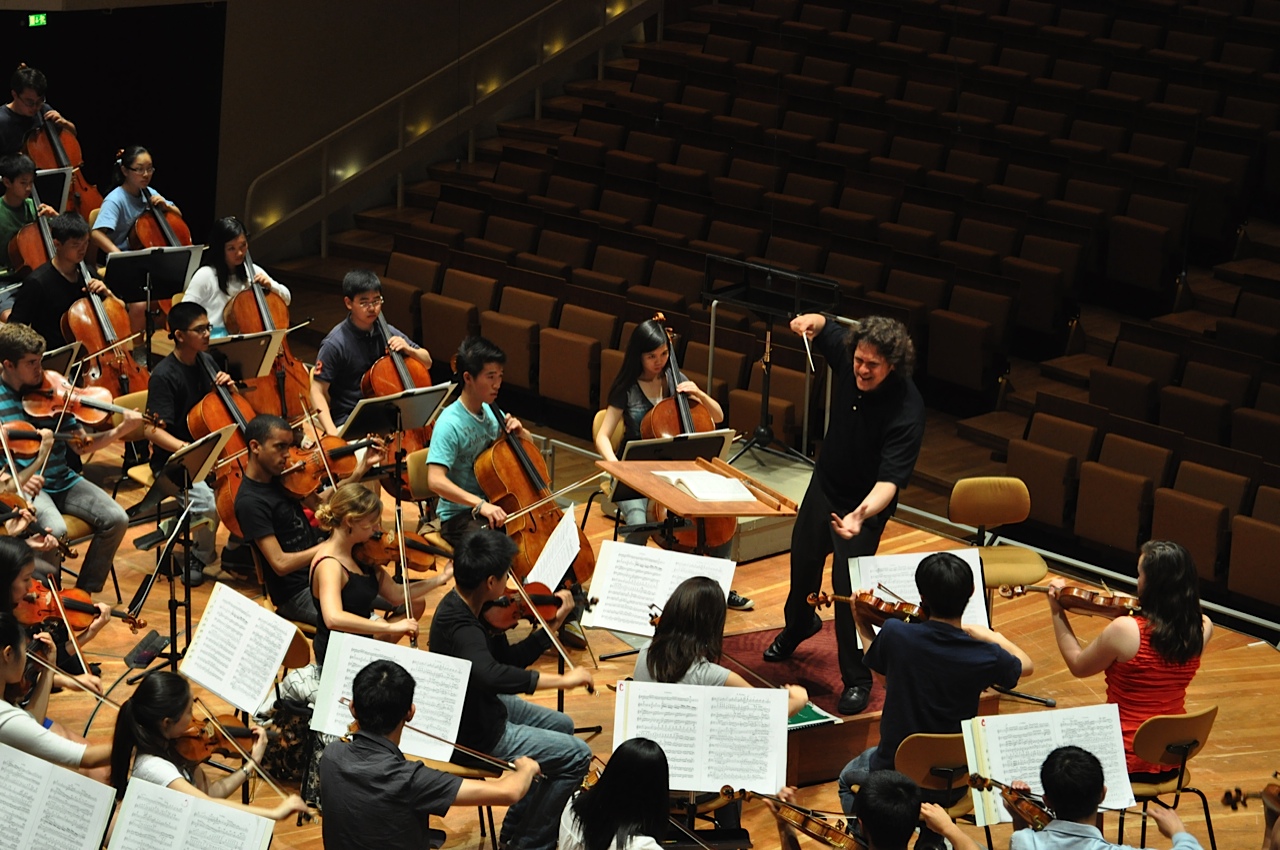
A timpanist just tall enough to rumble his mallets over the kettle drums stares out from beneath his specs as Lars Vogt slides onto the bench for the opening chords of Grieg’s Piano Concerto.

“I like that sound!” says Music Director Donato Cabrera to the young percussionist as he walks out into the front aisles of the Philharmonie. “Could you do more of a crescendo?”

He immediately resumes.

“Yeah!”

The members of the San Francisco Symphony Youth Orchestra (SFSYO) stamp their feet in congratulation. As rehearsal continues, former Music Director Alasdair Neale, who has dropped into town for a visit, also weighs in from the aisles, coordinating seamlessly with Cabrera to refine balance issues. The orchestra plays through parts of Mahler’s First Symphony, the strings attempting a dreamy pianissimo that even the world’s best orchestras struggle to create.

Finally, it is time for rehearsal to come to an end. “Breathe, breathe, breathe,” Cabrera offers as a final suggestion. “And play your guts out!”

Donata Cabrera rehearses with the SFSYO at the Philharmonie (c) Oliver Theil/SFSYO-Few professional orchestras enjoy the same degree of artistic adventure as the SFSYO. The orchestra came to Berlin as part of a European tour (June 20-July 6)—its eighth since being founded in 1981—that traveled through three other German cities, Luxemburg, and ended in Salzburg. As the orchestra’s Director of Education Ronald Gallman pointed out, playing on the same stage as the Berlin Philharmonic is already an enormous accomplishment, not to mention a huge boost for the morale. The ensemble, drawing together Bay area musicians aged 12 to 21, exists on a tuition-free basis (thanks to generous sponsorship which also made this year’s tour possible) and receives weekly coaching with members of the San Francisco Symphony as well as yearly sessions with San Francisco Symphony Music Director Michael Tilson Thomas. Guest artists have included Yo-Yo Ma, Sir Simon Rattle, John Adams, and Midori.

Vogt, joining the SFSYO for the fifth time, told me backstage that “the sky is the limit” with this orchestra, adding how important it is for professional musicians not to be “set in their frames” and allow the youthful inquiries of musicians playing something like Mahler for the first time to bring a fresh take on issues that more seasoned players take for granted. Cabrera emphasized that the act of discovery is no different with a youth orchestra than any other professional ensemble. “This is what we live for,” he said. “There is always more to peel away and discover.”

Speaking with three of the orchestra’s members, it was clear that they shared these values of music-making as a constant learning process. Principal violist Omar Shelly explained that while they had already rehearsed the programmed works extensively at home, the tour was a “huge opportunity to adjust a prime product to different places, like a catering to a menu.” Principal oboist Liam Boisset, who like Shelly plans to become a professional musician, raved about how the acoustics of the Philharmonie allowed all the orchestra’s members to hear one other. “I’ve learned so much more about Mahler on this tour,” he said. “It makes me much more aware about where I sit in the orchestra.”

At the concert later that evening, the Grieg opened with a precisely built crescendo on the timpani that carried well to the back of the Philharmonie. The close attention in rehearsal to balance made itself clear in the elegant flute and horn solos of the first movement, while Vogt brought a light yet intense touch to the runs underlying the orchestra. Vogt’s emotional togetherness with the ensemble was particularly apparent in the Adagio movement, and the sighing melodies received a lovely rubato in the strings. The final Allegro, featuring Vogt in a spirited evocation of a Norwegian folk dance, was thoroughly polished and on point. Every dynamic shading emerged well-conceived and firmly in its place, yet there was also a mystical quality to the quieter passages, such as when the flute and dusky strings usher in a nocturnal passage on the piano.

In Mahler’s First Symphony, Cabrera and the SFSYO admirably captured the leisurely pace the composer indicated in his tempo indication Langsam, schleppend—as opposed to the third movement (Feierlich und gemessen, ohne zu schleppen). The playful “kuckuck” wind motifs were particularly endearing coming from a youth orchestra, contrasting at first ironically with the glassy opening strings and the primordial inquiries underlying the music. The orchestra nailed the Scherzo, with its jaunty waltz riff (in fact an Austrian Ländler), executing phrases of mature heft and temperament. Even after the deluge of Mahler last season for the centenary of his death, it is impossible to resist being captivated by the Frère Jacques canon of the third movement, with its slow, resigned march toward death, interrupted by Jewish folk melodies that mourn as they rejoice. After making its way with rapt attention through this spiritual ambiguity, the orchestra let loose in the turbulent final movement, lending charged passages force without becoming muscular. Mahler not being a composer of the greatest psychological simplicity, the Sitzfleisch and intellectual stamina of these young musicians deserve much praise.

Yet it was John Adams’ Shaker Loops that showed the orchestra at its best. The composer’s extensive collaboration with the musicians’ home organization of course strengthens their claim to this music, Adams having inspired the Meet the Composer residency program and established his national reputation with works written for the San Francisco Symphony. Shaker Loops is one of his first major compositions, adapted from a septet to full string orchestra in 1982 and featuring pulsating minimalist textures that, unlike in Reich or Glass, are set to Western harmonies and traditional form. The high energy of the repeated tremoli in the opening Shaking and Trembling immediately brought some west coast wind into the Philharmonie, and the eerie microtonal slides in the following Hymning Slews revealed impressive technical precision. A Final Shaking provided a satisfying close with anxious high-pitched shimmering that yields to ecstatic tonal harmonies. It is not for nothing that the SFSYO won an ASCAP Award for Adventurous Programming and the Award for American Programming on Foreign Tours this year.

Cabrera with the SFSYO (c) Jeff Bartee Photography/SFS

Gilbert’s 360 Armory Spectacular

Wednesday, July 4th, 2012

by Sedgwick Clark

Live mannequins greeted audience members as they ascended the steps of the Park Avenue Armory for the New York Philharmonic’s genuine season finale under Alan Gilbert. A few steps further, under a set of bleachers, stood a group of powder-wigged ladies in white floor-length dresses. I stared at one, and her eyes followed me as I passed into the concert arena: creepy, like a white-face mime at Columbus Circle or a smoking caryatid in Jean Cocteau’s film Beauty and the Beast.

They were, we learned later, the chorus in the First Act finale of Mozart’s Don Giovanni. Across Central Park, away from the orchestra’s staid subscription series at Lincoln Center, Gilbert could cut loose and astonish us in music for multiple orchestras by Gabrieli, Boulez, Mozart, Stockhausen, and Ives. Two evenings dominated by a pair of postwar modernist classics heard only once before in New York had sold out the Armory’s 1,400 seats far in advance, and standees ringed the catwalks on each side of the arena. All the performances bespoke meticulous rehearsal. Even when precision inevitably suffered from the cavernous acoustic and football-field separation of orchestras and singers, one thoroughly appreciated the care in preparation.

The whole production was filmed and will be available for streaming free on July 6 at 2:00 p.m. and for 90 days henceforth on medici.tv. Click for more information.

Oddly, the opening Gabrieli Canzon XVI for antiphonal brass and its performers were not listed in the program. Too bad, for the Philharmonic brass may never have sounded so sheerly beautiful in their home town. They deserved more recognition than mere listing in the orchestra roster 11 pages later.

The major works were Karlheinz Stockhausen’s Gruppen (“Groups”) for Three Orchestras (1955-57) and Pierre Boulez’s Rituel in memoriam Bruno Maderna for Orchestra in Eight Groups (1974-75). Both have been more written about than performed—at least in the U.S.—and it’s easy to hear why. The music is fiendishly difficult and requires extra rehearsal time (as well as extra conductors in Gruppen, in this instance Magnus Lindberg and Matthias Pintscher). Over half a century later, the German composer’s total serialism and experiments in electronics have not gained a wide audience. These performances of Gruppen were only the second and third in New York; the first was by the New England Conservatory Orchestra at Juilliard in 1965. Tanglewood attendees may recall when Oliver Knussen, Rheinbert De Leeuw, and Robert Spano led the work and then repeated it immediately at the festival’s Contemporary Music series in 1993 (those interested should google Edward Rothstein’s eloquent Times review).

Critics usually tread lightly on reputed “classics” for fear of appearing foolish among their colleagues. I’ll plead obtuseness and say that, for me, Gruppen’s sole arresting moment occurred about three-quarters into the piece, when the north and south orchestras passed recognizably similar material back and forth for a few seconds (the climax?) before reverting to the work’s arid intellectuality. The piece seemed far longer than its 21:21 timing indicated. Perhaps repeated viewings of the Medici streaming will produce a “eureka.”

While Boulez is no less intellectually rigorous than Stockhausen, he nearly always seduces the listener (or me, anyway) with the glimmering colors in which he cloaks his music. He is, after all, French and a descendant of Debussy and Ravel, although in Rituel he evokes his teacher Messiaen. It lasts under 30 minutes, but there’s a sameness to it that made it seem overlong at its U.S. premiere with the Philharmonic under the composer in January 1977 and which Gilbert could not counteract.

So what’s Mozart doing in this company? The final scene of Don Giovanni involves three small orchestras, which were spaced out in the performance space with the singers roving around in the audience. The audacity of staging this scene in such a vast space with so much going on at the same time far outweighed the lack of precision or the fact that the singers’ lines became an indistinct echo when the characters weren’t directly facing you.

Charles Ives’s bona fide 20th-century classic, The Unanswered Question, which closed the concert, for once received its ideal spatial layout: the horseshoe arrangement of strings on the floor, playing ppp throughout to represent “The Silences of the Druids—Who Know, See, and Hear Nothing”; the flutes seeking “The Invisible Answer” from a raised platform amid the strings; and the solo trumpet lofting “The Perennial Question of Existence” from an open door at the very top of the western end of the Armory. While I would have welcomed a broader tempo (Gilbert was just under six minutes), the Philharmonic’s playing was tonal beauty incarnate.

A Class Act

The actor Alec Baldwin has donated a million dollars to the New York Philharmonic. The gift specifically honors the orchestra’s outgoing president and chief executive Zarin Mehta.

“I have loved classical music all of my life,” stated  Baldwin in a Philharmonic press release on Monday (7/2), “but Zarin Mehta made my dream of becoming part of the world of classical music come true.” So far, the actor has become host of the weekly Philharmonic broadcasts, recorded a pre-concert admonition to audiences to turn off their cellphones et al., performed the role of Narrator in Stravinsky’s L’Histoire du soldat under Valery Gergiev in 2010, been host of some of the orchestra’s Live from Lincoln Center broadcasts, become a member of the Philharmonic Board, and recorded a Capitol One bank TV commercial promoting Lincoln Center, for which he was paid a cool million and which he has now graciously passed on to the orchestra.

A class act, Mr. Baldwin. Perhaps I’m naive, but I can’t help thinking that there are more stars of the popular arts and sports who love classical music and would welcome a Zarin Mehta’s enterprising offer to support their local arts scene. It’s surely worth a try.

Claus Guth’s Forest-bound ‘Don Giovanni’ at the Staatsoper; Musikfestspiele Potsdam’s new Pleasure Garden

Friday, June 29th, 2012

By Rebecca Schmid

Few operas in history have gripped the human psyche to the same extent as Don Giovanni. Pushkin, Kierkegaard, and Bernard Shaw count among the literary figures to have written their own account of the daemonic seductor since Mozart and Da Ponte staged their ‘drama giocoso,’ a tragi-comedy, in Prague. Since the 19th century, some champions of the work have further added to the opera’s moral ambiguity by excluding the final sextet, “Questo é il fin di chi fa mal/e de’ perfidi la morte/alla vita è sempre ugual” (this is the end for evildoers/death and life are the same for the villainous) after Don Giovanni is sent to hell. Meanwhile, his female conquests have been increasingly interpreted as consenting perpetrators of his sexual games rather than just victims and continue to provide stage directors with ample fodder. Robert Carsen, in his new production for La Scala last December, sets the Commendatore’s murder by Don Giovanni in the chambers of Donna Anna (Anna Netrebko), leaving her white slip covered in blood as she holds her father’s dead body on the same bed where she frolicked with the murderer. In the final scene, the accursed aristocrat reemerges from hell puffing on a cigarette while his avengers descend into infernal smoke.

Carsen’s vision was supposed to travel to Berlin this month as a guest production of the Staatsoper until it emerged that it would be impossible to adapt sets to the company’s current home in the Schiller Theater (the company’s 18th-century headquarters on the Boulevard Unter den Linden are currently undergoing renovation, recently delayed—again—until 2015). In another strange twist, La Netrebko, the highlight of a live screening that will be broadcast to an outdoor plaza, announced in May that she would withdraw in order to make time for her son. The Swedish soprano Maria Bengtsson was whisked in and Claus Guth’s 2008 production, mounted during Staatsoper Intendant Jürgen Flimm’s tenure at the Salzburg Festival, quietly slated as a replacement. The star appeal was not entirely lost as Netrebko’s husband Erwin Schrott remained on the roster as Don Giovanni’s sidekick, Leporello, while the original Zerlina (Anna Prohaska), her Masetto (Stefan Kocan) and Don Ottavio (Giuseppe Filianoti) provided continuity for an event that has been touted as a highlight of the season.

The Guth staging, seen at its German premiere on June 24, takes a dark, pseudo-cinematic approach to the opera, confining the action to the middle of a dark forest with a rusty bus stop serving as the only manmade shelter. The curtain opens to a beer-chugging, ex-convict like Leporello while Donna Anna rips off the Don’s shirt in the background. In the showdown with the Commendatore, Don Giovanni is shot in the stomach with a plastic gun and walks around through the remainder of the opera with an open wound. During Donna Anna’s aria “Non mi dir,” he has already become a specter. Meanwhile, a business-like Donna Elvira chases after her one-time husband in heels, gets stoned out of her mind with Leporello, and lies on the forest floor with the dying anti-hero during her aria “Mi tradi.” In the first act, Zerlina and her bridesmaids emerge like wood nymphs in the thick of what appear to be real pines (sets and costumes by Christian Schmidt) before the stage turns to reveal a tree swing that will serve as Don Giovanni’s seduction grounds. The rotating stage spins at its fastest when Donna Anna and Don Ottavio pull up in a sedan, although they are ultimately as damned to roaming the forest as much as any other character.
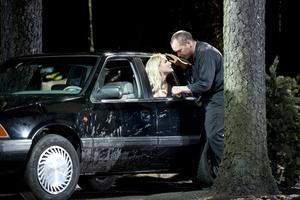
(c) Monika Rittershaus

While it is hard to deny the poetic weight of setting Don Giovanni in the woods—the opening to Dante’s Inferno, “Mi ritrovai per una selva oscura” ‘I found myself in a dark forest’ is the first thing that comes to mind—the production is mired in Regie gimmicks that undermine its psychological depth. Staring at tree trunks for two full acts also proved monotonous. Guth omits the final sextet, leaving Don Giovanni to fall into the earth after the Commendatore returns to a wintry forest (further emphasizing the notion of a terrestrial hell in which the characters cannot find the way toward redemption), yet scenes such as Don Giovanni and Leporello roasting marshmallows and the senseless presence of immaculate, bourgeois dressed characters in the brambles linger irritatingly within the director’s otherwise morbid vision. To be sure, his concept is fully in keeping with the opera’s legendary blend of comic and tragic elements, and his surrealist take on Don Giovanni’s existence, trapped somewhere between life and death, could not be more dead-on in literary terms, yet the production demands a level of intellectual engagement that supersedes its theatrical appeal. 

Nevertheless, Guth was blessed with a cast that largely rose above the quixotic circumstances vocally and theatrically. The audience hardly seemed to miss Netrebko as Bengtsson, a statuesque blonde with natural allure, portrayed the distraught Donna Anna with creamy tones and fine attention to dramatic nuance. Her voice was tearful in opening stanzas of “Non mi dir,” kept painfully slow by Music Director Daniel Barenboim, while she revealed unblemished strength in her swift declaration that heaven may someday forgive her. As Don Giovanni, Christopher Maltman evoked more of a modern playboy than an irresistibly virile predator, yet his high-lying baritone warmed up to give a fine rendition of his aria “Deh vieni alla finestra,” and his fear was vividly credible in the final scene. Schrott nearly stole the show as the riotous buffoon and manipulator Leporello, his booming bass and excellent Italian diction carrying magnetically in the dry acoustics of the Schiller Theater.

It is almost unfair to cast Elvira, often considered a mezzo role, with a soprano as eloquent as Dorothea Röschmann, and yet her acting skills do not always rise to the same level. While her rich tone and technical polish were the vocal stand-out of the evening, her presence more easily called to mind the countess in Le Nozze di Figaro, which she sang earlier this season, than Don Giovanni’s brash consort. As Zerlina, Prohaska (Musical America’s current “New Artist of the Month”) lived up to her usual standards of musical and thespian excellence, effortlessly singing through “La ci darem la mano” as she pumped herself on a swing. Kocan was a convincingly exasperated Masetto, although his voice retains a thick Slavic quality that interferes with the demands of singing in Italian. By contrast, Filianoti, in the role of Ottavio, cultivates a flexible technique that was ideal for the coloratura runs of the aria “Il mio tesoro,” yet his nasal timbre lacks body. He also failed to remain in time with Barenboim on more than one occasion. Ukranian Bass Alexander Tsymbalyuk was an imposing, expressively full-voiced Commendatore.

Barenboim led the Staatskapelle in a performance that never lacked dynamic shape and dramatic purpose, sensitively accompanying the singers at all times with great emotional depth, yet his tempo relations in Mozart were occasionally perplexing. The second half of “La ci darem la mano,” “Andiam mio bene” was twice as fast as the opening. The orchestra, despite its rich, Germanic sound, is also not terribly flattered by the acoustics of its current home, and its attacks could be rounder. Despite the odds stacked against this production, Barenboim proved that his ensemble is the best in town for Mozart operas, even if the composer is rolling is in his grave as Don Giovanni continues to wander the forest.

The production runs through July 6.
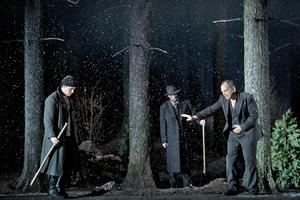
(c) Monika Rittershaus

Out at Friedrich the Great’s old stomping grounds…

The city of Potsdam is currently inundated with tributes to the tercentenary of Friedrich the Great, from Das Musical Friedrich to an exhibit of personal items entitled Friederisiko that stretches from the rococo palace Sanssouci to the Neue Palais, built at the end of the Seven Years’ War. While the 18th-century Prussian king may be best remembered for an aggressive military campaign that annexed parts of modern-day Poland and the Czech Republic in an escalating power struggle with the Austro-Hungarian Empire, the ‘enlightened despot’ was also a great patron of the arts. A flutist and amateur composer who penned 100 sonatas and four symphonies, Friedrich included C.P.E. Bach and Quantz among his court musicians; enjoyed a legendary if tumultuous friendship with Voltaire; and, fittingly for his time, favored the French language above German. Homages to “Old Fritz,” as he has been nicknamed, have extended to a new album released by Berlin Philharmonic Principal Flutist and soloist Emmanuel Pahud, Flöten König. The Swiss musician even dressed up earlier this season on the grounds of Sanssouci.

Potsdam’s annual Musikfestspiele (June 9-24) similarly seized upon the opportunity to transform city grounds into a courtly celebration, including a “Sanssouci Prom Concert” in the garden of the Neue Palais and ensembles as such as the Freiburger Baroque Orchester and the Orchestra of the Age of the Enlightenment in baroque and classical repertoire. The festival also included a “picnic concert” for the first time this year. The setting on Potsdam’s Freundschaftsinsel, a picturesque botanical garden nestled quietly away from the post-war architecture surrounding the main station just minutes away, proved a fitting escape for the occasion, replete with a couple in 18th-century garb pushing a tram that carried a baby anachronistically sucking a pacifier. Locals festively spread out their blankets and picnic fare, some including white tablecloths and prosecco on ice with an eye to winning the competition that was underway for “most inventive arrangement” (Potsdam, while only an hour away from Berlin and Friedrich’s summer getaway of choice, maintains its own brand of provincial flair).

The opening concert, however, represented a decidedly non-continental take on celebrations for the Flute King, featuring the band Fine Arts Brass in an all-British program. As both a visiting journalist from a U.K. publication and one of the group’s members individually commented, it felt “surreal.” The concert fell just on the heels of the Jubilee Weekend in England, and the brass band naturally included an arrangement of Handel’s Water Music. The group’s leading trumpeter Simon Lenton, moderating between numbers with a refreshing blend of humor and informative material, joked that the German native was “England’s finest composer.” Yet the program ranged from arrangements of Dowland and Purcell to a suite by Anthony Holborne that is usually performed for Christmas and Farewell to Stromness by Peter Maxwell Davies, living proof in his position as “Master of the Queen’s Music” that the art of patronage has not died.

In conversation with the festival’s Artistic Director Andrea Palent, it emerged that the event was partly modeled after “Last Night of the Proms,” which moves from the concert hall out into Hyde Park and other outdoor venues. She also mentioned the 18th-century tradition of “pleasure gardens,” which according to Palent spread its influence throughout Europe in Friedrich’s time (although the fact remains that he was Francophile). Palent also grounded the concept in a more general principle of the Enlightenment as championed by figures such as Rousseau—“back to nature”—saying that she hoped the outdoor setting would affect listeners on a sensual as well as intellectual level.

As the Meccore Quartet, a young group of Polish musicians, performed from string quartets by Haydn, Mozart, and Mendelssohn during the second part of the program, the music indeed served to heighten the sensory experience of sitting on the lawn and breathing the summer air rather than become an isolated spectacle. While one of the violinists mentioned afterwards that they had been concerned about acoustics, the music felt as if it were meant to be played in this setting, which in fact camouflaged technical and dynamic details that would have been more apparent to a critic’s ear in the concert hall. In an age of technological oversaturation, the event proved a fleeting reminder of the values that bred 18th-century art, even if a retiree couldn’t refrain from chasing after the musicians to take pictures with her digital camera.

 A gabled sculpture from the garden of the Neue Palais © Holger Kirsch for the Musikfestspiele Potsdam Sanssouci