Archive for 2013

A Stirring Evening (and Music)

Wednesday, April 24th, 2013

Lakeside at the Evangelische Akademie Tutzing

By ANDREW POWELL
Published: April 24, 2013

MUNICH — Members of the Bavarian Radio Symphony Orchestra venture six times a year to Lake Starnberg, some 20 miles southwest of here, to play chamber music at the Evangelische Akademie Tutzing, or EAT, as its website favicon reads. A mid-season program (Feb. 24) paired quintets by Mozart and Schumann in the venue’s airy music room, drawing skilled performances. But extra-musical ghosts disturbed this particular offering: concert tickets include a guided tour of EAT — once a lone lakeshore chapel, later a castle, palace and U.S. Army HQ — and our evening began with docent tales of, among other matter, a 1945 American troop obliteration of the palace library, Dwight Eisenhower’s name being dropped for good measure.

What? The troops fight their way into Bavaria, set up at Tutzing Palace to administer a new basis for democracy, and are remembered for trashing books? So much for perspective. Then again, Tutzing can seem stuck in the 1920s and 30s: Adolf Hitler’s beer-hall putsch buddy Erich Ludendorff is grandly buried there and the former fishing village memorializes “Hitler’s pianist” Elly Ney — Carnegie Hall attraction in 1921, ardent Nazi by 1933 — on its much-visited Brahms Promenade. Physically the town has changed little over the decades.

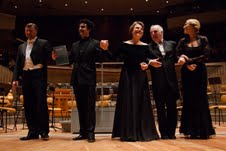
Our thoughts stirred by the guide’s earful, we crossed the yard for musical respite. Mozart’s G-Minor String Quintet, K516, resounded in handsome proportion and balance. Antonio Spiller, first violin, stressed the cheery second theme of the opening Allegro emphatically enough to prepare for Mozart’s abrupt turn in the closing movement. Leopold Lercher, Andreas Marschik and Christa Jardine partnered him attentively throughout, even if they couldn’t quite match his poise and confidence. Cellist Helmut Veihelmann intoned with care, but the ear craved more of a grounding, more cello volume. In the Schumann Piano Quintet, after a coffee break and snowy stroll by the lake (pictured), unrestrained collegial exchanges and pianist Silvia Natiello-Spiller’s buoyant passagework found color aplenty, even kitschy color. Marschik took the viola part.

EAT’s buildings date to medieval times. The small chapel got wrapped in a castle in the 16th century, its watery and Alpine views appropriated. Sundry owners and architects later morphed the premises into a modest post-Baroque palace. In 1947 the Lutheran Church assumed control, followed by ownership two years later in a 350,000-Mark deal. Tranquil seminars and coffee-table conferences now prevail along with occasional music events, such as those of the BRSO ensembles.

Given the pre-concert assertions and the irksome notion of book destruction, this U.S. listener decided on a little post-concert research. Quick findings: Eisenhower did spend time in Tutzing in the 1940s, returning there repeatedly for off-duty art lessons in 1951, but where he stayed isn’t clear; and the palace library did vanish during the 1939–45 war, but whether the honors fell to the U.S. Army isn’t clear at all. And regardless of what happened to the books, the American presence achieved positive results in Tutzing starting immediately.

Indeed, one life-saving story would well serve EAT’s docent and his Bayerischer Rundfunk (BR) pre-concert narrative. On the night of April 29, 1945, a train of prisoners — Russians, Romanians, Hungarians and Poles — pulled into Tutzing station. 800 in number and mostly men, they had been dispatched from Bavaria’s newly wound-down Mühldorf concentration camp, east of Munich, to the Tyrol, and to slaughter at the hands of waiting SS personnel. But a providential delay occurred — Tutzing is 90 minutes from the Tyrol — attributed variously to a faulty locomotive, a righteous local flagman, and even a prescient German commanding officer.

The next morning, on the same day that Hitler turned the lights out and Munich fell to the Allies, the XX Corps, part of George Patton’s U.S. Third Army, reached the town. Little fighting ensued because Tutzing was a Red Cross safe zone. The troops soon located the Benedictine Hospital crammed with wounded German soldiers, and the makeshift care beds arrayed in the high school and other buildings. Then they found the train, confronting directly the horror of camp survivors and at first wrongly concluding that Tutzing itself had been a camp location. The prisoners were told of their freedom, and the weakest removed from the train for treatment.

Decisive action followed. The American command seized a number of Tutzing homes for emergency use, instructing the locals to double up with their neighbors. The less seriously wounded of the German soldiers now lost their hospital beds to Mühldorf survivors in critical condition, the majority of them Jewish Hungarians. Although educated by the Reich to resist the enemy to the bitter end, many Tutzingers waved white flags for the U.S. troops, engendering whistles of censure from their more determined neighbors.

On May 1 the troops located a Nazi school campus on high ground in the next village, Feldafing, and rapidly commandeered it to serve as a new home and care facility for the former prisoners, now officially “displaced persons.” (Novelist and social critic Thomas Mann had owned a condo retreat in one of the campus buildings. He lived in Munich for 40 years before fleeing the country upon Hitler’s ascendancy in 1933.) On the morning of May 2, a working locomotive having been procured, the Todeszug crept back three miles the way it had come and transferred the survivors, giving them real beds and room to roam. Months later, after it became clear across Germany that ethnic groups among former prisoners did not always get along with each other, each displaced-person facility would become designated for a specific group, Feldafing for Jewish Hungarian survivors. With a population that eventually climbed above 4,000, the site would gain a reputation as “a place … to find missing people.”

The war raged for another five days before tacit German surrender May 7 at Reims. American troops requisitioned Tutzing Palace on June 7, setting up Army of Occupation HQ there three days later. This remained operative until the end of 1945, a pivotal command center at the very start of the 10-year Allied Occupation of Germany. In context, the books seem inconsequential.

Photo © Evangelische Akademie Tutzing

Related posts:
Brahms Days in Tutzing
Tutzing Returns to Brahms
BRSO Adopts Speedier Website
Tonhalle Lights Up the Beyond
Petrenko Hosts Petrenko

Colin Davis and Adolph Herseth, Inspired Musicians

Thursday, April 18th, 2013

by Sedgwick Clark

New York music lovers were fortunate to hear many performances by the British conductor Colin Davis and the Chicago Symphony’s longtime principal trumpet Adolph (“Bud”) Herseth in its concert halls. Last weekend the music world lost both artists, who afforded me some of the most inspiring musical experiences of my life.  How lucky we are to have so many examples of their artistry on record and in our memories.

Colin Davis (1927-2013)

How many musicians give their finest performances at the end of their lives? Colin Davis did. When word of his death at age 85 hit the Internet last Sunday, April 14, his revelatory Beethoven Missa solemnis with the London Symphony Orchestra at Avery Fisher Hall on October 21, 2011, leapt instantly to mind. With infinite wisdom, he had conveyed the composer’s emotional message as never before in my experience. It turned out to be his final New York performance. Six years before, he had led the LSO with blinding commitment in Vaughan Williams’s Sixth and Walton’s First symphonies. Indeed, the Walton far surpassed his highly regarded recording on the LSO LIVE label. And on April 3, 2008, he led the New York Philharmonic in a searing realization of VW’s Fourth Symphony that rivaled the composer’s own hellbent 1937 recording.

In the spring of my first season in New York, 1968-69, Davis led Metropolitan Opera performances of Britten’s Peter Grimes, with Jon Vickers and Geraint Evans, and Berg’s Wozzeck, with Evans and Evelyn Lear–thrilling, both of them. On January 19, 1972, I met him for the first time. It was my third day in my new job as p.r. director at Philips, his recording label. He had just conducted the opening night of a new Met production of Debussy’s Pelléas et Mélisande, and our office took him to dinner afterwards. Eager to engage him in conversation, I asked him (for some reason I can’t recall) what he thought of composers conducting their own works. “Oh, they’re all terrible,” he replied. Astonished, I asked “Stravinsky?” “He’s awful!” he said, rolling his eyes. “Well, what about Britten?” I asked, thinking I had him there. “He’s the worst!” he exclaimed. I shut up.

My boss told me that he was the only Philips artist who never asked, or had his manager ask, for an advertisement in the concert program. He was unfailingly friendly and relaxed to this new kid in the office, and his delightfully British, mock-serious sense of humor could turn boyishly ribald at times. When joining a group for lunch after a Tanglewood rehearsal, one of the men pointed out that his fly was open. Davis thanked him, saying, “Mustn’t let the little birdie out.” Another time, after a winter concert, two attractive young women with markedly plunging necklines came to the Green Room to tell him how much they enjoyed the performances. Apparently they frequented his concerts, and after they left he expressed worry that they “might catch cold”–a concern he repeated several times later in the evening at my boss’s apartment over dinner.

Talking with him about Sibelius after he had led the composer’s Third Symphony in Boston was a great opportunity. I expressed surprise at how slowly he took the middle movement, Andantino con moto, quasi allegretto. “I love the ineffable sadness of the music at that tempo,” he said quietly. I suggested that he should record all the symphonies with the BSO. When I returned to my office I told my boss how wonderful the performance was and that he should record the cycle. Sibelius not being a big seller, she snapped, “Sedgwick Clark, if you ever tell him that, you’re fired!” Of course I remained mum, but she fired me three months later anyway. Davis did record the seven symphonies in Boston, as well as several other Sibelius works, and they were hailed internationally upon their release.

Colin Davis was Musical America’s Conductor of the Year in 1997 in recognition of his appointment as the New York Philharmonic’s principal guest conductor.

Adolph Herseth (1921-2013)

Friday, January 9, 1970, is a storied date for untold numbers of New York orchestra fans. On that evening at Carnegie Hall, Adolph (“Bud”) Herseth intoned the stuttering trumpet fanfare that opens Mahler’s Fifth Symphony, and the Chicago Symphony Orchestra under Georg Solti proceeded to set a standard of all-out orchestral virtuosity that dominates the field still. Solti was called back to the stage 14 times in 15 minutes by a standing, stamping, cheering audience that refused to leave. Many orchestra players, too, were in no hurry to exit, milling about onstage after the hall lights were turned up, looking out in wonderment at the ovation and waving at audience members who remained to shout their praise. For three days hence my throat was so sore I could barely talk. It was the most exciting concert I’ve ever heard.

Herseth was principal trumpet of the most famous brass section in the U.S. from 1948 to 2001, and when he died at age 91 last Saturday his stature as a local hero was fully acknowledged in the press. John von Rhein wrote in the Trib: “For more than a half-century, Adolph Herseth’s distinctive sound and playing style were the bulwark of a brass section whose fabled power and brilliance have long been the sonic hallmark of the Chicago Symphony Orchestra. He was a legend, in the finest sense of that much-abused word.”

The next time you play one of those fabulous Chicago Symphony Orchestra recordings with Rafael Kubelik (Mercury), Fritz Reiner and Jean Martinon (RCA), or Georg Solti (Decca/London), pay special attention to the trumpet playing. You have seven CSO recordings of Ravel’s orchestration of Mussorgsky’s Pictures at an Exhibition to choose from.

Adolph (“Bud”) Herseth was the first orchestra player to receive Musical America’s Instrumentalist of the Year award, in 1996.

Looking Forward

My week’s scheduled concerts (8:00 p.m. unless otherwise noted):

4/19. Carnegie Hall. Dresden Staatskapelle/Christian Thielemann. Bruckner: Symphony No. 8 (Haas edition).

4/24 at 7:30. Zankel Hall. Young Artists Concert. Steven Mackey: Ground Swell. John Adams: Gnarly Buttons. Carter: Double Concerto. (John Adams and David Robertson, instructors.)

4/25 at 7:30. Zankel Hall. Young Artists Concert. Ives: Three Places in New England. John Adams: Shaker Loops. Andrew Norman: Try. Michael Gordon: Yo Shakespeare. (John Adams and David Robertson, instructors.)
The Art of Booking

Thursday, April 18th, 2013

By: Edna Landau

To ask a question, please write Ask Edna.

If you ask anyone in the artist management business how things are going these days, they will tell you that everything seems harder than it used to be. Some concert series have ceased to exist or have been significantly cut back, a number of orchestras have also disappeared or have been seriously challenged by budget shortfalls and labor difficulties, and an increasing number of presenters are reluctant to take risks, preferring to book artists who are familiar to their audiences and who are likely to generate a healthy amount of box office income.  In light of all this, what can a manager or self-managing artist do to enhance the chances of securing one of the highly sought after slots in a presenter’s season?

I recently consulted with a few longtime, highly regarded colleagues to see if they had any words of advice. My first call was to Marna Seltzer, currently Director of Princeton University Concerts, but formerly (at the start of her career) a manager and booking agent at Herbert Barrett Management. I felt that her having sat on both sides of the fence would give her a particularly insightful perspective on this subject. A glance at the Princeton University Concerts website revealed significant information about this presenter’s approach toward programming. A beautifully written announcement of the 2013-14 season speaks about the quest for a balanced season “that has the potential to leave the audience not just wanting to come back but feeling that they must come back to hear more”. Ms. Seltzer further writes: “One thing I am sure of is that we don’t want to become predictable. Even though we protect our legacy and try to deliver you the quality and mix that you have come to expect from us, we will never stop taking risks, trying new things.” (Would that there were many more presenters who adopted this approach.) How does Ms. Seltzer keep abreast of these new things and decide which to feature? She told me that recommendations from presenter colleagues carry tremendous weight. This poses a big challenge to managers who may have difficulty getting their artist(s) on the radar screens of major presenters. What are they to do? Ms. Seltzer spoke of the supreme importance of building relationships. Initial contacts might be made at industry conferences or by paying a personal visit to a presenter on their home turf. She loves the opportunity to show off the university’s beautiful and historic Richardson Auditorium and feels that familiarity with the hall can be of great benefit to a manager in deciding which artists to propose. A personal visit also makes a lasting impression on a presenter. What doesn’t make a favorable impression is a manager who launches into a conversation without having taken the time to see what type of artists she presents, or getting a sense of her immediate goals and needs. Their sole mission is to convince her that she must present their outstanding soloist or ensemble, irrespective of any other plans she may have for the season. This manager is less likely to enjoy a long term relationship with her that could lead to a productive booking collaboration in the future.

Evans Mirageas, Vice President for Artistic Planning at the Atlanta Symphony, The Harry T. Wilks Artistic Director of the Cincinnati Opera and a much in demand consultant, told me that he genuinely understands how difficult it is for an emerging artist to “get above the noise”.  He, too, places a lot of stock in what his colleagues have to say. While it is unlikely that he will return phone calls from people he doesn’t know about artists with whom he is not familiar, he does try to respond to written communications, even if only with a few cordial sentences acknowledging receipt of the material.  He encourages managers to organize auditions for their artists with artistic administrators (if they are trained musicians) when they are unable to arrange for the Music Director to hear them. Once he has heard a promising artist in concert or an audition, he adds them to an Excel list that he reviews regularly. He welcomes and values periodic news he may receive about those artists’ successes, either directly or via their managers, and updates the list accordingly. Still, he says, artists and managers must understand that music directors and conductors have their own wish list of artist/collaborators and it can take several  years before regular contact on the part of a manager might bear fruit. It was heartening to hear him say that in addition to the fact that no presenter can afford a season featuring only marquis names, it is important for a presenter to achieve balance in their offerings and to introduce their audience to new faces. They should also leave room for artists who may not have achieved superstardom  but who continue to offer rich artistic experiences while already a few decades into their careers. He responds most favorably to managers who invest time and effort to learn what might be of genuine interest to him and the music director, and whose dealings with him are direct, honest, concise, and “gently persistent”. Another artistic planner at a major orchestra also told me that when he is approached by a manager with whom he does not have an established relationship, he really appreciates if they start a conversation or meeting by asking about the orchestra’s priorities and plans, and then follow up by zeroing in on the two or three artists they think might be most appropriate for the orchestra, rather than running through a whole list of names. He stressed the importance of a businesslike approach in all booking-related communications. It should never get to the point where  a manager personally takes  umbrage when a booking doesn’t materialize right away. Each party has their own agenda at any given time, but managers should trust that proposals that are discussed and are of potential interest to the orchestra remain in their minds and may well result in bookings when the timing is right.

To ask a question, please write Ask Edna.

© Edna Landau 2013

A Visa Substitution Requires an Artist to Substitute

Wednesday, April 17th, 2013

By Brian Taylor Goldstein, Esq.

Dear Law and Disorder:

I have a substitution/visa question for you….We were intending to use someone from the US as the eighth singer for one of our groups coming to perform with a symphony in July 2013. It’s now looking like the group might have to replace the intended US singer with a singer from the UK. The rest of the group have visas that have already been approved and issues. Obviously, the singer from the US was not included in the original visa application, so I’m wondering how it would work if we’re now substituting a singer from the UK for the US singer. Would we have to do an entirely new visa application for the new (UK) singer, or would we still be able to add this new singer to the existing (approved) visa petition as a replacement for the US singer? Any light you could shed on this, either by answering these questions or by referring me to another resource where I might be able to get an answer to these questions would be extremely helpful and very much appreciated. Thanks so much!

I can both shed light and refer you to another resource.

First, the light: If you filed a petition listing 7 beneficiaries and 7 beneficiaries are listed on the visa approval notice, and all 7 will be coming to the US, then there is no one you can substitute. The substitution process is available only if one of the original 7 listed singers were to become ill or otherwise unable to travel to the US. Then, you could ask the consulate to “substitute” one of the 7 singers with a new singer. Its also much hard to substitute a visa that has already been issued as the original artists would need to return his/her passport and visa to the consulate in order for it to be voided before the new visa could be issued.

If you need to add an 8th singer and that 8th singer is a non-US performer, then you will have to file an amended petition where you ask for 8 beneficiaries instead of 7. You cannot file a petition just for the extra singer as you cannot list only 1 person on a P (group) visa petition. You would have to re-file the whole original petition as an “Amended Petition” where you list 8 singers rather than 7 and get a new approval notice for everyone. However, only the new, 8th singer, would need to go the consulate. The other 7 can use the visas already issued. You would also need to provide all of the same supporting materials you provided with the original petition (reviews, contracts, articles, etc.) once again as USCIS does not keep copies of these things. (Well, they do, but they are not easily retrievable as we suspect the files are sent somewhere near a top secret UFO landing site in Nevada.)

As the concert is not until July 2013, you won’t need to pay for premium processing and, if you file it as an amended petition, then you won’t need a new union letter. You’ll just need to pay the $325 filing fee.

Now for the resource: There is a lot of information on the substitution process at www.artistsfromabroad.org. You can also link to that site, as well as fine other resources on immigration, at our own website: www.ggartslaw.com

________________________________________________________________

For additional information and resources on this and other legal and business issues for the performing arts, visit ggartslaw.com

To ask your own question, write to lawanddisorder@musicalamerica.org.

All questions on any topic related to legal and business issues will be welcome. However, please post only general questions or hypotheticals. GG Arts Law reserves the right to alter, edit or, amend questions to focus on specific issues or to avoid names, circumstances, or any information that could be used to identify or embarrass a specific individual or organization. All questions will be posted anonymously.

__________________________________________________________________

THE OFFICIAL DISCLAIMER:

THIS IS NOT LEGAL ADVICE!

The purpose of this blog is to provide general advice and guidance, not legal advice. Please consult with an attorney familiar with your specific circumstances, facts, challenges, medications, psychiatric disorders, past-lives, karmic debt, and anything else that may impact your situation before drawing any conclusions, deciding upon a course of action, sending a nasty email, filing a lawsuit, or doing anything rash!

RCO Anniversary Extravaganza

Friday, April 12th, 2013

By Rebecca Schmid

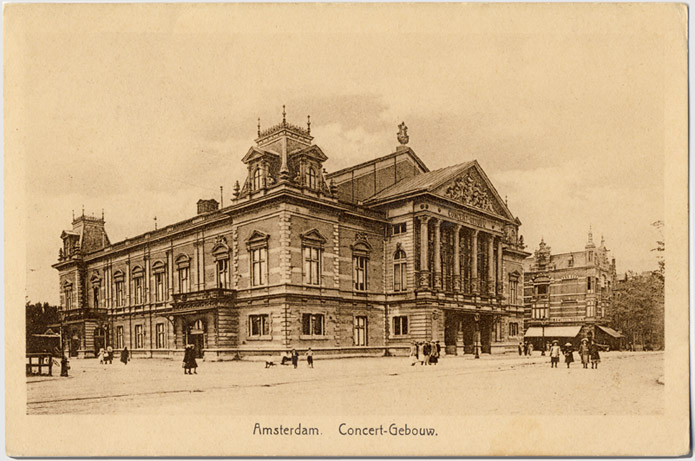
If tradition means not preserving the ashes but fanning the flames, in the words of Gustav Mahler, the Royal Concertgebouw Orchestra is celebrating its 125th anniversary with one foot firmly planted in the past and the other striding fearlessly into the future. Between a tour of six continents this season, the orchestra gave an anniversary concert on April 10 at its home concert hall, the Concertgebouw, founded the same year as the orchestra, in 1888, with an official opening on April 11. For modern-day residents of the Netherlands, this month also marks an important time in politics. Queen Beatrix will soon cede the throne to Prince Willem-Alexander, making him the country’s first King since 1890. The event honored the royal family, in attendance with Princess Máxima—soon-to-be Queen and the orchestra’s official patron—with red carpeting and black-tie dress. But the RCO, a crowned exception on the Netherlands’ tenuous landscape of budget slashes to the arts, does not take its status for granted. The entire proceeds of the concert, which featured three soloists—Thomas Hampson, Janine Jansen and Lang Lang—in a program of late 19th and turn-of-the-century repertoire alongside a new work by Dutch composer Bob Zimmerman, will be invested in educational outreach.

The RCO, which enjoyed close relationships with Mahler and Strauss under the 50-year tenure of Dutch conductor Willem Mengelberg, has not only kept this music flowing in its veins but performs in a hall which provides an ideal acoustic environment for the luxurious strings, golden brass and sumptuous dynamic architecture that emerges under Music Director Mariss Jansons (winner of this year’s Ernst von Siemens Prize, otherwise known as the classical world’s ‘Nobel’). The Concertgebouw was modelled after the Gewandhaus in Leipzig but, unlike its German counterpart, survived World War Two. Inaugurating a new era for the building, projection screens hung in gilded frames on each side of the stage, providing a canvas for historical images and artists’ commentary much in the style of the Beyond the Score series initiated by the Chicago Symphony or the multi-media presentations of the New World Symphony in Miami.

Hampson, before taking the stage for Mahler songs from the Knaben Wunderhorn cycle and Lieder eines fahrenden Gesellen, praised the RCO musicians on video for a “desire to be true to the master” that is “hugely more evident than in other places,” referring to composer as “one of their own.” The ambient whirring that opened and closed the footage may have lent his comments a clichéd tone, but the unforced beauty of the orchestra in Ging heut’ morgen übers Feld or the perfectly shaped rubati of Rheinlegenden lived up to the baritone’s elation. Hampson, one of few singers today who is able to capture Mahler’s searing irony, was at his best in the final Lob des hohen Verstandes, supported by the orchestra’s playful woodwinds and the fresh energy of its low strings. The swelling of individual lines that Jansons was able to achieve in Rheinlegenden found an even more powerful outlet in the suite from Strauss’ Rosenkavalier, penned in 1944 with the relationship of the Marschallin and Octavian at its center. Waltzes floated through the hall with warm nostalgia, and slow, tender passages glowed with burning intensity under Jansons’ inviting gestures.

He may be the only conductor who could have brought together string players from the Concertgebouw, his Bavarian Radio Symphony, the Vienna Philharmonic, and the Berlin Philharmonic—the latter being the only two orchestras where he guest conducts. The ensemble created an impressive homogeneity of tone in the Elégie from Tchaikovsky’s Serenade for Strings, with a silky pianissimo and crescendi that breathed further and further into celestial rapture. Saint-Saëns’ Introduction et Rondo capriccioso received an affecting performance with Dutch violinist Jansen as soloist, whose fierce communication powers lent fast passages vibrancy and spunk. Lang, having described the third movement of Prokofiev’s Third Piano Concerto onscreen as a “kind of war,” demonstrated a virtuosity so clean as to border on mechanical but created a wild energy with the orchestra in the final stretch.

Zimmerman’s Komt vrieden in het ronden, a neo-Romantic set of variations on a well-known Dutch folk song, fit well with the rest of the program and gave equal spotlight to all three soloists—an occasion that is not likely to be repeated. The audience laughed in amusement upon Hampson’s first entrance, while Lang was the King of Piano Cool as he read through the score. Jansen invested her lines with more personal expression in the music’s circular exchanges built on conventional harmonic schemes. The program opened with the prelude from Wagner’s Meistersinger von Nürnberg, which was performed for the inauguration of the building 125 years ago. Jansons drew a sound that was rich but never bombastic. The conductor’s humility was more than apparent during standing ovations for the extravagant occasion. Despite a high dose of old world charm, the evening was mostly memorable for the RCO’s fresh, exciting musicianship that invested even the most familiar Romantic works with new meaning. Surely this is the essential ingredient for every orchestra—even if it doesn’t bear the title of the “world’s greatest,” as bestowed by Gramophone Magazine in 2008—as its preserves its legacy while forging a path into the complex demands of the 21st century.

rebeccaschmid.info

The BSO—Helmless but Not Helpless

Thursday, April 11th, 2013

by Sedgwick Clark

The Boston Symphony Orchestra has taken its time in replacing James Levine, who stepped down as music director two years ago due to a back injury. While two years without a captain at the helm is hardly optimum, at least the orchestra has avoided Philadelphia’s precipitous mismatch of Christoph Eschenbach (2003-2008). Last week in the two concerts I heard of the three it performed at Carnegie Hall, the BSO demonstrated that it remains close to the top of its game, with its traditional warmth, tonal elegance, and ease of virtuosity firmly in place.

Wednesday’s concert (4/3), under Rafael Frühbeck de Burgos, the orchestra’s favorite guest conductor and Musical America’s 2011 Conductor of the Year, is close to my favorite program of the season. The BSO “owns” two of these works, both commissioned by its enterprising music director from 1924 to 1949, Serge Koussevitzky. The first, Hindemith’s Concert Music for Strings and Brass, Op. 50, deserves to be heard more often. It was one of several works the Russian conductor commissioned for the orchestra’s 50th anniversary in 1930—others being Stravinsky’s Symphony of Psalms, Roussel’s Third Symphony, Hanson’s Second Symphony (“Romantic”), Prokofiev’s Fourth Symphony, Copland’s Symphonic Ode, and works by Honegger, Respighi, and himself (anonymously). After hearing Koussevitzky reprise the Concert Music eight years later, Hindemith wrote in his journal, “I was pleasantly surprised by the piece, for I hardly remembered it. It is serious and very fresh, and not at all ugly.” He adds that the BSO is “the best orchestra in the world,” and one imagines that Frühbeck’s energetic, witty, deeply felt performance would only have bolstered the composer’s estimation.

The second BSO commission on the program, Bartók’s Concerto for Orchestra, needs little comment. It may be the last large orchestral work to enter the basic repertoire. Frühbeck received notably impassioned playing from all concerned, with especially pungent contributions from the woodwinds. Only at the very end did the orchestra come a cropper. Many conductors on record, beginning with Reiner, broaden the tempo at bar 616 for the climactic brass fanfare; Bernstein, Boulez, and others too numerous to mention wrong-headedly (in my humble opinion) follow suit, devitalizing the ending. That old literalist Leinsdorf in his 1962 recording—his first as the BSO’s music director—slams the coda home in tempo as Bartók indicates, which never fails to blow the roof off. Frühbeck’s players couldn’t seem to agree, and what should have been electrifying short-circuited.

Sandwiched between the Hindemith and Bartók works was another conservative 20th-century masterpiece, Rachmaninoff’s Rhapsody on a Theme of Paganini, played expressively by Garrick Ohlsson and partnered in kind by Frühbeck. While some might prefer more sec articulation and a slightly quicker pace to evoke the diabolical composer of the title, Ohlsson’s pianism was no less satisfying than in his performance with Atlanta and Robert Spano two seasons ago of the composer’s Third Piano Concerto.

All was right with the world as I left Carnegie after Daniele Gatti had led the second Boston concert (4/4) in Mahler’s Third Symphony (the following night he would lead an all-Wagner program). I was amazed at how easily I was able to suppress my usual Mahlerite niggling and surrender to the glories that Gatti accomplished. I was especially moved by the last movement, which flowed naturally—inevitably—and had just the right “saturated, noble tone” of the brass on the final page that Mahler demands. On the other hand, I felt that the tempo for the third-movement posthorn solo was a bit brisk to achieve the ideal nostalgia. Moreover, many quiet details such as the percussion in the first movement’s introduction were not audible because Gatti took pp marks too literally; recordings can ensure audibility, but live performance in a large space is something else entirely. Overall, however, the Bostonians sounded absolutely resplendent, and one cannot close without noting Anne Sofie von Otter’s evocative singing in the fourth-movement “Midnight Song” from Nietzsche’s Also sprach Zarathustra and the superb violin solos from second Assistant Concertmaster Elita Kang in this and the previous evening’s Rachmaninoff. A Mahler Third on such a high interpretive and technical level at Carnegie Hall makes life worth living.

Looking Forward

My week’s scheduled concerts (8:00 p.m. unless otherwise noted):

4/11 at 7:30. Avery Fisher Hall. New York Philharmonic/David Robertson; Pierre-Laurent Aimard, piano. Messiaen: Les Offrandes oubliées. Mozart: Concerto No. 23. Tristan Murail: Le Désenchantement du monde. Beethoven: Symphony No. 2.

4/11 at 7:30. Avery Fisher Hall. New York Philharmonic/Alan Gilbert; Joshua Bell, violin. Christopher Rouse: Prospero’s Rooms. Bernstein: Serenade (after Plato’s “Symposium”). Ives: Symphony No. 4

Appealing Promotional Videos

Thursday, April 11th, 2013

By: Edna Landau

To ask a question, please write Ask Edna.

Dear Edna:

First, thanks for your blog. I recommend it to folks all the time! And here’s my latest question: I was wondering if you could give us your perspective on what makes an effective musician’s publicity video – for both soloists and ensembles? I’ve been seeing such a variety of approaches, lengths and production values, it makes me wonder what you’re recommending these days. Thanks.

Angela Beeching, Longtime Edna fan and author, “Beyond Talent”

Dear Angela:

It is always a pleasure and an honor to hear from you. Thanks for the compliment on my blog. You bring up a very interesting topic, because there is no clear definition of what a typical publicity video might be. Many artists don’t have them at all. They choose to upload performances onto YouTube, or include them on their website as part of a media page, and that satisfies most of the presenters who are primarily interested in how they play, sing, or conduct in a variety of repertoire. If they have good videos of themselves engaging in outreach activities, those will often be posted as well. Finally, if they have clearance to post interview footage, they will include it in the mix. The latter gives a better indication of what they are like as communicators in a non-performing situation and acquaint the viewer with other aspects of their life that are important to them. It is still pretty uncommon for artists and ensembles to hire people to create a promotional video for them, partly because of the cost. It is far more common for artists who have recording affiliations to have videos that relate to a particular recording project, which are produced by the record company. Such videos might make you want to run out and buy the album, but you may not learn too much about the artist.

An ideal promotional video, in my opinion, will feature the artist speaking and performing, and may be embellished by some background footage and a narrative that weaves everything together. It will be joyful and energetic, or insightful and moving in a way that compels you to watch until the very end. It will give a good idea of what makes the artist tick and reflect the passion and commitment that fuel their artistry. A length of three to seven minutes seems to work well. Some artists who may not have had the means to hire someone to produce a video from scratch have obtained the rights to video footage from interviews and edited it down, primarily showing them talking, but not the interviewer. The more successful ones include performance samples or the artist playing in the background. I found two that I particularly liked, which are both of violinists: Vilde Frang and Madalyn Parnas. Ms. Frang’s video was posted by her general management, Askonas Holt, who call it a “video biography”. It features the young violinist rehearsing the Bruch Concerto No. 1 with the Philharmonia Orchestra and Jakob Hrusa, interspersed with comments by Ms. Frang, seemingly excerpted from an interview, which include reflections about the importance of being inspired and the broad variety of potential sources for inspiration, all articulated in a soft but compelling way that draws the viewer in. Ms. Frang’s apparent wisdom beyond her years, and her beautiful playing, convinced me over the course of the seven minute video that I must be sure not to miss her next appearance in New York. I was introduced to violinist Madalyn Parnas by Portrait of a Violinist: Madalyn Parnas, which was created by Steve Torres, a friend who she met at Indiana University. He loved the idea of tagging along with her on the day of a concert in New York and decided to interview her and make the video as an independent project. This video has some background playing by Ms. Parnas and some attractive glimpses of New York City, but very little actual performance footage. Still, one is captivated by Ms. Parnas as a person, right from the start of the video when she says: “From the very beginning I was passionate about music.” Her passion is palpable, as are her charm and energy. The video ends with her saying: “What a blessing to be able to make music your profession.”  In between, she speaks about the joy of working with living composers and her new recording with her sister and duo partner, Cicely, with whom she is briefly viewed in a new music performance. Madalyn comes across as genuine, modest, and extraordinarily dedicated to her craft. The bits of playing in the background reinforce the impression of a serious artist but in this video, it is the sheer force of personality that captivates the viewer.

In general, there seem to be more ensemble promotional videos than soloist ones. The majority of ensemble videos I have viewed seem to have been produced in an effort to clarify the mission and vision of groups whose names and instrumentation alone might not give a clear enough idea of their identity. One such ensemble is Time for Three, whose promotional video, only three minutes long, is chock full of energy and dynamism. It starts with them entering the stage with Christoph Eschenbach at a Philadelphia Orchestra concert and ends with a whopping quote from Sir Simon Rattle. (Other impressive quotes are also intermittently flashed on the screen.) In between, they are seen talking, performing and interacting with one another, always exuding a sense of fun. I encourage you to watch it since no description really does it justice.  Classical Jam, a hard to define chamber group whose core musicians perform on violin, viola, cello, flute and percussion, regularly collaborate with other top-notch musicians in a variety of concert formats, in which they work closely with presenters towards the important goals of community building and arts advocacy. They recently produced a video to demonstrate an interactive feature of some of their concerts, which they call the Master Jam. It begins with an explanation of who they are, and has many well-chosen images which relate to these goals and clearly demonstrate the wonderful impact that the ensemble has on its audiences. Their energy and joy are abundantly evident from the start. The background music which runs throughout the three minute video is very appealing and it ends with Classical Jam’s mission and vision statement. The group’s cellist, Wendy Law, told me that they worked with a filmmaker, Natasha Marco, who is a friend and supporter of Classical Jam. She indicated that a video of this sort might cost in the area of $1000. She also offered the following advice: “The most important tip in creating a video is to find a clear and concise narrative. We want the viewers to come away knowing a little more about who we are and WHY we do what we do. Having a great collaborator who truly understands your vision is also extremely important in creating the video.”

You didn’t ask about composer videos but I heard about one that I found most ingenious and refreshing. It features the composer Gregg Kallor playing his own “Espresso Nirvana”, which is part of a suite he wrote about a day in New York City, “A Single Noon”, inspired by an Emily Dickinson poem by that name. Whether or not you are a coffee lover, you are likely to be motivated to check out this gifted young composer and learn more about his music.  And finally, for sheer fun, I suggest you watch a marvelous little video treat produced by the Zurich Chamber Orchestra. Enjoy!

To ask a question, please write Ask Edna.

© Edna Landau 2013

Using Existing Recordings–Not So Fast!

Wednesday, April 10th, 2013

By Brian Taylor Goldstein, Esq.

Dear Law and Disorder:

A few weeks ago you wrote a great article about how to obtain a mechanical license when someone wants to record music. But what about using a recording that already exists? We would like to promote an upcoming concert at our venue by putting some recordings of the artist on our website. Since the artist gave us the recordings, are we ok?

Thanks…and no, you may not be ok.

Any time you want to use an existing recording of a composition, whether to put on your website, or as a soundtrack to a film or video, you will need to get permission (aka “a license)” from the composer (which often means contacting the composer’s publisher) as well as permission (aka “a license”) from the owner of the recording (which is often a record label.) That’s right, you may need to get two separate licenses! Why? Because copyright law creates a separate copyright in compositions and a separate copyright in the recording of a composition.

Just because an artist or an artist’s manager gives you a recording and gives you permission to use that recording, doesn’t mean that the artist owns the recording or has the rights to give. Even if it is a recording of the artist’s own original composition or if the composition itself is in the public domain, the artist may not own the recording. In which case, the artist cannot give you permission to use it, much less the artist’s manager.

Shortly after I posted the earlier blog you mentioned (The Mechanics of Mechanical Licenses, March 6, 2013), Peter Christ of Crystal Records Inc. (http://www.crystalrecords.com) sent me an email which exactly and accurately addressed this issue. He graciously agreed to let me post it here:

Your explanation was very clear and should help those who want to record music that is not public domain. However, it does not address the situation of a person who wants to use a recording already made, and on a record label, for their web site or their movie or other background music use. It should be made clear that the publisher needs to be contacted and ALSO the record label or other copyright owner of the recorded music.

We sometimes find out that our copyrighted recordings are being used as background music for films or on someone’s web site. This is not legal without our permission, and when it is discovered, the legal expenses can be very high for the perpetrator.


Some people want to do it right, and we frequently get requests for license to use our recordings for films, web, etc. We always appreciate that someone is honest and knowledgeable enough to request a license. However, in most cases, they do not realize they need a license both from the record company and from the publisher of the music. And in many cases, the music was recorded under an AFM contract and additional payment must be made through the union to the musicians on the recording. It should be pointed out that even if the music itself is public domain, the recording is most likely not, so permission from the record company, and possibly the union, is definitely needed. So the two minutes or so they want to use can get quite expensive.

Thank you for your excellent column in Musical America.

See, I don’t make this stuff up just to make your lives complicated! Bottom line, when it comes to music rights there are three rules: never assume—always ask—and know who to ask.

__________________________________________________________________

For additional information and resources on this and other legal and business issues for the performing arts, visit ggartslaw.com

To ask your own question, write to lawanddisorder@musicalamerica.org.

All questions on any topic related to legal and business issues will be welcome. However, please post only general questions or hypotheticals. GG Arts Law reserves the right to alter, edit or, amend questions to focus on specific issues or to avoid names, circumstances, or any information that could be used to identify or embarrass a specific individual or organization. All questions will be posted anonymously.

__________________________________________________________________

THE OFFICIAL DISCLAIMER:

THIS IS NOT LEGAL ADVICE!

The purpose of this blog is to provide general advice and guidance, not legal advice. Please consult with an attorney familiar with your specific circumstances, facts, challenges, medications, psychiatric disorders, past-lives, karmic debt, and anything else that may impact your situation before drawing any conclusions, deciding upon a course of action, sending a nasty email, filing a lawsuit, or doing anything rash!

Dudamel’s Development

Thursday, April 4th, 2013

by Sedgwick Clark

Gustavo Dudamel and the Los Angeles Philharmonic – America’s hottest orchestra/conductor team – breezed through New York last week for a pair of sold-out concerts they had just performed in LA, London, Lucerne, and Paris. Dudamel is a bona fide star. Now 32, he draws a younger-than-usual audience, and cheers erupted when he walked to the podium. But nothing in his demeanor indicates that this acclaim has gone to his head; he even appears bashful about it. True to his El Sistema upbringing, his commitment to music education is unwavering, and nothing in the American publicity mill will deter it. His conducting style is understated, with minimal gestures, and when the performance ends he walks through the orchestra to single out important soloists and entire choirs. He’s one of the gang, and he respects each and every one of them. He’s got the goods, and what’s happening on that other coast should be followed with great interest by the faltering music business.

He loves contemporary and 20th-century music, and all the works he conducted in New York fit that bill. Indeed, the first of the Lincoln Center concerts (3/27) was the local premiere of a single, extraordinarily ambitious work: John Adams’s oratorio The Gospel According to the Other Mary (2011-12). Many consider Adams a great composer, an opinion I wish I could share. His new work, lasting over two and a half hours, stretched the limits of boredom as few performances I can recall – not since Carlo Maria Giulini led this same orchestra in a full-hour, headache-inducing distention of Beethoven’s Eroica at Carnegie Hall 34 years ago.

For fuller, more gentlemanly analyses of the Other Mary, read George Loomis’s report (3/29) on the Musical America Web site and Anthony Tommasini’s in the Times (3/30). But even they were quite mixed over the sprawling structure of librettist and director Peter Sellars’s amalgam of poetry. Sellars is a brilliant thinker and talker, as he demonstrated once again in a pre-concert discussion, but noble ideas do not a viable libretto make, as this team so excruciatingly demonstrated with the opera Doctor Atomic. However, my concern here is about the musical element of the piece, not the political or religious matters – or Sellars’s distracting staging – that upset some of the reviewers I googled. I simply was not emotionally engaged by the way Adams arranged the notes.

The score is structured in two parts. The first part is the longest, and except for a couple of brief Orffisms I waited in vain for memorable melodic inspiration. The second half seemed to acquire a more angular rhythmic profile, perhaps because the deadline was encroaching and the motoric wisps of Stravinsky, Orff, and even Janáček that dot Adams’s earlier works asserted themselves more readily. (Tommasini heard “recognizeable inspirations, like big-band jazz, Bach, Copland, Ives, Ravel and more . . . .”) Whatever the case, Dudamel and the Angelinos acquitted themselves brilliantly as far as I could tell, and Deutsche Grammophon recorded the work in March.

Dudamel’s second concert (3/28) began with an ugly piece called Zipangu (1980), by Canadian composer Claude Vivier. According to the program book, Vivier’s “own style synthesized many characteristics of Debussy’s and Stravinsky’s music.” Nonsense.

The real music ensued with a rather soggy rendition of Debussy’s La Mer and a detailed and expressive (or, if one didn’t like it, slow and meandering) performance of Stravinsky’s complete Firebird (1910). While I prefer the greater intensity and drama of the composer’s recorded performance, which is tighter by five minutes, there were plenty of gorgeous moments to savor throughout the score in Dudamel’s conception, from the lovely “Round dance of the princesses” to the exciting “Infernal dance of Kastchei’s subjects,” which provoked applause at its wild conclusion.

An interesting detail: Stravinsky added two snarling trombone glissandi near the end of the Infernal dance in his 1919 Suite, which is the way the Firebird music is most often performed, and he retained it in his longer 1945 Suite. Neither the complete 1910 ballet music nor the 1910 Suite versions include the glissandi, but Dudamel added them (as well as, he told me later, other scoring details from the 1919 version that I didn’t notice), and they fit just fine. Why didn’t anyone else – including the composer himself ex post facto – think of this?

Looking Forward

My week’s scheduled concerts (8:00 p.m. unless otherwise noted):

4/4 Carnegie Hall. Boston Symphony/Daniele Gatti; Anne Sofie von Otter, mezzo; Tanglewood Festival Chorus. Mahler: Symphony No. 3.

4/5 at 7:00. Metropolitan Museum. New York Philharmonic Contact Concert/Alan Gilbert; Liang Wang, oboe. Unsuk Chin: Gougalon. Poul Ruders: Oboe Concerto. Anders Hillborg: Vaporized Tivoli. Yann Robin: Backdraft.

4/8 at 7:30. Symphony Space. Cutting Edge Concerts New Music Festival. Loadbang; Kathy Supove, piano; Oleg Dubson, actor. Alexandre Lundsqui: Gutteral I and II. Douglas Gibson: Fanfare for the Common Audience. Reiko Füting: Land of Silence. Andy Ahiko: LOVE LOST LUST LONE. Victoria Bond: The Page Turner. Hanna Lash: Stoned Prince.

4/11 at 7:30. Avery Fisher Hall. New York Philharmonic/David Robertson; Pierre-Laurent Aimard, piano. Messiaen: Les Offrandes oubliées. Mozart: Concerto No. 23. Tristan Murail: Le Désenchantement du monde. Beethoven: Symphony No. 2.

Requiem aeternam

Thursday, April 4th, 2013

By Rebecca Schmid
The Festtage of the Staatsoper Berlin, founded by Daniel Barenboim in 1996, is not officially an Easter Festival. But while the Berlin Philharmonic left the Philharmonie for some mountain air (taking up residence for the first time this year in Baden-Baden), the maestro— between conducting the first full cycle of the Cassiers/Bagnoli Ring production, which has unfolded between the German capital and Milan since 2010—presided over ensembles of both the Staatsoper and La Scala in two different Requiem masses.

The pianist and conductor, currently music director of both opera houses, opened Mozart’s Requiem on April 1 with W.A.’s last piano concerto, KV 595. The Staatskapelle’s rich warm, strings lent the music great strength—particularly in forte passages—while gentler nuances could have been more florid and secretive. Still, the balance with the piano was ideal in the opening Allegro. Barenboim brings a wonderful spontaneity to his performances—even if there were a couple of smudges on the keyboard—and he masters the Staatskapelle’s full-bodied sound with a firm but giving hand. The final Allegro movement, which opens deceptively with a variation of the chirping song Komm, lieber Mai, attained a mysterious quality that provided a captivating bridge to the Requiem, where Mozart could no longer take refuge in the childlike playfulness that masks a complex spectrum of emotions in other late works.

The mass, which lay unfinished on the composer’s deathbed, conveys a God-fearing sense of his own mortality. It is not until the bright E-flat major triad of the Sanctus movement, completed largely by Mozart’s contemporary Frank Xaver Süßmayer, that the light of day shines. There is nothing operatic about the work—one of several masses Mozart wrote between 1768 and 1791. As penetrating as the voices of the Staatsoper chorus were, one almost wished for a more penitent approach. Of the soloists, it was René Pape and Bernarda Fink—respectively the lower male and female voices—who captured the music’s demands for internal spirituality.

Rollando Villazòn seemed to vie for attention with his hystrionic facial expressions, so it was all the more excruciating when he switched suddenly from head to chest voice mid-entrance in Tuba Mirum. He managed to push above the ensemble later but it seems unlikely his timbre will ever recover the luster it bore pre-vocal crisis. Soprano Maria Bengtsson lent every line a pretty, creamy sound, but her inflections were often mannered. The Staatskapelle performed with increasing intensity, investing Domine Jesu Christe with an incision that drove to the heart of the music. Barenboim brought the final Lux Aeterna to a spaciously paced close.

Verdi’s Requiem, performed March 30 with the orchestra and chorus of La Scala, is unarguably the more theatrical of the two masses, emerging in the 1870s when the composer wrote no new operas. Verdi, moved to complete the work upon the death of his literary hero Alessandro Manzoni in 1873, nevertheless commented modestly that with so many Requiem Masses “there’s no point to writing one more.” He was wrong. His Dies Irae is one of the most petrifying moments in musical history, the chorus descending into a fiery pit of swirling strings and brass so demonic that even Wagner looks tame. The effect was nearly ear-numbing from my seat on the balcony above the stage, but I couldn’t miss the chorus’ homogeneity of tone and commitment to every syllable.

Daniela Barcellona gave a lesson in rich shading, carrying effortlessly across the hall in her solo of the second Dies movement. Soprano Maria Segreta, stepping in last minute for Anja Harteros, has a sweet timbre that sometimes struggled to hold its own alongside the voluminous mezzo, although it’s impossible for me to judge properly given the acoustics from my seat. They struck a placid balance in Agnus Dei. Pape was his usual serene self, and tenorissimo Fabio Sartori rounded out the ensemble with a penetrating but unpretentious tone. The musicians of La Scala made clear how deeply this music flows in their veins, phrasing with an unforced fluidity worthy of the highest Kunstreligion.

rebeccaschmid.info