Archive for 2012

Hearing the Artist’s Voice

Thursday, November 15th, 2012

By: Edna Landau

To ask a question, please write Ask Edna.

One of the questions I am asked most frequently when I meet with students at music schools and conservatories is: How important is it to have a website? I increasingly tell them that it is very important. The challenge for a musician who is still a student is to generate enough information to fill a website, especially if they have only a few, or even no reviews, and their performance calendar is very sparse. Recently, I had the pleasure of meeting with performance psychologist Dr. Noa Kageyama’s Performance Enhancement class at the Juilliard School. The students are all Masters students. In preparation for the class, I asked Dr. Kageyama to give me their names so that I could get to know them a little online before meeting them in person. Only four out of eighteen had websites but one really stood out from the rest. It was created by double bassist Corey Schutzer, whose performance experience to date is largely as a collaborative bassist. He does not yet have a very busy performance schedule and there are no reviews on the website, yet he does have some impressive quotes on the home page, a very interesting and unusual performance sample on the Media page, and a sincerely written page entitled “Teaching Philosophy”, which should help him find new students. He generously lists links to resources that other bassists might find helpful. Most importantly, he succeeds in achieving a warm, personal style of communication and he impressed this reader with his expressions of gratitude to all those who have helped him reach this point in his career. I particularly liked how this was reflected in his bio on the About page, written in the first person. (He was wise, however, to add a more traditional short bio, suitable for downloading by presenters.) I also admired the overall design and the varied and high quality photos (by a violinist and Juilliard graduate, Arthur Moeller). Corey subsequently told me that he used a Wix.com template for the website, which he didn’t find too challenging, but that he spent considerable time composing the content and getting it all organized on the site. The most interesting thing for me was learning from Corey that going through the exercise of creating the website was a major step forward for him, as it reaffirmed the positive things about his career to date, and the process of expressing himself in writing also served to build his overall confidence in representing himself to others.

All of this got me thinking that anyone who interacts with artists, emerging as well as established, wants to hear that artist’s inner voice. We want to know what they are really like, what inspires them, and in the case of their concert performances, why they chose the program they offered. Since I was captivated by Corey’s first person bio, I spoke to a few presenters to see if they would ever print such a bio. The answer was negative, largely because they felt that their audience wants to read something more objective and it is hard for an artist to write objectively about themselves. I concur that it becomes increasingly difficult as an artist amasses more accolades and their writing may come across as bragging. However, what I did hear from presenters is that they are extremely interested in reflecting in their programs the thought behind the chosen program and that they welcome receiving this input in the artist’s own words. At Carnegie Hall, this may appear in the section of the program entitled At a Glance. It is even possible that a bit of biographical information might be included if it is relevant to the choice of program. Hanna Arie-Gaifman, Director of the 92nd Street Y’s Tisch Center for the Arts, told me that she has sometimes interviewed artists prior to their performance and printed a short introduction to them in the program, if she felt that the audience would benefit from knowing more about them. Clark Morris, Executive and Artistic Director of the Harriman-Jewell Series in Kansas City, told me that they encourage artists to contribute their thoughts about the chosen program and even write program notes, if they so desire. They regularly do a question and answer session on stage after the concert to further familiarize the audience with the performers and gain insight into the program they just performed. He also told me that he has been speaking with artist managers about producing short video clips for their artists in advance of a tour that would explain what the music means to them. He envisions something simple and authentic, not slick or overly produced. He would then post the video clips on his website, to complement the informative notes he already has there.

The message here seems very clear. In addition to practicing and honing their performance skills to the highest levels possible, artists (especially young ones) need to reflect about themselves and their artistic choices, and become comfortable sharing with others who they are and what drove them to make those choices. If they devote proper time to helping audiences get to know them, they will be successful in building a dedicated and ever larger following.

To ask a question, please write Ask Edna.

© Edna Landau 2012
Not Even God Can Act Without A Contract!

Wednesday, November 14th, 2012

By Brian Taylor Goldstein, Esq.

No sooner had Super Storm Sandy begun crashing into the East Coast when my phone started ringing with cancellations. The most common question went something like this: “The presenter needs to cancel, but they already paid a deposit. Do we have to give it back? What the protocol?” The second most common question went something like this: “We booked an artist and paid a deposit. We’re being evacuated and need to cancel. Can we get the deposit back? Naturally, I always ask to see the contract. As I suspected, in almost each case, while the contract contained an Act of God clause, it merely stated that either party could cancel “in the event of an Act of God.” In an effort to “keep things simple” the parties also kept their contracts fairly worthless!

In essence, an Act of God provision in a contract (also sometimes called “force majeure” is a contractual provision which permits one party to cancel or breach the contract without having to pay damages or incurring any liability to the other. So, if an Act of God forces an artist to cancel, he/she is not liable to the venue for the venue’s lost ticket sales, lost out of pocket costs, or the costs of hiring and advertising another artist or performance. Similarly, if the Act of God forces the venue or presenter to cancel, it is not liable to the artist for the artist’s lost fees or out of pocket costs. However, nothing in the arts is ever that simple! Many people, incorrectly, assume that there is a common understanding or standard of Acts of God and that, in the event of a fire, blizzard, flood, or other unforeseen event, there are automatic protocols which will govern the situation. In fact, you will find that presumptions and assumptions differ wildly when it comes to Acts of God and that people, in the midst of a crisis, tend not be at their most rational. I’ve had presenters argue that poor ticket sales were Acts of God or that the death of an artist’s mother didn’t mean that the artist herself could not perform. I’ve also had an artist claim that an unexpected opportunity to perform at a better venue was an Act of God entitling her to cancel. I even know of a manger who claimed that the failure of his artist to obtain a visa was an Act of God and the artist should still receive her full fee even though she could not legally enter the US!

While no contract can even contemplate every possible scenario, you want your Act of God clause to do more than simply state that “either party can cancel “in the event of an Act of God.” Rather, you want your clause at least to provide some basic definitions and parameters: Let’s assume the venue is open, but the artist cannot get there due to a storm. Does the artist have to reimburse the presenter for any of its lost marketing expenses or costs? If the artist had already received a deposit, does it have to be returned? What if it’s the presenter’s venue is flooded, but the artist is ready, willing, and able to travel and perform? Does the presenter have to make a good faith effort to re-book the artist at a future date? Can the artist keep any deposits or advanced payments to offset the cancellation? Can an artist use an Act of God Force clause to cancel an engagement due to the death or injury of a family member or relative? Can a venue claim an Act of God if it experiences an unexpected budget shortfall or a financial crisis? What if the engagement is for a series of performances and a fire, storm, or flood forces the cancellation of only some of the performances? Is the artist’s engagement fee reduced on a pro-rata basis? What if the artist is a group and a member becomes sick or injured? Does the group have the option to find a replacement or can the venue claim an Act of God and cancel? Does it make a difference if it’s a key member of the group?

As I frequently like to remind everyone, in the arts world nothing is standard and everything is negotiable! Anyone who tells you otherwise, just wants you to do things their way. However, while there is no legally enforceable list of standard protocols or procedures which governs how things are “supposed” to happen in any given crisis, I’d like to believe that relationships are more important than contracts and, ultimately, what you are entitled to may be less important than what you have to offer.

_________________________________________________________________

For additional information and resources on this and other legal and business issues for the performing arts, visit ggartslaw.com

To ask your own question, write to lawanddisorder@musicalamerica.org.

All questions on any topic related to legal and business issues will be welcome. However, please post only general questions or hypotheticals. GG Arts Law reserves the right to alter, edit or, amend questions to focus on specific issues or to avoid names, circumstances, or any information that could be used to identify or embarrass a specific individual or organization. All questions will be posted anonymously.

__________________________________________________________________

THE OFFICIAL DISCLAIMER:

THIS IS NOT LEGAL ADVICE!

The purpose of this blog is to provide general advice and guidance, not legal advice. Please consult with an attorney familiar with your specific circumstances, facts, challenges, medications, psychiatric disorders, past-lives, karmic debt, and anything else that may impact your situation before drawing any conclusions, deciding upon a course of action, sending a nasty email, filing a lawsuit, or doing anything rash!

Drama Queen of the Year visits Berlin

Monday, November 12th, 2012

By Rebecca Schmid

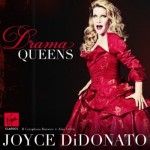
Fans of Joyce DiDonato may find it hard to fathom that one of today’s leading bel canto singers and Musical America’s Vocalist of the Year is just spreading her stardom to Germany. The Kansas native has sung only once at a Berlin opera house, performing Rosina in Il barbiere di Siviglia at the Deutsche Oper, and made her recital debut in the German capital last spring. Fortunately for us northerners, she is reversing the trend with a tour around her new album, Drama Queens (released on Virgin records). Together with the ensemble Il Complesso Barocco, she made the Konzerthaus Berlin her third stop on November 7 after traveling through the German cities of Baden-Baden and Bremen. The concert travels on to Hannover and Vienna before coming stateside.

DiDonato revisits a passion for baroque with this project, which compiles the arias of abandoned, forlorn and vengeful queens. The result plunges the listener into the tortured emotional world of a female archetype that provided the backbone of operas from Handel’s Giulio Cesare to Octavia by the little-known composer Reinhard Keiser, not to mention the many Italian composers who grounded the tradition. As DiDonato explained at the end of the recital, credit goes to Il Complesso Barocco founder Alan Curtis for spending “a lot of time in dusty libraries.” The conductor, apparently conserving his energy, was not present for the Berlin concert and ceded direction to the concert master Dmitry Sinkovksy.

The somewhat bare stage of the Konzerthaus’ main hall contrasted with DiDonato’s regal appearance in a red corset dress by Vivienne Westwood, which expanded into a full-scale bustle for the second half of the concert. The program, at least from a dramaturgical perspective, seamlessly alternated arias selected from Drama Queens with instrumental interludes. While the singer appeared somewhat nervous sitting onstage during a Scarlatti Sinfonia which proceeded her opening, a sensual account of the Cesti aria “Intorno all’idol mio,” she immediately abandoned herself to the role of the spurned queen Ottavia upon rising for the Monteverdi aria “Disprezzata regina.” The original instruments of Il Complesso Barocco underscored her mix of self-pity and rage with groaning textures.

One of DiDonato’s most powerful moments emerged in “Piangerò la sorte mia” from Handel’s Giulio Cesare. DiDonato’s powers of expression easily rise to the ranks of singers such as Beverly Sills and Cecilia Bartoli who have championed this role. The nearly choked timbre of her perfectly restrained pianissimo in the da capo section reached the tear jerking point with a break in accompaniment on the final line “finché vita…in petto avrò” (as long…as I have life in my breast). She brought the same dramatic depth and technical control, trilling precisely in time with Sinkovksy, to a more rare musical gem, the Giacomelli aria “Sposa, son disprezzata,” in which the Princess Irene of Trebisond laments her unfaithful husband (not an uncommon sentiment in this compilation).

The aria “Madre diletta, abbraciami” by the Venetian Giovanni Porta’s Ifgenia in Aulide emerged with lyricism perfectly sul filo from DiDonato and elegant phrasing from Sinkovksy, who savoured his melodies increasingly as the evening unfolded. His performance was at its best in Vivaldi’s “Pisendel” Concerto as his baroque violin seemed to weep in the slow inner movement. The Orlandini aria “Da torbida procella,” the opening track of Drama Queens, followed smoothly with its propulsive, storm-tossed textures evoking the Queen Berenice’s infatuation with the Emperor Titus.

DiDonato closed the concert with “Brilla nell’alma” from Handel’s Alessandro, an especially compelling number in the German composer’s artful assimilation of what the album’s program notes explain was the newly fashionably Neapolitan style with its static chordal accompaniment. As on recording, DiDonato soared through rapid coloratura runs that capture Rossane’s glee in having pinned down Alexander the Great and gave a purely instrumental cadenza, audibly shaped by the natural sounds of Il Complesso Barocco.

As a first encore, DiDonato offered the melancholic aria “Lasciami piangere” from Keiser’s Octavia, joking that Obama’s re-election allowed her to express the protagonist’s wish to cry and die in solitude without actually having to mean it. The following account of Berenice’s vengeful aria “Col versar, barbaro, il sangue,” in which the Queen threatens suicide upon the Emperor’s announcement that he won’t marry a woman of non-Roman heritage, brought the group together with even more electric energy than in the body of the concert. The audience was clearly smitten by her natural thespian presence. A reprisal of “Da torbida procella” ended the evening on a more uplifting note in matters of imperial love.

rebeccaschmid.info

A Dance Labyrinth by Kyle Abraham

Sunday, November 11th, 2012

By Rachel Straus

The world premiere of Kyle Abraham’s Pavement, seen at the Harlem Stage Gatehouse on November 3, evokes a vision of urban youth careening through a dark world. Abraham begins Pavement by marking a spot with his downcast arm.  Then he lassoes his body, drawing a circle with his outstretched limbs. He moves loose, full force and in searching manner, as if looking for a clear compass. When a white dancer enters, he stops Abraham, lies him face down on the floor, and brings his hands to the base of his spine. Abraham’s arrest is done without emotion. This lack of drama makes the event feel doubly devastating.

Pavement’s racially provocative introduction occurs to the accompaniment of Fred McDowell’s rasp-voiced blues song “What’s the Matter Now.” Its lyrics suggest impending violence, but the brutality in Pavement never occurs on stage. It transpires through sound bites from John Singleton’s 1991 crime drama Boyz n the Hood in which young men lose their lives to gang violence.

The recent violence of Hurricane Sandy robbed Pavement of its intended set design. Yet the square stage’s red outline and the presence of a basketball hoop, whose backboard occasionally projected visions of a housing project, gave the 70-minute work a clear sense of place. Abraham’s casting—four black male dancers (Abraham included), two white male dancers, and one black female performer (the powerful mover Rena Butler)—augured a dance about race. Yet Pavement is far from being a modern-day West Side Story. A tale of black against white never comes to the fore. Like T.S. Eliot’s modernist poem The Wasteland, Abraham creates scenes that don’t necessarily fit together or have clear beginnings and endings. They are snippets of everyday life (Abraham asking for a dollar) and dream evocations, in which his remarkable dancers’ limbs weave in and out of each other to the accompaniment of a red strobe light.

Pavement’s stream of conscious structure is also created through a collage of 12 pieces of music. The recorded selections include a J.C. Bach and Mozart aria (performed by the French tenor Philippe Jaroussky), two ballads by Sam Cooke, and an excerpt from Benjamin Britten’s opera Peter Grimes (about homosexual oppression). Almost all of the musical selections, listed in the playbill by the composers’ names only, carry metaphorical weight. Unfortunately, it requires research to understand the connections Abraham is making between the music and his messages regarding the slipperiness of love, gender and race.

In the program notes, Abraham excerpts a quote from W.E.B Du Bois’ 1903 Souls of Black Folk. Du Bois developed the theory of a black person’s double consciousness. He called it the veil. When Abraham’s dancers do the high five, the gangsta walk, and behave too cool for school, they appear to be acting out today’s veil. When they launch into pure dancing sections, they move beyond coded acts of identity. They become unveiled.

Pavement ends with a pile up of bodies. The dancers, however, don’t look dead; they appear to be sleeping, lulled by the sound of Donny Hathaway singing “Some Day We’ll All Be Free.” Here again Abraham transforms a violent image into one that is doubled or fractured in meaning. This shirking of didacticism makes Pavement more porous than concrete. Here is a dance work that becomes a labyrinth, one that is as puzzling as it is fascinating.

Brahms Days in Tutzing

Thursday, November 8th, 2012

The Wetterstein range, with Germany’s highest mountain, the Zugspitze, viewed across Lake Starnberg from Tutzing

By ANDREW POWELL
Published: November 8, 2012

MUNICH — Johannes Brahms came here in 1870, catching the completed half of Wagner’s Ring and hobnobbing with colleagues, Liszt among them. He basked in new celebrity, his German Requiem having appeared in print a year earlier. The visit ended with a few days’ repose at Lake Würm, nearby.

He came again three years later. Der Ring remained incomplete, but in any case he sought other things: a meeting with poet Paul Heyse, guidance on writing for orchestra from conductor Hermann Levi (whose brother ran his asset portfolio), and more time at the deep tranquil lake (pictured), with its southward vistas to the Alps. Levi duly helped in the city, and the composer checked in in May for a four-month lakeside stay in the fishing village of Tutzing, lately reachable from downtown by train.

Brahms: “Tutzing is prettier than recently imagined … . The lake is usually blue, but a deeper blue than the sky … also the chain of snowy mountains — one cannot stop looking at them.”

Tutzingers take pride in this Brahms connection. It produced the Haydn Variations and gave life to the two long-stalled, minor-key string quartets. At a stretch, you could say the sojourn nudged Brahms over thresholds in both his orchestral and chamber music. It saw too the premiere of the Acht Lieder und Gesänge, Opus 59.

Settled in the 6th century by families called Tozzi and Tuzzo, Tutzing sports a lakeshore Brahms promenade, a Brahms memorial, a Brahms apothecary and, not so inevitably, a Brahms festival.

This last, dubbed Tutzinger Brahmstage, had an abortive start in the 1950s on the initiative of anti-Semite and “pronounced National Socialist” pianist Elly Ney. Later, much later, artist manager Christian Lange put the festival on an annual fall footing with modest strata of local government support. Sometime in between, Lake Würm officially became “Lake Starnberg.”

But music festival visitors to handsome Tutzing face a number of ponderables. A walk of homage along the spectacular promenade, for instance, finds the composer honored in flat stone between lake and Alpine view benches, a pleasing effect until you turn and see, lurking just feet away, a grand memorial to the Nazi pianist with high bronze bust and trellised garden.

Choosing when to visit confronts the problem of five events spread around three weekends, not the Ojai-like “days” timeframe suggested by the festival name. (A Carl Orff Festival in the next municipality, where that composer is buried, does better in this regard and supports its local hotels.)

Then there is the matter of programming. Tutzinger Brahmstage 2012, which has just ended amid blazes of fall color and a run of blue skies, favored rings around the composer in place of any survey. Mostly Brahms it was not. Brahms and jazz (a concert on Oct. 18) go together like Mahler and reggae. The lone string chamber work offered, the G-Major Sextet (Oct. 14), got lumped with an unneeded reduction for the same forces of Beethoven’s Pastorale Symphony. Baritone Michael Volle diluted his Liederabend (Oct. 21) with warhorses of Mahler, lessening the time to explore Brahms’s vaster output for voice.

On Oct. 26, though, festive impulses and programming logic coalesced nicely. Someone had recalled that Brahms wrote organ music and had invited Vienna-based Renate Sperger to play the 3,000-pipe, 28-year-old Sandtner organ of Tutzing’s neo-Baroque St Joseph’s Church, an instrument with ripe sound and tight, unobtrusive action.

Her program contrasted Johann Nepomuk David’s quasi-cartoonish 1947 Partita on Es ist ein Schnitter, improbably a heartfelt tribute to a friend he lost in combat, with a row of Brahms chorale preludes. Six of these, concluding with O Welt, ich muß dich lassen, were from Opus 122, the chiseled and ashen collection penned a year before the composer died. At midpoint came Brahms’s early but resolute Prelude and Fugue in A Minor, WoO 9 (1856), while two Bach staples — the Fantasia and Fugue in G Minor, BWV 542, and the Toccata and Fugue in D Minor, BWV 565 — framed the evening.

Sperger traced the excesses of the David with calm efficiency and savored introspection in the chorale preludes, abetted by Sandtner’s suave apparatus. In the Bach pairings, she wrought requisite thunder and scaled the quilted fugal flights with unbroken legerdemain.

On the evidence of this year, Tutzinger Brahmstage holds potential in reserve, not least for local businesses. Brahms’s music, particularly the vocal and chamber scores, suits an intimate meeting place, and Tutzing has an authentic claim as a host town, with viable concert venues in St Joseph’s Church and the Evangelische Akademie, its idyllically sited former palace. A focused few days and a sculptural clean-up on the promenade could work wonders.

After leaving Tutzing and Munich in 1873, Brahms returned home to Vienna. There he led the Philharmonic in the November premiere of the Haydn Variations, an orchestral triumph from which he never looked back.

The next month he was once more in Bavaria, to pick up mad King Ludwig II’s Maximilian Medal for Art and Science. Wagner got his at the same time. Who knew? Perhaps Ludwig thought equally highly of both of them.

Photo © Tourismusverband Fünf-Seen-Land

Related posts:
Tutzing Returns to Brahms
A Stirring Evening (and Music)
Kaufmann, Wife Separate
Zimerman Plays Munich
Widmann’s Opera Babylon

Reaching Out During the Storm

Thursday, November 8th, 2012

By: Edna Landau

To ask a question, please write Ask Edna.

For those who live along the eastern seaboard of the United States, this past week was filled with overwhelming challenges, including displacement from homes, freezing temperatures, loss of electrical power, extensive property damage and financial loss. Many of us have read about the telethon organized by NBC, featuring performers including Bruce Springsteen, Bon Jovi, Billy Joel, Sting, and Christina Aguilera, which raised $23 million in donations to the American Red Cross for Hurricane Sandy relief. A note I received on this blog following the storm inspired me to pay tribute this week to less heralded performers who gave generously of themselves to make this trying experience more bearable. Marianne Schmocker, director of Marianne Schmocker Artists, wrote as follows:

I do not have a question, but thought you might be interested to read this. One of the groups that I represent, the Hugo Wolf Quartet, performed an afternoon concert in New York on Sunday, October 28, and headed out to the airport to return to Vienna at the start of Hurricane Sandy, only to be turned away. They found one of the last taxis to leave for Manhattan. The director of the Austrian Cultural Forum, Andreas Stadler, who had presented the quartet a few days earlier, invited them to stay in the ACF building where he also lives. However, there was not enough space for all four musicians. Two of them had to sleep on the concert stage. After the storm on Monday, they gave a free concert at the ACF which was attended by seven people. When they heard that concerts were canceled everywhere in Manhattan, they gave another free concert on Thursday, November 1. This time, the hall was packed, after an announcement appeared on the ACF’s website and word spread via Facebook and Twitter. Even though the quartet had to live together in a very small place away from their families who were very worried about them, they still had the energy to play music for others. As their manager, I discovered the Hugo Wolf Quartet anew. I am proud to work with them.

In speaking with Ms. Schmocker, I learned that the Hugo Wolf Quartet offered different programs each time they played, trying to present music that was as uplifting as possible for the special circumstances. For the final concert on November 1, they wanted to offer Felix Mendelssohn’s String Quartet #2 but they had a small problem – they didn’t have the music. So they went to Starbucks, joined the large numbers of people who were already signed on to their WiFi, downloaded the music onto their computers and printed it out at the Austrian Cultural Forum.

Before leaving the country, the quartet’s cellist, Florian Berner, joined by Mr. Stadler, did an interview for WWFM in Princeton. Mr. Stadler explained how the November 1 concert came about. As he and the quartet had been sharing accommodations and meals for several days, they discussed what would be important to New York after the storm. They felt that the answer was a message of reconstruction and good spirit, something for which music is the perfect vehicle. Mr. Berner reported that the atmosphere was so exceptional during the concert that they were reminded how important art and music are when we encounter moments in life which we don’t know how to handle. A number of audience members thanked him and the Quartet for giving them a two hour reprieve from watching great devastation on television and lifting their depressed spirits.

It is particularly touching when artists from abroad seize the opportunity to share the healing power of great music with us in our time of need. I am sure they were not alone. Bravo to all the other performers who spontaneously responded in similar fashion. Please feel free to use the comments feature on this blog to share your stories. I’d love to hear from you!

To ask a question, please write Ask Edna.

© Edna Landau 2012
The Arts’ Lease on Life

Wednesday, November 7th, 2012

by Sedgwick Clark

Nearly three years ago, December 6, 2009, President Barack Obama said these inspiring words at the Kennedy Center Honors presentation:

“In times of war and sacrifice, the arts — and these artists — remind us to sing and to laugh and to live. In times of plenty, they challenge our conscience and implore us to remember the least among us. In moments of division or doubt, they compel us to see the common values that we share; the ideals to which we aspire, even if we sometimes fall short. In days of hardship, they renew our hope that brighter days are still ahead. So let’s never forget that art strengthens America. And that’s why we’re making sure that America strengthens its arts. It’s why we’re reenergizing the National Endowment of the Arts. That’s why we’re helping to sustain jobs in arts communities across the country. It’s why we’re supporting arts education in our schools, and why Michelle and I have hosted students here at the White House to experience the best of American poetry and music.”

Yesterday, President Obama was reelected to a second term. He defeated a man who had looked directly into the camera at the first presidential debate and said that despite the fact that he loved Sesame Street‘s Big Bird, he would withdraw all government funds from PBS. Sesame Street is out of my viewing slot, but I was well aware of what that threat meant. I can’t imagine that there were not millions of other voting arts lovers who were not similarly offended.

Looking Forward

My week’s scheduled concerts:

11/7 Carnegie Hall. Midori, violin; Özgür Aydin, piano. Beethoven: Sonatas Nos. 2, 6, and 9 (“Kreutzer”). Webern: Four Pieces, Op. 7. Crumb: Four Nocturnes (Nightmusic II).

11/13 Carnegie Hall. Cleveland Orchestra/Franz Welser-Möst; Michael Sachs and Jack Sutte, trumpets. Beethoven: Symphony No. 4; Grosse Fuge, Op. 133. Matthias Pintscher: Chute d’étoiles for Two Trumpets and Orchestra. Scriabin: The Poem of Ecstasy.

11/14 Juilliard School. Peter Jay Sharp Theater. Juilliard Orchestra/Alan Gilbert; vocalists. Mozart: Così fan tutte.

Congratulations America!

Wednesday, November 7th, 2012

GG Arts Law took a break from the blog to follow the election. We’ll resume next week. Keep your emails and comments coming!

Järvi and Jansen with the DSO Berlin; The Knights play Beethoven on Sony Classical

Friday, November 2nd, 2012

By Rebecca Schmid
The Deutsches Symphonie-Orchester Berlin is off to a fine start this season, having gained Tugan Sokhiev as music director after an interim period senza maestro following Ingo Metzmacher’s departure in 2010. On Wednesday, Paavo Järvi and the violinist Janine Jansen joined the orchestra together for the first time in a performance of Bruch’s Violin Concerto at the Philharmonie. The only work by this German composer to have entered the canon is also his first violin concerto, an original assimilation of the devotion to Mendelssohn and Schumann which he would never relinquish despite the growing influence of the New German School in his time.

Jansen, a regular fixture in the Philharmonie-based chamber series Spectrum Concerts before entering the international spotlight, imbued improvisatory moments of lyricism in the opening movement with unselfconscious passion. While the climbing runs of the inner Adagio verged on the muscular, her seamless, chamber-like communication with the orchestra and its full-bodied strings, in much better form than last season, made for a satiating performance. The account grew in intensity for the last movement as Jansen’s visceral playing found an ideal outlet in Bruch’s fierce harmonics. Her liveliness carried directly over to the orchestra in fortissimo passages which Järvi harnessed without force. As an encore, Jansen offered a soulful account of a Bach Partita, finding the right balance between introspection and sentimentality.

The opening performance of Nielsen’s First Symphony, which leans heavily on Beethoven for structural and motivic inspiration, proved less gripping. While the tension brewing in the simple harmonies of the inner Andante emerged nicely through the DSO’s chiselled strings, the climatic harmonic changes of the third movement could have been plumbed to greater effect. The orchestra also did not shine in hard-edged attacks and at times wobbly woodwinds of the first Allegro movement. Järvi’s good humored presence kept the energy high through moments of Nordic grandeur, and the orchestra found its stride in the winding melodies of the final movement.

Closing the evening was Hindemith’s Symphonic Metamorphoses on Themes by Carl Maria von Weber, a dance commission premiered by the New York Philharmonic in 1944 and choreographed for City Ballet under Balanchine eight years later. The modernist setting of Romantic melodies found inspiration in Stravinsky’s neo-classical Pulcinella, which makes itself especially apparent in the cheeky low woodwinds of the second Turandot movement. The DSO’s direct, spirited playing served the music well in its stern but free polyphonic invention, culminating in a sardonic march.

The Knights’ latest Release…

The clichéd notion of Beethoven an uplifting force for humanity seems a strange fit for the Knights, an orchestra of young freelancers whose flexible format and dramaturgically innovative programming provide a promising alternative in today’s climate of stalled bureaucratic dealings and gloomy discussions about attracting new audiences. The ensemble’s most recent independent album, A Second of Silence, released earlier this year on Ancalagon LLC, interweaves Satie, Glass, Feldman and Schubert. Meanwhile, the Knights also teamed up with cellist and Dresden Music Festival Intendant Jan Vogler for an all-Beethoven “prelude to the 2012/13 season,” out on Sony Classical since September 28. The orchestra, which has mostly stayed close to U.S. territory, has collaborated with Vogler on several occasions since winning his attention four years ago—performing a Beethoven symphony. “I was struck immediately by the fresh and innovative interpretation, but also by the musicians’ treatment of each other, by the ideals of a true communality which hold this orchestra together,” he writes in liner notes.

The album takes what the press release describes as “two contrastive compositions,” the Triple Concerto and the Fifth Symphony. Both were written within the same four-year period, published respectively in 1807 and 1809—the year Napoleon proclaimed himself emperor—but, as concert master and Knights co-founder Colin Jacobsen points out, show the composer in two very different moods. Beethoven’s Fifth may be one of the most hackneyed symphonic works today, having emerged alongside the Ninth as musical specimens able to redeem mankind from the horrors of world war, yet it is easy to understand Vogler’s coup de foudre. Eric Jacobsen leads the orchestra with a lightness that evokes an embrace of life as much as a struggle of man against fate. By contrast, even Leonard Bernstein and the New York Philharmonic, documented on Sony Classical Great Performances, seem weighed down by the forces of history.

The Knights’ unusually fleet articulation of the iconic four-note motive in the opening movement and evasion of bombast in the final Allegro propel the music away from ruminations about tortured genius and into a realm in which the joy of music-making triumphs, even if it at times skims over the surface of “the tremendous inner battle” Bernstein saw in this manuscript. The orchestra nevertheless captures an introspective quality, such as in the dance-like inner Andante, breathing together like a chamber ensemble, and infusing the piece with renewed vitality. The Triple Concerto, featuring solo parts for violin, cello and piano, similarly sheds a cloak of nostalgia for restraint and buoyancy, creating exciting suspense in what Jacobsen rightly identifies as an “operatic sense of drama” in the opening bars and moving through French-inspired rhythms with grace. The violinist’s solos are sweet and unassuming in the inner Largo, never too majestic, echoed sensitively by pianist Antti Siirala and Vogler’s lamenting cello. The recording gives a balanced account of the instruments’ interactions, a further argument in favour of adding yet another Beethoven album to the shelf.

rebeccaschmid.info

Carnegie’s Crane

Friday, November 2nd, 2012

by Sedgwick Clark

Hurricane Sandy left a humbling amount of destruction in its wake, including a breath-catching sight in midtown Manhattan: a construction crane dangling 1,000 feet above West 57th Street, just east of Seventh Avenue, across from Carnegie Hall. Traffic was cordoned off between Sixth and Eighth avenues on 55th through 58th streets, bringing Carnegie concerts to a halt until the crane is brought down. It was initially thought that the street could be reopened when the crane was secured to the scaffolding, but second thoughts determined that the whole kit and caboodle—crane, cab, and 90-story scaffolding—would have to come down and then be replaced for utmost safety.

How long the replacement would take varied in several reports. But on Thursday, November 1, protests by consulates of international hotel guests and pleas from apartment residents within the restricted area grew to the extent that they were allowed to enter their rooms briefly for selected belongings and pets, accompanied by the police, according to a report in Bloomberg Businessweek. This indicates a long haul at the very least, which will change the status of concert appearances this season by many favorite artists on Carnegie’s stages.

For a time the hall was optimistically announcing the cancellation of concerts day by day, but late on Thursday it e-mailed a press release covering concerts through November 5. Among 11 concerts rescheduled, cancelled, or moved to alternative venues, Murray Perahia’s annual New York recital, scheduled for 11/2, was handily moved to Avery Fisher Hall on Sunday, 11/4, at 7:30. But the Belcea Quartet’s first of three Beethoven quartet concerts on Saturday, 11/3, in Zankel Hall was rescheduled for Tuesday, 11/6, “pending the reopening of West 57th Street in Manhattan”—most likely wishful thinking under the circumstances.

Ticketholders were encouraged to check carnegiehall.org for the most up-to-date information. 

Free Mozart from the New Jersey Symphony

I wonder if New Jersey Governor Chris Christie likes classical music? He has displayed such a statesmanlike profile in the aftermath of Hurricane Sandy that nothing would surprise me from now on. His state’s fine orchestra, the New Jersey Symphony, has just announced that this weekend’s all-Mozart concerts at the State Theatre in New Brunswick on 11/3 at 8 p.m. and at NJPAC in Newark on 11/4 at 3 p.m. will be open to the public at no charge on a first-come, first-served basis. Works on the program are the Violin Concerto No. 3, Symphony No. 29, and Sinfonia Concertante, K. 364. Augustin Dumay is violinist and conductor; Frank Foerster is violist.

Another Yannick Angle        

I’ve always enjoyed others’ opinions whether I agree with them or not. As it happens, George Loomis and I largely agreed about Yannick Nézet-Séguin’s Verdi Requiem with the Philadelphia Orchestra at Carnegie Hall. When I e-mailed George to say how much I had liked his review (Musicalamerica.com, 10/26), he replied: “I don’t think I’ve ever been to a Verdi Req where the focus was so much on the orchestra.” Perhaps that’s one reason I liked the performance so much (Musicalamerica.com, 10/24). I have admitted before that vocalism is not my strong suit, but it certainly is (one of) George’s, which is why anyone interested in the arts should read as many different opinions as possible.

George concluded his review with a good point I had forgotten: that Yannick had held up his arms to silence applause when the last note of the “Libera me” died out—but for too long, and one could sense the audience champing at the bit to register its approval. It was pretentious. Giannandrea Noseda got it just right last fall at Lincoln Center after his devastating performance of Britten’s War Requiem: about 20 seconds.

Botstein Overreaches

Music Director Leon Botstein’s celebration of the American Symphony Orchestra’s 50th anniversary was typically ambitious—two monumental works identified with Leopold Stokowski, founder of the ASO: Charles Ives’s Symphony No. 4 and Gustav Mahler’s Symphony No. 8 (“The Symphony of a Thousand”), with Stoki’s 1969 arrangement of The Star-Spangled Banner thrown in as an opener. Ticket prices matched 1965’s: $1 to $7.

Three of the Ives Fourth’s movements had been performed previously—Nos. 1 and 2 conducted by Eugene Goossens in 1927 and No. 3 by Bernard Herrmann in 1933—but Stokowski’s was the premiere of the complete, four-movement work (1910-25), on April 26, 1965. Coincidentally, one of the 83-year-old maestro’s assistant conductors for the Ives premiere—José Serebrier (the other was David Katz)—was downstairs in Carnegie’s Zankel Hall leading the American Composers Orchestra in Ives’s Third Symphony and other works. I had planned on attending the ACO but, alas, I heard about the Botstein concert the morning of the concert and was able to get a ticket.

The Ives is still a rarity these days, with the complex rhythmic layering of its second and fourth movements still requiring considerable virtuosity. I’ve heard Boulez/New York Phil, Ozawa/BSO, and Dohnányi/Cleveland of the Fourth in concert; the first and third of these had much to offer technically but were hardly idiomatic. The Stoki and Serebrier recordings remain superior. It was announced on Bernstein/Philharmonic programs in the Sixties and Eighties but to my knowledge was never performed. Botstein’s performance was surprisingly accomplished technically, but it was emotionally unsympathetic, especially the lovely third-movement Andante moderato, and devoid of the folkloristic American elements that Stoki unearths in the busy second movement. It was also awfully fast—27 minutes; six minutes faster than the timing listed in the program.

Stokowski led the American premiere of Mahler’s Eighth in 1916 with the Philadelphia Orchestra and gave it a notable reading in 1949 with the New York Philharmonic, preserved on several sources, including a historical broadcast set of the symphonies released by the orchestra, which, incidentally, I produced. The Eighth is an extraordinarily difficult piece to unify and was neither memorably played, sung, or conducted. Imagine, Maestro, if you had given the rehearsal time you took for the Ives and applied it to Mahler’s gargantuan symphony. You could have worked to honor the composer’s pianissimo directions. Loud portions, such as the end of the first movement, might have been more than a chaotic noise. You might not have had to stop twice in the second movement’s instrumental introduction, and more than that, you might have had time to invest it with some meaning.