By James Conlon Several great classical musicians have passed away in recent months. Van Cliburn, Henri Dutilleux and Sir Colin Davis have each left an enormous mark on our world, and their passing, in keeping with their international status, has been rightly observed on several continents. Today I offer a personal homage to the conductor Bruno Bartoletti, who died last week in Florence, a day before his eighty-seventh birthday. He was known, and will thus be remembered by those of us who had the fortune to know him, for his extraordinary knowledge, artistic vision, elegance, courage and tenacity. In Florence, at the Maggio Musicale Fiorentino, the many colleagues, musicians and chorus members whose lives and careers he influenced over the course of decades feel his loss. His colleagues and public in Chicago also acknowledge the same appreciation, where his association and artistic leadership saw the newly born Lyric Opera grow into the international opera company it is today. He was born in an age when conductors did not study gestures, podium demeanor or baton technique. He learned music in conservatory, and then conducting by apprenticeship. He first witnessed, and later participated in, a golden age of Italian vocalism. He embodied many qualities of the conductor/artistic director that seem to be in shorter supply now. He was erudite; a person of broad culture and taste. It was an age in which knowledge of, respect for, and devotion to inherited tradition was considered fundamental. Part of that tradition was the defense of new music. He courageously and tenaciously promoted twentieth-century opera everywhere he worked. The new works he introduced, and sometimes premiered, is long. Today, the presence of many of these operas in the repertory is taken for granted. It is easy to lose sight of the fact that, at the moment Bruno Bartoletti was defending them, many were not even known, let alone accepted by the public. The list includes works by Bartók, Berg, Bolcom, Britten, Ginastera, Janáček, Penderecki, Prokofiev and Shostakovich. Alongside that mission, he defended Italian opera as part of the great patrimony that he, and his entire nation, received as a birthright. He took Rossini, Donizetti and Bellini no less seriously than Verdi and Wagner. He insisted that conducting Puccini and the Verismo composers be taken no less seriously than conducting Stravinsky or Debussy. He revered this tradition and bristled – as I do – at the notion that it is in some way inferior. By happenstance, I was in Florence the day he passed away. I had barely arrived here when I heard the news, and consequently did not make it up the hill for my customary visit. His sprawling villa, with his many scores and books, was situated across the road from the estate of Lord Acton (which now serves as the Florentine Academic Center of NYU). My older daughter Luisa studied there for a year, and I once visited them both on the same day. I am in Florence for this year’s Maggio Musicale, marking the Verdi Bicentennial by conducting the original version of Macbeth in the Teatro della Pergola, the very theater in which the work was created in 1847, conducted by the composer. I was looking forward to discussing the early version of Macbeth with Bruno. He would doubtlessly have had a lot to say. He was the embodiment of an age that took for granted the notion that an interpretative artist’s first obligation was to know, respect and, yes, revere inherited culture, its works of art and performing traditions. For him, defending those traditions was not in any way antithetical to the advocacy of the new and innovative, demonstrating that there is no contradiction in so doing. By serving two supposedly inimical masters, he showed that they are, in reality, one.
Archive for 2013
Your Move or Mine?
Wednesday, June 19th, 2013By Brian Taylor Goldstein, Esq. Dear Law and Disorder: If I am booking an artist, whose job is it to draft the contract? Some venues ask me to send them my contract, but other venues seem to have their own. What’s the normal practice? Since you asked for the “normal” practice, I shall tell you: the normal practice is that some venues will ask you to send them your contract and other venues will have their own. It all depends on the circumstances and the venue. You should always have a basic engagement contract that you can tailor for each artist and send to a venue who wants your contract. However, you should expect larger venues to prefer to use their own contracts just as most venues understand and expect that major artists will insist on using the artist’s contract. It really doesn’t matter as both parties will need to review the proposed contract and, if necessary, proposed changes, additions, and amendments. Its unrealistic to presume that the venue’s contract will address all the issues important to the artist and that artist’s contract will address all the issues important to the venue. Negotiation is not just about date, time, and fee. Negotiations include ALL of the terms which will be in the final contract. What you want to avoid at all costs is a situation where, in lieu of taking the time to review and negotiate a single contract, the manger or agent just attaches the artist’s contract as a rider to the venue’s contract (or visa versa) and the parties proceed. Almost always the two contracts will have conflicting terms which will operate to negate the entire contract, making neither one legally enforceable. (And, no, it doesn’t help to use a rubber stamp that says “in the event of a conflict, mine governs.” That only benefits the folks who sell rubber stamps.) Even more important, regardless of who goes first, is to never ever ever ever ever send anyone a signed contract at the outset. The contract should be signed only after all parties have had a chance to review, make comments, propose changes, attach riders, and agree upon a final version. Otherwise, the party receiving the signed contract will simply strike out or amend the language they don’t like…or, worse, attach a rider…sign it, and return it…which, legally, constitutes a counter-offer and not an enforceable contract. (Actually, it “could” be enforceable, but this gets into complex legal issues which could all be avoided if everyone just sent one another blank contracts and waited until all issues had been resolved before anyone signed anything!) I realize that it takes time to review, negotiate, and amend every contract. However, that’s what contracts are for. It gives each party a chance to make sure that all important issues have been addressed and that there will be no unstated expectations or assumptions. Contracts are not about enforcement…they are about avoiding conflicts and disappointment. Without question, life would be easier if there were standard contracts and terms that worked for every engagement. However, we work in the arts. Nothing is normal and nothing is customary. If you are looking for consistency, go work in a bank. Otherwise, learn to embrace the chaos. __________________________________________________________________ For additional information and resources on this and other legal and business issues for the performing arts, visit ggartslaw.com To ask your own question, write to lawanddisorder@musicalamerica.org. All questions on any topic related to legal and business issues will be welcome. However, please post only general questions or hypotheticals. GG Arts Law reserves the right to alter, edit or, amend questions to focus on specific issues or to avoid names, circumstances, or any information that could be used to identify or embarrass a specific individual or organization. All questions will be posted anonymously. __________________________________________________________________ THE OFFICIAL DISCLAIMER: THIS IS NOT LEGAL ADVICE! The purpose of this blog is to provide general advice and guidance, not legal advice. Please consult with an attorney familiar with your specific circumstances, facts, challenges, medications, psychiatric disorders, past-lives, karmic debt, and anything else that may impact your situation before drawing any conclusions, deciding upon a course of action, sending a nasty email, filing a lawsuit, or doing anything rash!
ABT’s Breathtaking Romeo and Juliet
Thursday, June 13th, 2013by Sedgwick Clark
I’ve been writing a lot about Stravinsky this season, but Prokofiev has stolen the limelight of late. The New York Philharmonic programmed his two violin concertos in successive weeks—with Lisa Batiashvili digging into the First last week and the Second beginning tonight with Leonidas Kavakos. The American Ballet Theatre is performing Kenneth MacMillan’s lyrical choreography of Romeo and Juliet all this week at the Metropolitan Opera House. With only a handful of concerts (and perhaps ballets) left to go, ABT’s R&J may prove to be the finest evening I have had in a theater or concert hall this season. Don’t miss it!
It’s been some time since I’ve seen the ballet performed. One of the first I saw was also at the Met, by the Royal Danish Ballet in the mid-Seventies. Not even guest artist Peter Martins’s Romeo could stop me from fleeing after the second act due to the abominable playing of the local pickup orchestra. That certainly wasn’t the case at ABT on Tuesday evening, with David LaMarche leading an all-but-flawless rendering of Prokofiev’s great score, as fine as any I have heard live or on recording. The impassioned Polina Semionova made Juliet’s transition from girl to young woman heart-throbbingly real, and David Hallberg as her ardent Romeo was no less believable. The large ABT cast was committed and effective throughout.
And while I’m thinking of ballet orchestras, I went to New York City Ballet last weekend to see works choreographed to music by Shostakovich (Concerto DSCH turned out to be his Piano Concerto No. 2, which was a treat), Cage (Sonatas and Interludes), and Glass (In Creases), but was blown away by the final work, Balanchine’s Tschaikovsky Suite No. 3, which kept a smile on my face from first note to last. (Maybe I should say from ascent to descent of the curtain!) Many of our finest ensembles come a cropper in dovetailing the string and woodwind rhythms of the Suite’s Scherzo. But as this orchestra aficionado has happily noted before, the inspired repertoire of NYCB is not only visual but aural, with its crack musicians always to be counted upon.
Looking Forward
My week’s scheduled concerts (8:00 p.m. unless otherwise noted):
6/13 at 7:30. Avery Fisher Hall. New York Philharmonic/Lionel Bringuier; Leonidas Kavakos, violin. Dukas: The Sorcerer’s Apprentice. Prokofiev: Violin Concerto No. 2. Kodály: Dances of Galánta. Stravinsky: Firebird Suite (1919).
Accommodating Audience Members
Wednesday, June 12th, 2013By Robyn Guilliams Dear Law and Disorder, I run a small nonprofit presenting organization. We recently received an email from a patron who wanted to attend a particular performance, and he asked if we provide accommodations for the deaf. He indicated that either an American Sign Language interpreter or some sort of close captioning system would suffice. We responded and told him that we did not provide those sorts of accommodations because we can’t afford it. We suggested that he reserve a seat towards the front of the venue to enhance his ability to see the performance without any interference. He then wrote back, stating that he was making a request for a reasonable accommodation under the Americans with Disabilities Act and asking that we respond with accommodation specifications within 48 hours. I don’t believe that this is a reasonable request for a nonprofit organization. We don’t have the capability for close captioning, and we would be required to spend $500 to $800 on a sign interpreter. How should I respond?? You should respond that your organization would be happy to provide a sign interpreter for this gentleman! The Americans with Disabilities Act (“ADA”) requires that all “public accommodations” – that is, virtually any facility that is open to the public – provide auxiliary aids and services to ensure effective communication access to their deaf and hearing-impaired patrons and customers. This applies to for-profit businesses and nonprofits, both large and small! For a theater or other performing arts venue, the most appropriate auxiliary aids usually are sign language interpreters and real-time close captioning devices. The idea behind the ADA is to ensure that no one with a disability is excluded, denied services, segregated or otherwise treated differently than others because of barriers or the absence of auxiliary aids. While the cost of a sign interpreter may seem daunting to small organizations, consider it a cost of doing business (yes, nonprofits – you are “doing business” by presenting performing arts presentations to the public!) and factor that cost into your budget. The ADA does provide an exception to the auxiliary aids requirement if providing these aids would result in an “undue burden” (i.e., “significant difficulty or expense”) to the business. However, this “burden” must be truly significant for the exception to apply. Must every venue install high-tech close-captioning technology to accommodate the deaf and hearing impaired? No. Nor must a venue hire an ASL interpreter for every performance. A patron who arrives at a performance and demands an auxiliary aid with no advance notice may be out of luck. However, when a patron makes a timely request for a sign language interpreter, the venue must make its best efforts to fulfill that request. A few other notes to keep in mind: The “reasonable accommodations” (e.g., the sign language interpreter) must be paid for by the place of public accommodation. The costs cannot be passed on to the individual with a disability! A place of public accommodation must provide services in an “integrated” setting. This means that the deaf or hearing-impaired patron cannot be excluded from enjoying a performance along with the rest of the audience. As an example, it’s not acceptable to set up a close-captioned television feed in an area separate and apart from where the performance is happening. If close-captioning is offered, it must allow the hearing-impaired patron to enjoy the performance in the same space as the rest of the audience. The deaf or hearing-impaired patron has the choice of which accommodation best fits his or her communication needs; however, an equally effective substitute may be provided if the original request is unreasonable or unfillable. In theory, the ADA codifies what should already be pervasive throughout the performing arts: an embrace of inclusivity. More practically, whether or not you agree with the ADA, the cost of ADA compliance is far less than the costs of non-compliance, which can be excessive. There are grants and foundations which may available to help you offset the costs of accommodating your disabled patrons. This may also be a good time to use this occasion to review your ADA policies and procedures, including how your staff and volunteers respond to ADA compliance requests and patrons with special needs. An insensitive response can send an embarrassed or angry patron directly to an attorney. As with any issue, it’s always easier to address problems and complaints before they arise. ________________________________________________________________ For additional information and resources on this and other legal and business issues for the performing arts, visit ggartslaw.com To ask your own question, write to lawanddisorder@musicalamerica.org. All questions on any topic related to legal and business issues will be welcome. However, please post only general questions or hypotheticals. GG Arts Law reserves the right to alter, edit or, amend questions to focus on specific issues or to avoid names, circumstances, or any information that could be used to identify or embarrass a specific individual or organization. All questions will be posted anonymously. __________________________________________________________________ THE OFFICIAL DISCLAIMER: THIS IS NOT LEGAL ADVICE! The purpose of this blog is to provide general advice and guidance, not legal advice. Please consult with an attorney familiar with your specific circumstances, facts, challenges, medications, psychiatric disorders, past-lives, karmic debt, and anything else that may impact your situation before drawing any conclusions, deciding upon a course of action, sending a nasty email, filing a lawsuit, or doing anything rash!
Boccanegra via Tcherniakov
Saturday, June 8th, 2013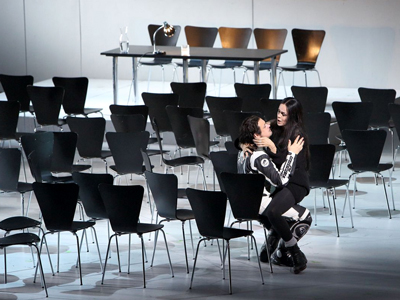
By ANDREW POWELL
Published: June 8, 2013
MUNICH — The drama of Verdi’s Genovese opera Simon Boccanegra, circa 1339 and 1363, pivots on the protagonist’s Solomon-like statecraft and courage, as deployed in the Council Chamber scene of Act I. Here plebeo and patrizio powers, emotional and familial woes, jostle compellingly. In his new* staging for Bavarian State Opera (heard and seen June 6), Dmitri Tcherniakov places the Council Chamber in a gray-walled seminar room, complete with rows of black chairs, circa 1990. The update and reduction necessarily focuses attention on the characters’ minds, on their decision-making as it were. Problem is, Simon (Željko Lučić) has been introduced as a drunken pawn of Plebeian party politics, Amelia Grimaldi (Kristine Opolais) as a goth girl, Gabriele Adorno (Stefano Secco) as a biker.
Unsure where to go next, or bent on preserving the non-intensity, Tcherniakov stays put in that seminar room for the rest of the opera. Adorno’s Act II tirade finds him knocking the chairs over, and Fiesco (Vitalij Kowaljow as a priest-confessor) spends Act III impassively parked on one of them. In a back-flash of color, a slide is projected of the set for the Prologue, outside an Edward Hopper-esque bar just like Jonathan Miller’s 1982 Rigoletto. As climax, Simon’s poisoning sends him into hallucination à la Boris Godunov; Amelia and Adorno show up in wedding attire, and dad’s behavior, not so much his demise, fairly ruins their big day.
Conductor Bertrand de Billy must have thought he was assigned Parsifal. Nary a pulse emanated from the pit, and no symphonic arc. Forget Verdian phrasing. Still, coordination held up and the Bavarian State Orchestra played cooperatively. Opolais, a substitute for Krassimira Stoyanova, retains the lustrous girlish top she brought to Rusalka here in 2010. She sang securely after a tremulous Come in quest’ ora bruna, but under-projected Italian consonants sabotaged her alert acting. (Anja Harteros sings and acts Amelia ideally on a 2010 DVD.) Secco, a substitute for Ramón Vargas, worked hard as the eager young Patrician but his sound had a pinched quality. Kowaljow essayed Fiesco with apparent indifference at this performance, and in Act III he barely contributed. Lučić by himself carried the show, if it held together at all, with warm legato, keen dramatic expression and powerful outbursts. A deftly floated high F concluded the Figlia! a tal nome palpito duet.
[*New to Munich. The production was first mounted at English National Opera in June 2011. It is the second transfer staging here this season: Richard Jones’s lively Hänsel und Gretel opened in March, long after its 1998 unveiling in Cardiff.]
Photo © Wilfried Hösl
Related posts:
Kušej Saps Verdi’s Forza
Verdi’s Lady Netrebko
Manon, Let’s Go
Kaufmann Sings Manrico
Petrenko’s Sharper Boris
49 Recordings of Le Sacre du printemps
Thursday, June 6th, 2013by Sedgwick Clark
It may seem unnecessary to audition and report on 49 recordings of Stravinsky’s Le Sacre du printemps (The Rite of Spring) since 38 of them can be obtained only in a single set from Decca and another 10 from the Columbia and RCA catalogues in a set from Sony Classical. But if fellow Stravinskyites relish my Sacre orgy, they might be persuaded to acquire these sets too and have an equally pleasurable wallow. In a day when any professional orchestra can whiz through the piece without blinking, it’s fascinating to hear the oldest recordings and realize how daunting Le Sacre once was.
My preferred recordings in these sets are listed below, in order of preference.
Clark’s Top 6
• Columbia Symphony/Igor Stravinsky (1960; 31:35). Sony
• Boston Symphony/Pierre Monteux (1951; 31:25). Sony
• Cleveland Orchestra/Pierre Boulez (1969; 34:34). Sony
• Boston Symphony/Michael Tilson Thomas (1972; 34:00). Decca
• Chicago Symphony/Georg Solti (1974; 32:12). Decca
• Berliner Philharmoniker/Bernard Haitink (1995; 32:48). Philips
Sony Classical’s Centennial Releases of The Rite of Spring
Igor Stravinsky – Le Sacre du Printemps – 100th Anniversary Collection – 10 CDs
CD 1
Philadelphia Orchestra/Leopold Stokowski (1929/1930). Shocking! In our day of recorded perfection, it’s difficult to say which of Le Sacre’s first three recordings, is the worst played: Monteux, Stravinsky, or this Stokowski, all recorded within a year of each other. RCA’s 78s are more vivid sonically than this CD or any LP transfer I’ve heard—enough so that a recent spot check revealed the kind of sensuous details that separated him from nearly every conductor of the 20th century, and which I never noticed before. I’m glad Sony included it, but non-collectors may find listening a chore. (32:39)
CD 2
New York Philharmonic-Symphony Orchestra/Igor Stravinsky (1940). A very tight reading. One wishes he would relax a little and invest the music with more expressiveness at times, but the New Yorkers do well by the score, with only occasional imprecision, until they stumble over the rhythmic complexity of the concluding Danse sacrale. Still, it’s a huge improvement over his 1929 Paris recording. The 78s have notably more presence and tonal warmth. The recording date, by the way, is April 29, 1940, not April 4, as the back of the package states. (30:45)
CD 3
Boston Symphony/Pierre Monteux (1951). Monteux conducted the infamous first performance of Le Sacre. He made four recordings, and this is far and away his best. The BSO players seem to be playing on the edge of their seats with commitment, and a few scrappy moments—most in the Danse sacrale—hardly detract from this great, well-recorded performance. (31:35)
CD 4
Philadelphia Orchestra/Eugene Ormandy (1955). Ormandy reportedly maintained that he never conducted Le Sacre. It certainly isn’t his piece. Timpani are muffled throughout, and woodwind details are often obscured by Philly’s glamorous strings. This is its first release on CD, sounding rather dim from what I take to be its LP work tape rather than the master source. Too bad Sony didn’t include Ormandy’s Petrushka Suite from the LP, which is more his style. (29:49)
CD 5
Columbia Symphony/Igor Stravinsky (1960). The composer’s stereo recording of Le Sacre (as well as his 1940 mono recording with the New York Philharmonic-Symphony, which is only 50 seconds shorter) has unrivalled rhythmic accentuation, clarity, and balletic character. There are more exciting, splashily recorded versions, but this performance simply feels “right.” (31:35)
CD 6
Chicago Symphony/Seiji Ozawa (1968). I was at Ravinia, the CSO’s summer home, for the concert preceding the recording session. It was exciting then and it is now, even if the performance style is somewhat generalized. But it’s superbly played, and a sad reminder of the promise Ozawa had that was never quite fulfilled. He tightens the pace at the end as Monteux did, no less effectively. (32:46) Fireworks from the original LP is included first, as before.
CD 7
Cleveland Orchestra/Pierre Boulez (1969). The French conductor’s 1963 Paris recording was fast, fiery, and on its toes. But he came to feel, he said to me in an interview, that such febrile tempos trivialized the work. This Cleveland performance can seem a bit earthbound at times, but following the score reveals all sorts of details that other conductors gloss over and that Boulez reveals without calling attention to them, such as the three accented trumpet notes on page 31 that so many treat indifferently (but not Ormandy!). The players are at their best, and the recording is the utmost in clarity. (34:34)
CD 8
London Symphony/Leonard Bernstein (1972). The best thing about this Sacre is the faux Rousseau, pop art cover. It’s a surprisingly tepid Sacre from this most un-tepid conductor. Originally recorded for quad by producer John McClure, the wet acoustic obscures much detail. (35:29)
CD 9
Philharmonia Orchestra/Esa-Pekka Salonen (1989). Hopelessly flashy. The slow tempos are very slow, and the fast ones very fast in this absurdly bifurcated Sacre. It’s very exciting but counterproductive to any musical continuity and impossible to dance to. His later DG recording is more traditionally paced. (32:13) A fine Symphony in Three Movements is included from the original CD release.
CD 10
San Francisco Symphony/Michael Tilson Thomas (1996). MTT remains a master of Le Sacre with all the details so often missing in other performances right in place, superbly played and recorded. The Glorification and Evocation sections may seem a bit hasty, but they stir the blood. (34:54)
Sony’s Stravinsky conducts Le Sacre du Printemps
CD 1
Le Sacre du Printemps (1960). See CD5 above.
Firebird Ballet Suite (revised 1945 version). Columbia Symphony Orchestra/Igor Stravinsky (1967). Stravinsky’s most popular and frequently performed piece is the 1919 Suite from The Firebird ballet. But it was not under copyright and he never made a dime from it. So in 1945 he arranged and reorchestrated a new suite, adding several dances from the complete ballet. Most orchestras continued to perform the 1919 suite, however, because they didn’t have to pay royalties for it. I listened to this “bonus” stereo recording directly after hearing his 1946 recording. What a difference in the expressiveness of his conducting; the music breathes with rubato, affection, and breadth, especially in the horn solo and strings of the Final Hymn, before the brass fanfare of Palace Merrymaking. It’s as if he knew it would be his final recording. And indeed it was. (29:24)
CD 2
Le Sacre du Printemps (1940). See CD2 above.
Firebird Ballet Suite (revised 1945 version). New York Philharmonic-Symphony Orchestra/Igor Stravinsky (1946). This new suite was hot off the presses when Stravinsky recorded it. But some transitions were abrupt—especially jarring between the Berceuse and Final Hymn—and before the score was printed he added three Pantomimes and brief transitional material, totaling about three minutes. It’s good that Sony decided to include these two Firebird suites and allow us to hear a great composer at work. (26:00)
Decca’s Complete Collector’s Edition: Le Sacre du printemps
CD 1
Concertgebouw Orchestra/Eduard van Beinum (1946). The oldest Sacre in this set, it is remarkably well played and conducted. Tempos are similar to the composer’s. It lacks the detail of modern recordings, of course, but it’s full of atmosphere. Timpani mostly inaudible. Fine transfer, with no audible 78 joins. (32:08)
L’Orchestre de la Suisse Romande/Ernest Ansermet (1950). Ansermet was one of Stravinsky’s great early champions, but his recordings are mere curios today. The insufficiencies of his Suisse Romande are all too clear, as are his devitalized interpretations. His 1957 stereo remake is no improvement. (33:56)
CD 2
RIAS Symphonie-Orchester Berlin/Ferenc Fricsay (1954). At last a recording of Le Sacre in which the timpani make their proper effect (even if the bass drum is weak)! An excellent performance, if perhaps bit too sane. (33:39)
Minneapolis Symphony/Antal Dorati (1954). A CD first. A driving, dynamic performance with all the crucial instrumental details powerfully captured in their correct acoustical space by Mercury Living Presence’s single mic. The Dance of the Earth and Danse sacrale are incredibly exciting, and the timpanist is on fire. The 1959 stereo remake is faster, seeming frantic and lightweight. (31:18)
CD 3
Orchestre des cento soli/Rudolf Albert (1956). The sleeper of the set. Decca couldn’t even find a photo of Albert! Well paced and played, it only flags a bit in the last pages of the Danse sacrale, as one imagines the exhausted virgin dancing herself to death would. The few instances of imprecise ensemble are of no concern. The German-born Albert was a contemporary-music exponent, and a few weeks after leading this recording he conducted the world premiere of Messiaen’s Oiseaux exotiques. (33:37)
Paris Conservatoire Orchestra/Pierre Monteux (1956). There are several pirate Monteux Sacres on the market, but this was his fourth and final studio recording and the only one in stereo, produced by John Culshaw. On paper it looks promising and authentic (French maestro who conducted the work’s first performance, French orchestra, recorded in Paris’s Salle Wagram), but the fact that it was recorded over a nine-day period may indicate that there were extra-musical reasons for the lackluster leadership and lax ensemble. The 1951 Boston on Sony is best. (32:57)
CD 4
L’Orchestre de la Suisse Romande/Ernest Ansermet (1957). (33:52) See CD1.
Minneapolis Symphony Orchestra/Antal Dorati (1959). (29:56) See CD2.
CD 5
Berliner Philharmoniker/Herbert von Karajan (1963). Stravinsky criticized this performance as “a pet savage rather than a real one . . . . There are simply no regions for soul-searching in The Rite of Spring. Berlin’s “sostenuto style is a principal fault,” he continues. “The music is alien to the culture of its performers.” It’s a fascinating performance, with many instrumental felicities, but it’s ultimately a curio, which goes for its 1977 remake as well. (33:48)
London Symphony/Colin Davis (1963). A young man’s Sacre—exciting, athletic, well played for its time. Well recorded. (30:29)
CD 6
Los Angeles Philharmonic/Zubin Mehta (1969). The first “modern” recording from these labels, with obvious multi-miking, deep bass drum, and exaggerated timpani, as if you were onstage. The Danse sacrale is exciting and well played, which characterizes the entire performance. It may not be your ideal seat in the concert hall, but “Wow!” (32:54)
Boston Symphony/Michael Tilson Thomas (1972). Excellent playing and conducting, recorded naturally in Symphony Hall’s gorgeous ambient warmth. If occasional detail is lost, the aura of a genuine concert makes up for it. Tilson Thomas told me soon after the sessions that this was the only recording, including the composer’s own, that followed the metronome marks precisely. Whatever the case, it remains one of the best. (34:00)
CD 7
London Philharmonic/Bernard Haitink (1973). The low-level volume is not all that needs a boost, despite careful instrumental balances. (34:07)
London Philharmonic/Erich Leinsdorf 1974). Stolidly conducted, with distracting Phase 4 balances. I wonder if Leinsdorf was standing in for another maestro taken ill, as I enjoyed his sumptuous Sacre with the Boston Symphony in fall 1968 at Lincoln Center. (33:26)
CD 8
Vienna Philharmonic/Lorin Maazel (1974). This version was panned for unidiomatic playing by the VPO and Maazel’s eccentricities, but over headphones the playing is mostly accurate and quite beautiful–perhaps not what one wants in a Sacre, but interesting nonetheless. Then there are those 11 fortissimo chords that lead into the Glorification of the Chosen One section, which Maazel has the Viennese play ludicrously slow and meaty, and several other yucky protractions of brass glissandi. Of interest to the curious. His New York Phil performance during his tenure was thankfully less vulgarized. (33:41)
Chicago Symphony/Georg Solti (1974). Superbly played, no eccentricities, closely recorded. Minor imprecisions in the Glorification section prove that the musicians are human, but no matter. This is a mind-blowing Sacre, truly virtuoso, highly recommended. (32:12)
CD 9
London Symphony/Claudio Abbado (1975). A fine performance, powerfully recorded, with plenty of excellent details from the LSO, such as a fast, sinister bass clarinet before the Danse sacrale. But as usual with Abbado, I don’t hear much character in the playing to complement the precision—certainly nothing approaching Solti/Chicago. (33:17)
Concertgebouw Orchestra/Colin Davis (1976).
CD 10
Berliner Philharmoniker/Herbert von Karajan (1977). (34:18) See CD5.
National Youth Orchestra/Simon Rattle (1978).
CD 11
Boston Symphony/Seiji Ozawa (1979).
Detroit Symphony/Antal Dorati (1981).
CD 12
Israel Philharmonic/Leonard Bernstein (1982).
Orchestre Symphonique de Montréal/Charles Dutoit (1984).
CD 13
The Cleveland Orchestra/Riccardo Chailly (1985).
The Cleveland Orchestra/Pierre Boulez (1991).
CD 14
Royal Concertgebouw Orchestra/Georg Solti (1991).
The MET Orchestra/James Levine (1992).
CD 15
Deutsches Sinfonie-Orchester, Berlin/Vladimir Ashkenazy (1994).
Orchestre de Paris/Semyon Bychkov (1995).
CD 16
Berliner Philharmoniker/Bernard Haitink (1995).
Kirov Orchestra, St. Petersburg/Valery Gergiev (1999).
CD 17
Los Angeles Philharmonic/Esa-Pekka Salonen (2006).
Orchestre Philharmonique de Radio France/Myung-Whun Chung (2007).
CD 18
Simón Bolívar Youth Orchestra of Venezuela/Gustavo Dudamel (2010).
Four hands: Bracha Eden, Alexander Tamir (1968).
CD 19
Four hands: Güher and Süher Pekinel (1983).
Four hands: Vladimir Ashkenazy, Andrei Gavrilov (1990).
CD 20 – Bonus CD
Violin Concerto
Samuel Dushkin, violin; Lamoureux Concert Orchestra/Igor Stravinsky (1935).
Pre-Nuptial Management Agreements
Wednesday, June 5th, 2013By Brian Taylor Goldstein, Esq. Dear Law and Disorder: I just received an email that an artist is leaving my roster for another manger, effective in two weeks. I’ve been working with this artist for over five years. We’ve never had a signed contract because we’ve never needed one. Isn’t it customary to give at least 3 months notice? Also, the new manager is offering to let us keep our commissions on any engagements that are “contracted.” What does that mean? Everyone knows that engagements are often confirmed without their being contracts! Help! Actually, you’ve always needed a signed contract. You just didn’t realize you needed one until now. A contract is your opportunity to memorialize all the terms of a relationship…including how to get out of one. An artist/manager relationship is like a marriage and, when it ends, it’s like a divorce—all too often a bitter and nasty divorce. If there is no pre-nuptial agreement, then any disputes will be resolved by the application of legal rules and concepts. In these situations, such rules are quite basic: what you didn’t negotiate for in advance, you don’t get! Many in our industry like to believe that there exists a magic book of customs, traditions, and rules which govern everything from artist-manager relationships to engagement cancellations, and that, in the absence of a contract, this book will determine how everyone should behave. Nothing can be further from the truth. What may be “customary” for one person or situation may not be “customary” for another. Nor would you want it to be otherwise. The arts and entertainment industry is too diverse, too broad, and too delightfully fluid for that degree of uniformity. To the extent there exists a set of rules which govern relationships in the absence of a contract, such rules consist of the laws of contracts, agency, and a myriad of other legal concepts—all of which are fairly arbitrary and none of which will provide an outcome better than the parties could have devised for themselves through advanced contractual negotiation. Whether its exclusivity, the right to be reimbursed for expenses, the authority of the manager, or the calculation of the manager’s commissions, such issues need to be agreed upon…in advance…and memorialized in a written contract. If you want an artist to be required to give you three months notice before leaving your roster, that needs to be agreed upon and written down as well. (While an agreement does not have to be written to be enforceable, its very hard to prove the terms of any agreement without something in writing—especially when you’re in the midst of a bitter divorce when everyone’s memories will suddenly and conveniently become quite spotty.) In your case, without a written contract setting forth a specific length of time an artist is obligated to remain on your roster (ie: 1 year, 2 years, etc.) and without a requirement that the artist has to give you advance notice before terminating the agreement, then the artist can leave your roster whenever they want with no notice at all. As for the new manager’s offer to let you keep your commissions on any engagements that are “contracted”, this, too, is something that should and could have been defined in an artist management agreement. Otherwise, the definition of “contracted” will be the legal definition: a “contracted” engagement is one where there is an enforceable agreement (either written or oral), which means there has been an offer and an acceptance of that offer and the parties have agreed upon all key terms. While its true that engagements are often confirmed without their being contracts, a confirmation of an engagement may not necessarily constitute a “contracted” engagement. A “hold” may or may not be an enforceable contract. If the parties have agreed upon the date and the fee, it may not be “contracted” if there are other important issues that have not yet been agreed upon—ie: insurance, licensing, technical requirements, etc. In other words, what you consider to be “contracted” may or may not be what the law of contracts considers to be “contracted.” In the absence of a written agreement with defined terms and obligations, your best and most practical course of action is to accept that this is a bit of a mess and enter into a dialogue with your “former” artist and his or her new manager to come up with a mutually agreed upon list of “contracted” engagements on which you will receive your commissions. I can almost guarantee that such a list will have fewer dates that you believe is fair and more dates than your former artist and his/her manager believe is fair. However, if everyone believes they are giving up too much, its probably a fair settlement. Then, focus your time on getting agreements in place for your remaining artists. Pre-nuptial agreements are never sexy, but neither is finding yourself sleeping with the enemy. _________________________________________________________________ For additional information and resources on this and other legal and business issues for the performing arts, visit ggartslaw.com To ask your own question, write to lawanddisorder@musicalamerica.org. All questions on any topic related to legal and business issues will be welcome. However, please post only general questions or hypotheticals. GG Arts Law reserves the right to alter, edit or, amend questions to focus on specific issues or to avoid names, circumstances, or any information that could be used to identify or embarrass a specific individual or organization. All questions will be posted anonymously. __________________________________________________________________ THE OFFICIAL DISCLAIMER: THIS IS NOT LEGAL ADVICE! The purpose of this blog is to provide general advice and guidance, not legal advice. Please consult with an attorney familiar with your specific circumstances, facts, challenges, medications, psychiatric disorders, past-lives, karmic debt, and anything else that may impact your situation before drawing any conclusions, deciding upon a course of action, sending a nasty email, filing a lawsuit, or doing anything rash!
Jansons Extends at BR
Monday, June 3rd, 2013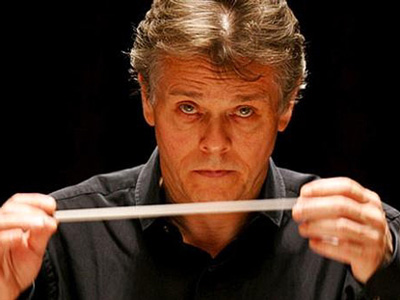
By ANDREW POWELL
Published: June 3, 2013
MUNICH — Mariss Jansons has signed an extension of his contract as Chefdirigent of the Bavarian Radio Symphony Orchestra and its choral forces, Bayerischer Rundfunk (BR) announced today here. The added period runs from Sept. 2015 through Aug. 2018.
The Riga, Latvia-born conductor, 70, also serves as chief conductor of Amsterdam’s Concertgebouw Orchestra. His tenure in Munich, a collegial one, began in 2003.
Separately, at a ceremony in the Prinz-Regenten-Theater tomorrow (June 4), Jansons receives the 2013 Ernst von Siemens Music Prize. He has promised to donate its €250,000 bounty toward the design and building of a (much needed) new concert hall for Munich should the project actually happen.
BR additionally announced the promotion of one of the orchestra’s artistic planners, Nikolaus Pont, 41, to the position of Orchestermanager. Born in Vienna, Pont earlier worked for the Wiener Konzerthaus and the Austrian broadcaster ORF.
Photo © Matthias Schrader
Related posts:
Jansons! Petrenko! Gergiev!
BRSO Adopts Speedier Website
Berlin’s Dark Horse
Antonini Works Alcina’s Magic
Zimerman Plays Munich
Horn Trios in Church
Sunday, June 2nd, 2013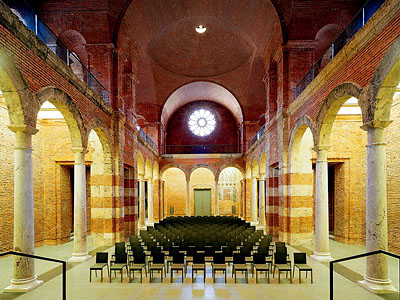
By ANDREW POWELL
Published: June 2, 2013
MUNICH — A short walk separates two of this city’s four opera houses: the Cuvilliés Theater, where Mozart conducted Idomeneo, and the National Theater, where Hans von Bülow led the first Tristan und Isolde. Ensconced half way stands the Court Church of All Saints, an 1837 neo-Romanesque, quasi-Byzantine former glory — bombed and burned in 1944, later re-domed, secularized, sandblasted, and finally re-opened in 2003 as a performance space. Here, in happily clear, generally non-reverberant acoustics, members of the Bavarian State Orchestra regularly make chamber music. This morning (June 2) — three weeks before the summer solstice, yet a cold day of heavy rain and wind, with half the city center roped off to greet UEFA Champions League champions Bayern München — intrepid listeners savored horn trio music of distinction.
Markus Wolf (violin), Johannes Dengler (valve horn) and Julian Riem (piano) found good balance in Lennox Berkeley’s reticent but neatly crafted Horn Trio (1952), an ample work capped by variations, ultimately jaunty, on a dry theme. This segued with guileless aplomb into the disparate sound world of Charles Koechlin: the Quatre petites pièces (1906), plangent in their miniature tunefulness, Impressionist or saccharine by turns, and agreeably concise. Again the players worked together with obvious affinity.
After the Pause, Brahms’s familiar E-flat Trio (1865, natural horn) threw the attention at Dengler, whose nimbleness and clean intonation served the composer faithfully (turning a blind eye to the valves on his magnificent instrument). As in the Berkeley and Koechlin, Wolf’s flexibility and aptitude for finding the weight of a phrase compensated for occasional wiry tone. Riem never dominated: a virtue, except when the score wanted a smidgen more personality, for instance in the Adagio mesto.
It turns out that these same musicians recorded the Koechlin and Brahms back in 2008, the latter on a reconstructed 1803 Halari natural horn, a 1722 Stradivarius, and a restored 1862 Bechstein. (Only the Strad showed up today.) For reasons unclear, this effort did not surface until 2012, when the resulting CD drew praise. Robert Markow, writing in Fanfare: “This may well be the best recording ever made of the Brahms Horn Trio.” And in Germany the team took an Echo Klassik Award.
Photo © Bayerische Schlösserverwaltung
Related posts:
Festive Sides
Schultheiß Savors the Dvořák
Benjamin and Aimard
A Complete Frau, at Last
Portraits For a Theater
Munich Phil Tries Kullervo
Friday, May 31st, 2013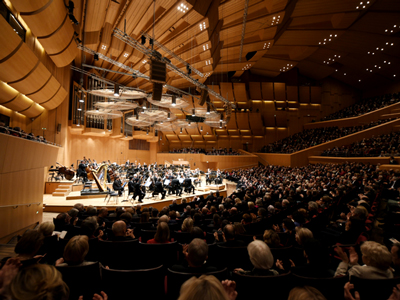
By ANDREW POWELL
Published: May 31, 2013
MUNICH — Young Finnish conductor Pietari Inkinen waved his arms heartily this week for Kullervo, leading the Munich Philharmonic at the Gasteig concert hall. It wasn’t enough. Sibelius’s impassioned sequence of tone poems (1892) demands wily control of dynamics and balances, and an intermittent spotlight on half-hidden themes. How else to correlate five epically inclined “movements,” two of them vocal, with thin melodic ties and scant symphonic argument?
As performed on May 28, the second and fifth movements (Young Kullervo and Kullervo’s Death) overstayed their welcome, and the 26-year-old composer’s closing apotheosis missed its mark. The painterly start and Brucknerian flashes of the first movement (without programmatic title) did compel attention, helped by eloquent string playing, but the fourth movement’s bucolic refrains, well forward, negated its supposed devotion to war.
Kullervo and His Sister, the central, longest and strongest of the movements — authorized by Sibelius for standalone performance — contrasted the matronly sound of Monica Groop’s mezzo-soprano (sibling and rape victim in this sorry Kalevala tale) with Jukka Rasilainen’s virile, resplendent Heldenbariton. Here and in the last movement, the score needs a substantial men’s chorus, for lines mostly unison. The combined voices of the Philharmonischer Chor München and Helsinki’s 130-year-old Ylioppilaskunnan Laulajat fit the bill thrillingly, even if they could not disguise Inkinen’s unpersuasive approach.
Photo © Andrea Huber
Related posts:
Flitting Thru Prokofiev
Honeck Honors Strauss
St John Passion Streams
Mahler 10 from Nézet-Séguin
Bieito Hijacks Boris