By Brian Taylor Goldstein, Esq. Dear Law and Disorder: Several years ago, our small ensemble hired a composer to arrange and re-orchestrate a work for us to play. The work itself, which is still under copyright, was originally written and arranged for a large orchestra. Recently, we made a video of our group performing the piece, put it on YouTube, and the composer’s publisher had it taken down. The publisher also told us that the composer had not authorized any arrangements or re-orchestrations. They also told us we couldn’t even perform it live anymore. Is this true? Even though we paid for the re-arrangement ourselves? Even though we have always obtained performance licenses through BMI? We have been performing this arrangement for years and the publisher has never objected before. It doesn’t seem fair. We have engagements in 2013/2014 to specifically perform this piece as part of our repertoire. When you obtain a performance license through ASCAP, BMI or SESAC, you obtain the right to perform a work as written. This includes the right to “interpret” the work to reflect your own style, artistry, expression, etc. However, it does not include the right to re-orchestrate or re-arrange a work in a manner that changes the fundamental nature of the work. For example, obtaining a performance license to perform a work written for a chamber ensemble does not give you the right to “re-arrange” it for four banjos and a zither—as tempting as that may be! The fact that you paid for the re-arrangement doesn’t give you any rights to perform it, if the re-arrangement itself was unauthorized. That’s like stealing a car, but arguing that it wasn’t a crime because you paid for the gas. (My partner, Robyn, says I never met an analogy I didn’t like…so let’s go with that.) However, on the plus side, such as it is, should the composer/publisher of the work ever decide they like your arrangement, they can’t use it without your permission either. The right to the re-arrangement belong to the owner of the re-arrangement—which could be your ensemble or the composer of the re-arrangement, depending on how your commission agreement was drafted. (Remember, the mere act of paying for something doesn’t inherently convey any rights.) The fact that you have been performing this arrangement to date without any trouble might buy you an argument—albeit a weak one—that your past performances were “implicitly” licensed. However, now that the publisher has officially told you that your arrangement is unauthorized, any future performances beyond this point would constitute copyright infringement. The line has been drawn. I know it doesn’t seem fair when a composer, author, publisher, or copyright owner refuses to give you the rights you need—especially in a situation such as yours where your arrangement obviously has artistic merit or else you wouldn’t be getting engagements to perform it. However, bear in mind that those same rules also protect your own rights. Imagine your position if someone had taken that video you posted on YouTube and, without your permission, altered it or used it in such a way that you found artistically objectionable. You would be just as adamant that they must stop. Also, bear in mind that its almost always easier (not to mention legally required) to get rights by asking and negotiating ahead of time, rather than taking what you want and then asking for forgiveness or permission after the fact. It’s the difference between borrowing and stealing a car. __________________________________________________________________ For additional information and resources on this and other legal and business issues for the performing arts, visit ggartslaw.com To ask your own question, write to lawanddisorder@musicalamerica.org. All questions on any topic related to legal and business issues will be welcome. However, please post only general questions or hypotheticals. GG Arts Law reserves the right to alter, edit or, amend questions to focus on specific issues or to avoid names, circumstances, or any information that could be used to identify or embarrass a specific individual or organization. All questions will be posted anonymously. __________________________________________________________________ THE OFFICIAL DISCLAIMER: THIS IS NOT LEGAL ADVICE! The purpose of this blog is to provide general advice and guidance, not legal advice. Please consult with an attorney familiar with your specific circumstances, facts, challenges, medications, psychiatric disorders, past-lives, karmic debt, and anything else that may impact your situation before drawing any conclusions, deciding upon a course of action, sending a nasty email, filing a lawsuit, or doing anything rash!
Archive for 2013
George Benjamin’s Written on Skin
Friday, August 16th, 2013by Sedgwick Clark
British composer George Benjamin’s opera Written on Skin certainly doesn’t need my praise after all the encomia it received at its world premiere at Festival d’Aix-en-Provence in July 2012 and its London premiere on March 9 at Covent Garden. But I can report on the U.S. premiere this past Monday at Tanglewood’s Festival of Contemporary Music in Ozawa Hall. In a word, it was thrilling.
The playing of the Tanglewood Music Center Fellows, a student orchestra, was flawless from top to bottom—indeed, already imbued with the elder orchestra’s Boston richness and depth of tone. Even in a concert performance, the young singers displayed a sense of drama and commitment fully competitive with the excellent Aix cast available on the recently released Nimbus CD set. They were: Lauren Snouffer (Agnès), Evan Hughes (Protector), Augustine Mercante (Angel 1/Boy), Tammy Coil (Angel 2/Marie), and Isaiah Bell (Angel 3/John). My concert companion had heard the Aix premiere and expressed misgivings about attending the Tanglewood performance, but after the first few minutes she turned to me, smiled, and nodded her assent.
The composer conducted the Aix and London performances and did so at this concert as well. On the evidence of this one concert, I have no hesitation in stating that Benjamin is a great conductor. Never for a moment was there doubt of his control over his youthful orchestra, and the precision of attack, allied with expressive warmth and natural freedom of phrase, was masterful. His biography states that he has conducted some of the world’s great ensembles, in repertoire from Schumann to Wagner and, of course, works by many of his contemporaries. I hope to hear him conduct again as soon as possible . . . as long as it doesn’t unduly compromise his composing career.
Program details of Bard Music Festival, “Stravinsky and His World”
WEEKEND TWO: Stravinsky Re-invented: From Paris to Los Angeles
Friday, August 16
SPECIAL SHOWING
Filming Stravinsky: Preserving Posterity’s Image
Weis Cinema
Free and open to the public
PROGRAM SIX
Against Interpretation and Expression: The Aesthetics of Mechanization
Sosnoff Theater
7:30 pm Pre-concert Talk: Christopher H. Gibbs
8 pm Performance: Eric Beach, percussion; Judith Gordon, piano; Jonathan Greeney, percussion; Imani Winds; Piers Lane, piano; Peter Serkin, piano; Gilles Vonsattel, piano; Bard Festival Chamber Players and students of The Bard College Conservatory, conducted by Leon Botstein
Igor Stravinsky (1882–1971)
Concerto for Piano and Winds (1923–24)
Sonata for Two Pianos (1943–44)
Béla Bartók (1881–1945)
Sonata for Two Pianos and Percussion, Sz 110 (1937)
Edgard Varèse (1883–1965)
Octandre (1923)
Paul Hindemith (1895–1963)
Kleine Kammermusik, Op. 24, No. 2 (1922)
Olivier Messiaen (1908–92)
From Quatre études de rythme (1949–50)Tickets: $25, $35, $50, $60
Saturday, August 17
PANEL THREE
Lenin, Hitler, Stalin, and Mussolini: Music, Ethics, and Politics
Olin Hall
10 am—noon
Tamara Levitz, moderator; Tomi Mäkelä; Simon Morrison; Michael Beckerman
Free and open to the public
PROGRAM SEVEN
Stravinsky in Paris
Olin Hall
1 pm Pre-concert Talk: Manuela Schwartz
1:30 pm Performance: Xak Bjerken, piano; Randolph Bowman, flute; Sara Cutler, harp; Jordan Frazier, double bass; Marka Gustavsson, viola; Robert Martin, cello; Jesse Mills, violin; Harumi Rhodes, violin; Sharon Roffman, violin; Laurie Smukler, violin; Bard Festival Chamber Players
Igor Stravinsky (1882–1971)
Les cinq doigts, for piano (1921)
Octet for Wind Instruments (1922–23)
Duo concertant (1931–32)
Albert Roussel (1869–1937)
Sérénade, for flute, harp, and string trio, Op. 30 (1925)
Bohuslav Martinu (1890–1959)
String Quartet No. 4, H. 256 (1937)
Sergey Prokofiev (1891–1953)
Sonata for Two Violins, Op. 56 (1932)
Arthur Lourié (1892–1966)
Sonata for Violin and Double Bass (1924)
Alexandre Tansman (1897–1986)
Sonatina for Flute and Piano (1925)
Tickets: $35
PROGRAM EIGHT
The Émigré in America
Sosnoff Theater
7 pm Pre-concert Talk: Leon Botstein
8 pm Performance: John Relyea, bass-baritone; Rebecca Ringle, mezzo-soprano; Bard Festival Chorale, James Bagwell, choral director; American Symphony Orchestra, conducted by Leon Botstein, music director
Igor Stravinsky (1882–1971)
Jeu de cartes (1936)
Symphony in Three Movements (1942–45)
Ode (1943)
Requiem Canticles (1965–66)
Arnold Schoenberg (1874–1951)
Kol Nidre, Op. 39 (1938)
Hanns Eisler (1898–1962), Score for Night and Fog (1955), a film by Alain Resnais
Tickets: $30, $50, $60, $75
Sunday, August 18
PROGRAM NINE
Stravinsky, Spirituality, and the Choral Tradition
Olin Hall
10 am Performance with commentary by Klára Móricz, with the Bard Festival Chorale, James Bagwell, choral director; Frank Corliss, piano; Bard Festival Chamber Players
Choral works by Igor Stravinsky (1882–1971); Gesualdo da Venosa (1566–1613), Claudio Monteverdi (1567–1643); Johann Sebastian Bach (1685-1750); Sergey Rachmaninoff (1873–1943); Francis Poulenc (1899–1963), Lili Boulanger (1893–1918), and Ernst Krenek (1900–91)
Tickets: $30
PROGRAM TEN
The Poetics of Music and After
Olin Hall
1 pm Pre-concert Talk: Richard Wilson
1:30 pm Performance: Rieko Aizawa, piano; Imani Winds; Alexandra Knoll, oboe; Piers Lane, piano; Jesse Mills, violin; Bard Festival Chamber Players
Igor Stravinsky (1882–1971)
Circus Polka, arranged for piano (1942, arr. 1944)
Septet (1952–53)
Anton Webern (1883–1945)
Variations for Piano, Op. 27 (1936)
Walter Piston (1894–1976)
Suite, for oboe and piano (1931)
Aaron Copland (1900–90)
Nonet (1960)
Elliott Carter (1908–2012)
Woodwind Quintet (1948)
Ellis Kohs (1916–2000)
Sonatina for Violin and Piano (1948)
Carlos Chávez (1899–1978)
From Ten Preludes (1937)
Tickets: $35
PROGRAM ELEVEN
The Classical Heritage
Sosnoff Theater
3:30 pm Pre-concert Talk: Tamara Levitz 4:30 pm Performance: Gordon Gietz, tenor; Jennifer Larmore, mezzo-soprano; Sean Panikkar, tenor; John Relyea, bass-baritone; Bard Festival Chorale, James Bagwell, choral director; American Symphony Orchestra, conducted by Leon Botstein, music director; and others
Igor Stravinsky (1882–1971)
Perséphone (1933–34, rev. 1948)
Oedipus Rex (1926–27, rev. 1948)Tickets: $30, $50, $60, $75All programs subject to change.
The Festival Glutton
Abandoning my contrarian avoidance of summer-music, a week of festival gluttony has left me exhausted but happily so: the first weekend of Bard’s Stravinsky deluge (8/9-11), Tanglewood Contemporary Music Festival’s U.S. premiere of George Benjamin’s ecstatically received opera Written on Skin (8/12), and back home for David Lang’s Whisper Opera at Lincoln Center’s Mostly Mozart Festival (8/13).
Ever the proselytizer, the Bard Festival’s Leon Botstein can’t resist sharing a cornucopia of music with his audiences, and those of us who share his passion are happy to follow. He and his artistic co-directors, Christopher H. Gibbs and Robert Martin, invariably concoct illuminating programs of music by the primary composer and complementary works by various colleagues. Preconcert talks and panels of experts dot the schedule, reminding us that Bard is a school. One never fails to learn and even be surprised. (Ever hear any music by Mikhail Gnesin, Maximilian Steinberg, or André Souris? I hadn’t even heard of the latter.) Two programs this year feature ten composers, and they sometimes run close to three hours due to setups between works. Bard audiences are notable for their sitzfleisch.
Botstein’s presentational approach to conducting is more in tune with Stravinsky, who claimed to loathe interpreters, than, say, Mahler, whose music is open to a variety of approaches. In a preconcert talk on opening night, Botstein said that, with few exceptions, Stravinsky’s music is no longer difficult for contemporary audiences. But, he warned ominously about one of the works on the program, “I assure you that Abraham and Isaac does sound ‘modern.’ ” (Actually, it doesn’t, being a 60-year-old serialist relic whose time has long passed in our current, neo-tonal era.) Interestingly, Botstein’s easygoing performance of this ungrateful piece with members of the American Symphony Orchestra was quite the most digestible I’ve ever heard, abetted by baritone John Hancock’s mellow rendering of the Hebrew text. The most popular work on the program, Symphony of Psalms, was unerringly paced but compromised by mushy choral articulation. Anna Polonsky and Orion Weiss, two young pianists who would shine in other performances throughout the weekend, brought the unaccountably neglected Concerto for Two Pianos to life. And Botstein led a taut Les Noces that featured a characterful vocal quartet—soprano Kiera Duffy, mezzo-soprano Melis Jaatinen, tenor Mikhail Vekua, and bass-baritone Andrey Borisenko—to end the concert.
The second program, called “The Russian Context,” was one of those point-making Bard concerts performed largely by workmanlike festival regulars. Three Tchaikovsky works, for instance, Feuillet d’album, Op. 19, No. 3, and Humoreske, Op. 10, No. 2, both for piano, and the song None but the Lonely Heart, Op. 6, No. 6, were all adapted by Stravinsky for his 1928 ballet Le Baiser de la fée. The pianist in these, and several other works throughout the first weekend, Gustav Djupsjöbacka, was discouragingly half-hearted, whether as soloist or accompanist. Fortunately, contributions by pianists Orion Weiss in works by Glinka and Stravinsky and Piers Lane in works by Rachmaninoff, Scriabin, and Stravinsky compensated. Most impressive, however, was the young, Curtis-trained Dover Quartet in Glazunov’s Five Novelettes, Op. 15, which had everyone marveling over the foursome’s warm, full-bodied sonority and gracious Romantic style.
A teacher, Rimsky-Korsakov, and two students, Steinberg and Stravinsky in works from 1913, dominated the third program, with the full American Symphony under Botstein reveling in the shimmering sensuousness of a suite from Rimsky-Korsakov’s The Legend of the Invisible City of Kitezh (1907) and Maximilian Steinberg’s ballet suite from Les métamorphoses. What a contrast with the savage Le Sacre du printemps, conducted pretty much in one well-chosen tempo throughout, as the work’s first conductor, Pierre Monteux, said was possible. There were no serious mishaps, and the Danse sacrale—the burial ground for innumerable past performances—went perfectly. Unfortunately, the brass were nearly always too loud, overwhelming the strings, and rasping and ugly besides.
Many performances of Schoenberg’s Pierrot Lunaire strike people as modern because they are so unattractively sung. What a revelation, then, to hear Kiera Duffy tackle the composer’s Sprechstimme
Tanglewood perf fully competitive with any musical performance I’ve ever heard! And, upsettingly so, what a qualitative contrast with Bard’s standard (still haven’t read your review)!! One wants to be encouraging about Bard because there are so many positive aspects of it, but the student orchestra and vocalists at Tanglewood were so vastly superior that the Bard performers–all professionals, after all, although Peter Serkin was the only “name” soloist at Bard this year–were nearly all thrown in the shade. I have no idea what the respective budgets are, but professionals must be paid, and students do not. It’s difficult when the weakest link in the festival is its leader.
Looking Forward
My week’s scheduled concerts (8:00 p.m. unless otherwise noted):
8/15 at 7:00. Rose Theatre. Mostly Mozart Festival. Budapest Festival Orchestra/Ivan Fischer. Mozart: Le Nozze di Figaro.
8/16-18 (various times). Bard Music Festival. Annandale-on-Hudson, N.Y. “Stravinsky and His World.” See schedule above.
Its Not The Length Of A Contract That Matters, Its How You Use It
Wednesday, August 14th, 2013By Brian Taylor Goldstein, Esq. Dear Law and Disorder: I want to start getting the artists I represent to sign a written representation agreement. However, all of the models I have found are too long and complex. I definitely do NOT want a 14 page contract, more like 4 or 5 at most. I won’t be able to get folks to sign it otherwise! And, can the language be more simple? I like simplicity. When drafting contracts, length and simplicity should be the least important factors. Such restrictions are arbitrary. That’s like saying: “I want to drive from New York to California, but I absolutely refuse to use a car that requires tires or gas.” You’re going to have a problem satisfying your travel needs and goals. The goal of any contract is not to make it simple enough so everyone signs it. If that’s your goal, you really only need two sentences: “I agree to book engagements for you. You agree to pay me.” Let’s assume both parties sign it. What if the artist doesn’t pay you or leaves you for another agent? Contracts are not self-enforcing. If one party breaches a contract, then merely having a signed contract is not going to force them to comply. You have to file a lawsuit to enforce a contract. That’s expensive…and often pointless if the artist has no assets. Worse, if your contract is too simple and doesn’t adequately address the nature of the dispute, then the other side’s attorney is going to poke all sorts of holes in your “simple agreement” and you’re going to lose anyway. The goal of a contract is having a document that adequately addresses your concerns and issues and spells out all of the key terms so that you and your artist have a chance to review and discuss them. A meaningful contract will assist both parties in routing out any presumptions or misunderstandings before problems arise. Whether it takes 4 pages to do that or 14 pages, the length of your contract will depend on the complexity of the relationship, the length of the relationship, the needs and concerns of the parties, the amount of money at issue, and a myriad of other issues. For example, if an agent takes a commission of 20% off everything they book for the artist, do you earn your commission when the engagement is booked or actually performed? Does “everything” include 20% of reimbursements for travel and hotel expenses? Are you exclusive? Do you get a commission on engagements that the artist books on their own? And when do you get paid? And how do you get paid? Are engagement fees sent to you or do you invoice the artist? What about engagements that happen after the term? How long is the term? Can you cancel? Can the artist cancel? What if the artist decides to cancel and goes to another agent? Are you still entitled to the commission on engagements you booked? And the list goes on… Think of your contract as a checklist that you will use to facilitate a discussion with each new artist you bring on to your roster to help you decide if you want to work with them and vice versa. If there are issues that are not important to you, then you can take them off your list and remove them from your contract. However, if there are expectations or requirements that are important to you, those need to be adequately explained and detailed. Similarly, while the language you use to explain your expectations and requirements can be simple, it also needs to be appropriate. While I am the first to criticize attorneys for using overcomplicated legal babble, more often than not, a lot of language that confuses artist and agents in contracts is not necessarily “legalese”, but basic business terms and practices with which they are not familiar. Let’s face it…a lot of artists as well as agents, managers, and presenters, do not necessarily have the same business background and training as do entrepreneurs and business people in other, less fulfilling industries. That merely means there are new terms to learn, as opposed to avoid, as your business grows and matures. My point is that your focus needs to be on finding the right language to adequately explain your terms, concerns, expectations, and requirements. I’ve seen too many parties get burned because they dumbed down a contract just to make it shorter. That’s a waste of both time and money. More important, in my opinion, arbitrarily “dumbing” down a contract merely on the assumption that artists won’t understand anything more complex does a disservice to the all the inherently bright, creative, and intelligent denizens of our arts industry who merely need an opportunity to be taught. __________________________________________________________________ For additional information and resources on this and other legal and business issues for the performing arts, visit ggartslaw.com To ask your own question, write to lawanddisorder@musicalamerica.org. All questions on any topic related to legal and business issues will be welcome. However, please post only general questions or hypotheticals. GG Arts Law reserves the right to alter, edit or, amend questions to focus on specific issues or to avoid names, circumstances, or any information that could be used to identify or embarrass a specific individual or organization. All questions will be posted anonymously. __________________________________________________________________ THE OFFICIAL DISCLAIMER: THIS IS NOT LEGAL ADVICE! The purpose of this blog is to provide general advice and guidance, not legal advice. Please consult with an attorney familiar with your specific circumstances, facts, challenges, medications, psychiatric disorders, past-lives, karmic debt, and anything else that may impact your situation before drawing any conclusions, deciding upon a course of action, sending a nasty email, filing a lawsuit, or doing anything rash!
Uni Classical—Dr. Jekyll and Mr. Hyde
Thursday, August 8th, 2013by Sedgwick Clark
Is there anything new under the sun?
Last week I wrote in this space about Deutsche Grammophon’s new 13-CD release of Pierre Boulez’s complete works: “To the college student who discovered the Frenchman’s artistry soon after his classical-music ‘Eureka!’ moment with Stravinsky’s Le Sacre du printemps, this set comes as a shining example of the currently embattled recording industry’s good works.” 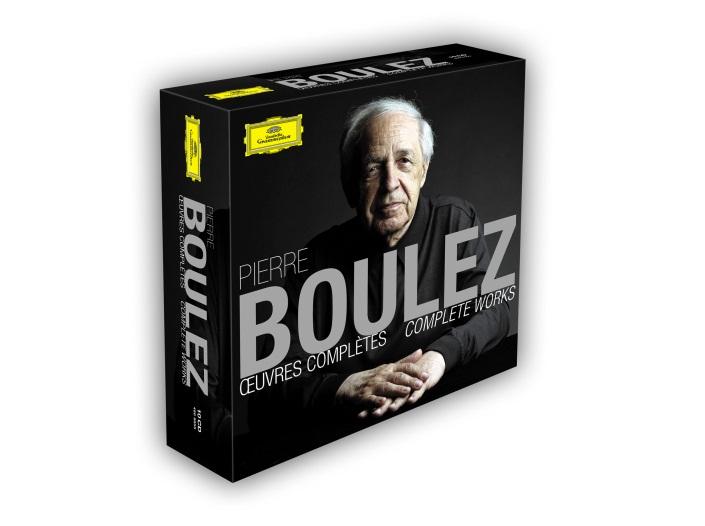
After a vantage point both in and out of the record business for over four decades, I shouldn’t have been surprised by the piece on Musical America’s website Tuesday (8/6) about the latest marketing scheme of DG’s sister label, Decca, under the Universal Music umbrella. Decca, you will recall, was the creator of the industry’s all-time best seller, “The Three Tenors,” as classy a crossover notion as ever conceived. It’s now about to be succeeded by releases of “Classical Music for Your Gay Wedding,” with a separate cover targeted for lesbians as well, “Classical Music for Dogs,” and “Classical Music for Driving,” with uptempo cuts such as “Ride of the Valkyries” aimed specifically at truck drivers and sold at truck stops.
The Gay Wedding CD got me thinking, and I e-mailed my old friend Kevin Copps, Senior V-P at Atlantic Classics back in the gay-90s, who recalled his company’s own best-selling effort: “hey, what a great idea—i wish we had thought of something like that. oh, wait, we did—20 years ago. today we’d probably be a bit, shall we say, ballsier, and call it something like, ‘my big queer gay wedding,’ but so-called gay marketing seems so passé now that it probably wouldn’t kindle our imaginations. the cover’s a yawn, btw, such a dated and nigh-straight aesthetic, though i suppose the ‘mainstreaming’ of gay weddings is a progressive indicator. in any case, our models were way hotter.”
I haven’t seen the playlists of these soon-to-be-released gems, but I figure that truckers will be treated to such hi-test butch blockbusters as Glinka’s Ruslan and Ludmilla Overture (only the Solti/LSO recording would do), the Death of Tybalt from Prokofiev’s Romeo and Juliet, Khachaturian’s Sabre Dance, Shostakovich’s Festive Overture, Mars from Holst’s Planets, the finales of Beethoven’s Seventh and Tchaikovsky’s Fourth symphonies . . . the list is endless.
My suggestion: Keep your eyes on the road—and on the sidewalk.
Bard’s Stravinsky Festival Starts This Weekend
For those who missed seeing the delicious programs for Bard’s “Stravinsky and His World” festival in this space two weeks ago, I repeat the first week’s offerings as a public service. It begins this weekend, August 9-11, in Annandale-on-Hudson—don’t miss it!
Program details of Bard Music Festival, “Stravinsky and His World”
WEEKEND ONE: Becoming Stravinsky: From St. Petersburg to Paris
Friday, August 9
PROGRAM ONE
The 20th Century’s Most Celebrated Composer
Sosnoff Theater
7:30 pm Pre-concert Talk: Leon Botstein
8 pm Performance: Alessio Bax, piano; Andrey Borisenko, bass; Lucille Chung, piano; Kiera Duffy, soprano; Gustav Djupsjöbacka, piano; John Hancock, baritone; Melis Jaatinen, mezzo-soprano; Anna Polonsky, piano; Mikhail Vekua, tenor; Orion Weiss, piano; Bard Festival Chorale, James Bagwell, choral director; members of the American Symphony Orchestra, conducted by Leon Botstein, music directorIgor Stravinsky (1882–1971)
Les Noces (1914–17)
Symphonies of Wind Instruments (1920, rev. 1947)
Symphony of Psalms (1930)
Concerto for Two Pianos (1935)
Abraham and Isaac (1962–63)
Tickets: $25, $35, $50, $60
Saturday, August 10
Panel One
Who Was Stravinsky?
Olin Hall
10 am–noon
Christopher H. Gibbs, moderator; Leon Botstein; Marina Frolova-Walker; Olga Manulkina; Stephen Walsh
Free and open to the public
Program Two
The Russian Context
Olin Hall
1 pm Pre-concert Talk: Marina Frolova-Walker
1:30 pm Performance: Matthew Burns, bass-baritone; Dover Quartet; Gustav Djupsjöbacka, piano; Laura Flax, clarinet; Marc Goldberg, bassoon; Melis Jaatinen, mezzo-soprano; Piers Lane, piano; Orion Weiss, piano
Igor Stravinsky (1882–1971)
Faun and Shepherdess, Op. 2 (1906–07)
From Four Studies, for piano, Op. 7 (1908)
Three Movements from Petrushka, for piano solo (1921)
Mikhail Glinka (1804–57)
Trio Pathétique in D minor (1832)
Alexander Glazunov (1865–1936)
Five Novelettes, for string quartet, Op. 15 (1886)
Alexander Scriabin (1872–1915)
Vers la flamme, Op. 72 (1914)
Sergey Rachmaninoff (1873–1943)
Preludes, Op. 23, Nos. 8 & 9 (1901–03)
Songs and piano works by Modest Mussorgsky (1839–81), Pyotr Tchaikovsky (1840–93), Nikolai Medtner (1880–1951), and Mikhail Gnesin (1883–1957)
Tickets: $35
SPECIAL EVENT
Film: The Soldier’s Tale
Lászlo Z. Bitó ’60 Conservatory Building
A film by R. O. Blechman, with live musical accompaniment
Tickets: $12
Program Three
1913: Breakthrough to Fame and Notoriety
Sosnoff Theater
7 pm Pre-concert Talk: Richard Taruskin
8 pm Performance: American Symphony Orchestra, conducted by Leon Botstein, music director
Igor Stravinsky (1882–1971)
Fireworks (1908)
The Rite of Spring (1913)
Nikolai Rimsky-Korsakov (1844–1908)
Suite from The Legend of the Invisible City of Kitezh (c. 1907)
Anatoly Liadov (1855–1914)
From the Apocalypse, Op. 66 (1910–12)
Maximilian Steinberg (1883–1946)
Les Métamorphoses, Op. 10 (1913)Tickets: $30, $50, $60, $75
Sunday, August 11
Panel Two
The Ballets Russes and Beyond: Stravinsky and Dance
Olin Hall
10 am–noon
Kenneth Archer; Lynn Garafola; Millicent Hodson
Free and open to the public
Program Four
Modernist Conversations
Olin Hall
1 pm Pre-concert Talk: Byron Adams
1:30 pm Performance: Alessio Bax, piano; Lucille Chung, piano; Gustav Djupsjöbacka, piano; Kiera Duffy, soprano; Benjamin Fingland, clarinet; Judith Gordon, piano; John Hancock, baritone; Melis Jaatinen, mezzo-soprano; Sharon Roffman, violin; Raman Ramakrishnan, cello; Lance Suzuki, flute; Benjamin Verdery, guitar; Lei Xu, soprano; Bard Festival Chamber Players
Igor Stravinsky (1882–1971)
Three Japanese Lyrics (1912)
Pribaoutki (1914)
Claude Debussy (1862-1918)
En blanc et noir (1915)
Arnold Schoenberg (1874–1951)
Pierrot lunaire (1912)
Maurice Ravel (1875–1937)
Trois poèmes de Stéphane Mallarmé (1913)
Maurice Delage (1879–1961)
Quatre poèmes hindous (1912–13)
Works by Erik Satie (1866–1925); Manuel de Falla (1876–1946); and Béla Bartók (1881–1945)
Tickets: $35
Program Five
Sight and Sound: From Abstraction to Surrealism
Sosnoff Theater�
5 pm Pre-concert Talk: Mary E. Davis
5:30 pm Performance: Anne-Carolyn Bird, soprano; John Hancock, baritone; Melis Jaatinen, mezzo-soprano; Nicholas Phan, tenor; Ann McMahon Quintero, mezzo-soprano; Anna Polonsky, piano; Orion Weiss, piano; members of the American Symphony Orchestra, conducted by Leon Botstein, music director; designed and directed by Anne Patterson; projection design by Adam Larson; choreography by Janice Lancaster
Igor Stravinsky (1882–1971)
Ragtime (1918)
Mavra (1921–22)
Erik Satie (1866–1925)
Parade (1916–17; arr. piano four-hands)
Francis Poulenc (1899–1963)
Le travail du peintre, song cycle for voice and piano (1956)
Georges Auric (1899–1983), Arthur Honegger (1892–1955), Darius Milhaud (1892–1974), Francis Poulenc, and Germaine Tailleferre (1892–1983)
Les mariés de la tour Eiffel (1921)
André Souris (1899–1970)
Choral, marche, et galop (1925)
Looking Forward
My week’s scheduled concerts (8:00 p.m. unless otherwise noted):
8/9-11 (various times). Bard Music Festival. Annandale-on-Hudson, N.Y. “Stravinsky and His World.” See schedule above.
8/12. Ozawa Hall. Tanglewood Music Festival, Lenox, Mass. Tanglewood Music Center Fellows/George Benjamin. Lauren Snouffer (Agnès); Evan Hughes (Protector); Augustine Mercante (Angel 1/Boy); Tammy Coil (Angel 2/Marie); Isaiah Bell (Angel 3/John). George Benjamin: Written on Skin (concert performance).
8/13 at 7:30. Clark Studio Theater. Mostly Mozart Festival. International Contemporary Ensemble (ICE). David Lang: Whisper Opera.
8/15 at 7:00. Rose Theatre. Mostly Mozart Festival. Budapest Festival Orchestra/Ivan Fischer. Mozart: Le Nozze di Figaro.
Boulez—Complete Works on DG
Thursday, August 1st, 2013by Sedgwick Clark
Pierre Boulez began his recording career in earnest for Columbia and CBS Records (now on Sony Classical) in 1966. In the late 1980s, for Erato, he recorded several of his own works, as well as some by Stravinsky, Schoenberg, and young contemporary composers whose music interested him. Then, in March 1991, he began an exclusive contract with Deutsche Grammophon that resulted in new recordings of most of his Columbia and CBS repertoire, divided between the orchestras of Cleveland, Chicago, Berlin, and Vienna. In addition, he added many new works to his recorded catalogue, including many of his own.
It appears that the 88-year-old Boulez’s conducting, recording, and compositional careers are over now, silenced by an eye ailment that prevents him from seeing his scores. DG seems to be acknowledging this fact of life with its release last week of a handsome new 13-CD edition of Boulez’s complete works, with the composer leading all the works requiring a conductor. To the college student who discovered the Frenchman’s artistry soon after his classical-music “Eureka!” moment with Stravinsky’s Le Sacre du printemps, this set comes as a shining example of the currently embattled recording industry’s good works. We are inundated every day by vanity CDs and duplicate downloads praying for a piece of the pie before oblivion beckons, but here is a testament to a lifetime of accomplishment hailed with the thoughtfulness of classy design, excellent sound, and a 250-page French/English booklet with copious notes and photos.
The yellow label has done it right. First, the composer supervised the collection, making the choices between works he recorded more than once (three times in the cases of Le Marteau sans maître and Pli selon pli). Second, in order to include all of Boulez’s compositions, DG has included recordings from several other labels, including Sony, Erato, and Harmonia Mundi. Third, several short pieces, most for solo instruments or small ensembles, were recorded to fill out the composer’s catalogue.
The final disc contains an October 2011 interview with Boulez conducted in French by Claude Samuel and translated into English in the accompanying booklet. Boulez is as lucid as ever, although sounding alarmingly gravelly compared to 11 months before when he was interviewed by Ara Guzelimian at an 85th-birthday celebration at Columbia University’s Miller Theater in New York. (Now that I think about it, that was also the last time I had the opportunity to speak with Elliott Carter and Charles Rosen.)
As Boulez himself has always left future possibilities open, so does Deutsche Grammophon. In my first interview of four over 30 years with the French musician, he explained that he viewed composition as a “spiral” into which he could return to a work and imbue it with new ideas. The works and performers are listed on the back of the CD box, and DG’s head cannily reads “Pierre Boulez Works in Progress.”
Looking Forward
My week’s scheduled concerts (8:00 p.m. unless otherwise noted):
8/3 at 4-10:00 p.m. MASS MoCA, North Adams, MA. 12th Annual Bang on a Can Marathon. View program.
Visa Envy: Why Is Yours Longer Than Mine?
Wednesday, July 31st, 2013By Brian Taylor Goldstein, Esq. I am writing you about a question we have in regards to the length of stay that USCIS grants for O-1B visas. In the past few years, it has been our experience that USCIS will not grant 3 year visas for a time period that has gaps from anywhere to 3 to 6 months between engagements. Therefore, for our artists, we have been applying for month long visas, or three month long visas, etc, which has started to become prohibitively expensive for them, and rather inconvenient and time consuming for us. We were told by an artist that is moving off of our roster that his new manager will be applying for a 3 year visa for him, regardless of the fact that this particular artist has gaps of 6 or more months between engagements, or no engagements at all after a certain point. So our question is, has the USCIS policy changed, or worse, do you think it’s possible that the artist’s new manager has some kind of connection or agreement with USCIS that we do not? Artist visas are not defined by length, but by type: O-1 visas for individual artists, P-1 visas for groups, and P-3 visas for culturally unique individuals or groups. The length of the visa validity period depends on how many engagements and other activities (rehearsals, production meetings, receptions, etc) the artist or group has in the United States—up to 1 year of engagements for P visas and up to 3 years of engagements for O visas. Officially, USCIS will approve a single visa validity period where all the engagements constitute “a continuous event”, such as a tour. However, in its inimitable predilection for unhelpfulness, USCIS has no specific definition of “a continuous event” and no policy on the minimum or maximum length of “gaps” between engagements and activities. Rather, USCIS examiners are given complete, unfettered discretion when it comes to determining whether a gap between engagements is too long and will require filing separate petitions. Let’s say, for example, that an artist has an engagement in October 2013 and their next US engagement is not until April 2013 and the manager files a visa petition requesting a validity period of October 2013 through April 2013. USCIS could either approve the visa for the entire length of the validity period requested, notwithstanding the six month gap between engagements, or it could only approve enough time to cover the October 2013 engagement and require the manager to file a new, separate petition for the April 2013 date. When dealing with this issue, anecdotal evidence and actual experience is your best guide. While I have known USCIS to approve visa petitions even with large gaps between engagements, more often than not it will “cut off” a visa validity period where there are more than 3 – 4 months between engagements or activities. My general advice is to keep gaps as short as possible. As for shortening gaps, or even extending the length of an entire visa validity period, consider this: you are not limited to including in your visa petition only engagements dates that have signed engagement contracts. You do not have to provide a signed contract to support each engagement. Instead, USCIS will accept any written confirmation of an engagement, including unsigned term sheets, deal memos, emails, confirming letters. Even if a date is still under negotiation, so long as you are holding that date on the artist’s calendar, it can be including on the visa petition along with an accompanying written confirmation that the date is being held. In addition, you can also provide a list of the artist’s non-US engagements and explain that when the artist is not performing in the US it is because the artist will be performing elsewhere in the world. I can assure you that USCIS has no special deals with your ex-artist’s new manager. According to your question, your ex-artist is merely claiming that his new manager “will be applying” for a 3 year visa for him. “Will be applying” is not the same that as “has obtained.” If the artist has large gaps in his itinerary or lacks 3 years of engagements, he will be receiving a Request for Evidence (RFE) or a visa denial, not an O-1 with a validity 3 years. Don’t believe everything you are told, especially by disgruntled ex-artists who want you to believe they have moved to greener pastures. __________________________________________________________________ For additional information and resources on this and other legal and business issues for the performing arts, visit ggartslaw.com To ask your own question, write to lawanddisorder@musicalamerica.org. All questions on any topic related to legal and business issues will be welcome. However, please post only general questions or hypotheticals. GG Arts Law reserves the right to alter, edit or, amend questions to focus on specific issues or to avoid names, circumstances, or any information that could be used to identify or embarrass a specific individual or organization. All questions will be posted anonymously. __________________________________________________________________ THE OFFICIAL DISCLAIMER: THIS IS NOT LEGAL ADVICE! The purpose of this blog is to provide general advice and guidance, not legal advice. Please consult with an attorney familiar with your specific circumstances, facts, challenges, medications, psychiatric disorders, past-lives, karmic debt, and anything else that may impact your situation before drawing any conclusions, deciding upon a course of action, sending a nasty email, filing a lawsuit, or doing anything rash!
Partial View
Thursday, July 25th, 2013by Sedgwick Clark
I wandered over to Lincoln Center on Wednesday to see the opening act of Kronos Quartet’s five-night 40th-anniversary gig. Mark Dendy’s new site-specific modern-dance work for 80 dancers, Ritual Cyclical, was being staged in and around the Henry Moore reflecting pool in front of the Vivian Beaumont Theater and set to Kronos recordings on Nonesuch. The Times had given a big spread to it on Monday the 22nd, dominated by a dramatic photo of two dancers in the pool in a balletic pose. Alas, by the time I arrived there were so many people standing on the plaza around the pool that only the tops of the sculptures were visible, and attempting to walk around for a different view without seeming pushy was not possible.
After about half an hour several disagreeable-looking women dressed in army fatigues cleared out a circular area between the pool and Avery Fisher Hall so that a few dancers could run around gazelle-like in an effort to open up the available stage area, but the most interesting choreography presumably was out of view for all but those lining the pool. Eventually, for some reason, the crowd began to shift toward Alexander Calder’s Box Office sculpture in front of the Performing Arts Library entrance. The Kronos recordings, which had been easy on the ear up to this point, segued to the 1943 recording of Charles Ives playing piano and singing his antiwar song They Are There, followed by Jimi Hendricks’s electronically distorted arrangement of Kronos scratching out The Star-Spangled Banner – a rendition that makes Roseanne Barr’s infamous 1990 San Diego Padres pre-game performance seem mellifluous by comparison – and the audience quickly thinned out.
Bard Festival’s Stravinsky Weekends
There’s been a lot of Stravinsky in this blog so far this year, and there will be more as the world continues to celebrate the centennial of his Le Sacre du printemps. Those who share my passion for his music and wish to hear other composers’ works from the same period as well should comb the schedule of events below and plan to be at the Bard Music Festival in Annandale-on-Hudson, August 9-11 and August 16-18.
Program details of Bard Music Festival, “Stravinsky and His World”
WEEKEND ONE: Becoming Stravinsky: From St. Petersburg to Paris
Friday, August 9
PROGRAM ONE
The 20th Century’s Most Celebrated Composer
Sosnoff Theater
7:30 pm Pre-concert Talk: Leon Botstein
8 pm Performance: Alessio Bax, piano; Andrey Borisenko, bass; Lucille Chung, piano; Kiera Duffy, soprano; Gustav Djupsjöbacka, piano; John Hancock, baritone; Melis Jaatinen, mezzo-soprano; Anna Polonsky, piano; Mikhail Vekua, tenor; Orion Weiss, piano; Bard Festival Chorale, James Bagwell, choral director; members of the American Symphony Orchestra, conducted by Leon Botstein, music directorIgor Stravinsky (1882–1971)
Les Noces (1914–17)
Symphonies of Wind Instruments (1920, rev. 1947)
Symphony of Psalms (1930)
Concerto for Two Pianos (1935)
Abraham and Isaac (1962–63)
Tickets: $25, $35, $50, $60
Saturday, August 10
Panel One
Who Was Stravinsky?
Olin Hall
10 am–noon
Christopher H. Gibbs, moderator; Leon Botstein; Marina Frolova-Walker; Olga Manulkina; Stephen Walsh
Free and open to the public
Program Two
The Russian Context
Olin Hall
1 pm Pre-concert Talk: Marina Frolova-Walker
1:30 pm Performance: Matthew Burns, bass-baritone; Dover Quartet; Gustav Djupsjöbacka, piano; Laura Flax, clarinet; Marc Goldberg, bassoon; Melis Jaatinen, mezzo-soprano; Piers Lane, piano; Orion Weiss, piano
Igor Stravinsky (1882–1971)
Faun and Shepherdess, Op. 2 (1906–07)
From Four Studies, for piano, Op. 7 (1908)
Three Movements from Petrushka, for piano solo (1921)
Mikhail Glinka (1804–57)
Trio Pathétique in D minor (1832)
Alexander Glazunov (1865–1936)
Five Novelettes, for string quartet, Op. 15 (1886)
Alexander Scriabin (1872–1915)
Vers la flamme, Op. 72 (1914)
Sergey Rachmaninoff (1873–1943)
Preludes, Op. 23, Nos. 8 & 9 (1901–03)
Songs and piano works by Modest Mussorgsky (1839–81), Pyotr Tchaikovsky (1840–93), Nikolai Medtner (1880–1951), and Mikhail Gnesin (1883–1957)
Tickets: $35
SPECIAL EVENT
Film: The Soldier’s Tale
Lászlo Z. Bitó ’60 Conservatory Building
A film by R. O. Blechman, with live musical accompaniment
Tickets: $12
Program Three
1913: Breakthrough to Fame and Notoriety
Sosnoff Theater
7 pm Pre-concert Talk: Richard Taruskin
8 pm Performance: American Symphony Orchestra, conducted by Leon Botstein, music director
Igor Stravinsky (1882–1971)
Fireworks (1908)
The Rite of Spring (1913)
Nikolai Rimsky-Korsakov (1844–1908)
Suite from The Legend of the Invisible City of Kitezh (c. 1907)
Anatoly Liadov (1855–1914)
From the Apocalypse, Op. 66 (1910–12)
Maximilian Steinberg (1883–1946)
Les Métamorphoses, Op. 10 (1913)Tickets: $30, $50, $60, $75
Sunday, August 11
Panel Two
The Ballets Russes and Beyond: Stravinsky and Dance
Olin Hall
10 am–noon
Kenneth Archer; Lynn Garafola; Millicent Hodson
Free and open to the public
Program Four
Modernist Conversations
Olin Hall
1 pm Pre-concert Talk: Byron Adams
1:30 pm Performance: Alessio Bax, piano; Lucille Chung, piano; Gustav Djupsjöbacka, piano; Kiera Duffy, soprano; Benjamin Fingland, clarinet; Judith Gordon, piano; John Hancock, baritone; Melis Jaatinen, mezzo-soprano; Sharon Roffman, violin; Raman Ramakrishnan, cello; Lance Suzuki, flute; Benjamin Verdery, guitar; Lei Xu, soprano; Bard Festival Chamber Players
Igor Stravinsky (1882–1971)
Three Japanese Lyrics (1912)
Pribaoutki (1914)
Claude Debussy (1862-1918)
En blanc et noir (1915)
Arnold Schoenberg (1874–1951)
Pierrot lunaire (1912)
Maurice Ravel (1875–1937)
Trois poèmes de Stéphane Mallarmé (1913)
Maurice Delage (1879–1961)
Quatre poèmes hindous (1912–13)
Works by Erik Satie (1866–1925); Manuel de Falla (1876–1946); and Béla Bartók (1881–1945)
Tickets: $35
Program Five
Sight and Sound: From Abstraction to Surrealism
Sosnoff Theater�
5 pm Pre-concert Talk: Mary E. Davis
5:30 pm Performance: Anne-Carolyn Bird, soprano; John Hancock, baritone; Melis Jaatinen, mezzo-soprano; Nicholas Phan, tenor; Ann McMahon Quintero, mezzo-soprano; Anna Polonsky, piano; Orion Weiss, piano; members of the American Symphony Orchestra, conducted by Leon Botstein, music director; designed and directed by Anne Patterson; projection design by Adam Larson; choreography by Janice Lancaster
Igor Stravinsky (1882–1971)
Ragtime (1918)
Mavra (1921–22)
Erik Satie (1866–1925)
Parade (1916–17; arr. piano four-hands)
Francis Poulenc (1899–1963)
Le travail du peintre, song cycle for voice and piano (1956)
Georges Auric (1899–1983), Arthur Honegger (1892–1955), Darius Milhaud (1892–1974), Francis Poulenc, and Germaine Tailleferre (1892–1983)
Les mariés de la tour Eiffel (1921)
André Souris (1899–1970)
Choral, marche, et galop (1925)
WEEKEND TWO: Stravinsky Re-invented: From Paris to Los Angeles
Friday, August 16
SPECIAL SHOWING
Filming Stravinsky: Preserving Posterity’s Image
Weis Cinema
Free and open to the public
PROGRAM SIX
Against Interpretation and Expression: The Aesthetics of Mechanization
Sosnoff Theater
7:30 pm Pre-concert Talk: Christopher H. Gibbs
8 pm Performance: Eric Beach, percussion; Judith Gordon, piano; Jonathan Greeney, percussion; Imani Winds; Piers Lane, piano; Peter Serkin, piano; Gilles Vonsattel, piano; Bard Festival Chamber Players and students of The Bard College Conservatory, conducted by Leon Botstein
Igor Stravinsky (1882–1971)
Concerto for Piano and Winds (1923–24)
Sonata for Two Pianos (1943–44)
Béla Bartók (1881–1945)
Sonata for Two Pianos and Percussion, Sz 110 (1937)
Edgard Varèse (1883–1965)
Octandre (1923)
Paul Hindemith (1895–1963)
Kleine Kammermusik, Op. 24, No. 2 (1922)
Olivier Messiaen (1908–92)
From Quatre études de rythme (1949–50)Tickets: $25, $35, $50, $60
Saturday, August 17
PANEL THREE
Lenin, Hitler, Stalin, and Mussolini: Music, Ethics, and Politics
Olin Hall
10 am—noon
Tamara Levitz, moderator; Tomi Mäkelä; Simon Morrison; Michael Beckerman
Free and open to the public
PROGRAM SEVEN
Stravinsky in Paris
Olin Hall
1 pm Pre-concert Talk: Manuela Schwartz
1:30 pm Performance: Xak Bjerken, piano; Randolph Bowman, flute; Sara Cutler, harp; Jordan Frazier, double bass; Marka Gustavsson, viola; Robert Martin, cello; Jesse Mills, violin; Harumi Rhodes, violin; Sharon Roffman, violin; Laurie Smukler, violin; Bard Festival Chamber Players
Igor Stravinsky (1882–1971)
Les cinq doigts, for piano (1921)
Octet for Wind Instruments (1922–23)
Duo concertant (1931–32)
Albert Roussel (1869–1937)
Sérénade, for flute, harp, and string trio, Op. 30 (1925)
Bohuslav Martinu (1890–1959)
String Quartet No. 4, H. 256 (1937)
Sergey Prokofiev (1891–1953)
Sonata for Two Violins, Op. 56 (1932)
Arthur Lourié (1892–1966)
Sonata for Violin and Double Bass (1924)
Alexandre Tansman (1897–1986)
Sonatina for Flute and Piano (1925)
Tickets: $35
PROGRAM EIGHT
The Émigré in America
Sosnoff Theater
7 pm Pre-concert Talk: Leon Botstein
8 pm Performance: John Relyea, bass-baritone; Rebecca Ringle, mezzo-soprano; Bard Festival Chorale, James Bagwell, choral director; American Symphony Orchestra, conducted by Leon Botstein, music director
Igor Stravinsky (1882–1971)
Jeu de cartes (1936)
Symphony in Three Movements (1942–45)
Ode (1943)
Requiem Canticles (1965–66)
Arnold Schoenberg (1874–1951)
Kol Nidre, Op. 39 (1938)
Hanns Eisler (1898–1962), Score for Night and Fog (1955), a film by Alain Resnais
Tickets: $30, $50, $60, $75
Sunday, August 18
PROGRAM NINE
Stravinsky, Spirituality, and the Choral Tradition
Olin Hall
10 am Performance with commentary by Klára Móricz, with the Bard Festival Chorale, James Bagwell, choral director; Frank Corliss, piano; Bard Festival Chamber Players
Choral works by Igor Stravinsky (1882–1971); Gesualdo da Venosa (1566–1613), Claudio Monteverdi (1567–1643); Johann Sebastian Bach (1685-1750); Sergey Rachmaninoff (1873–1943); Francis Poulenc (1899–1963), Lili Boulanger (1893–1918), and Ernst Krenek (1900–91)
Tickets: $30
PROGRAM TEN
The Poetics of Music and After
Olin Hall
1 pm Pre-concert Talk: Richard Wilson
1:30 pm Performance: Rieko Aizawa, piano; Imani Winds; Alexandra Knoll, oboe; Piers Lane, piano; Jesse Mills, violin; Bard Festival Chamber Players
Igor Stravinsky (1882–1971)
Circus Polka, arranged for piano (1942, arr. 1944)
Septet (1952–53)
Anton Webern (1883–1945)
Variations for Piano, Op. 27 (1936)
Walter Piston (1894–1976)
Suite, for oboe and piano (1931)
Aaron Copland (1900–90)
Nonet (1960)
Elliott Carter (1908–2012)
Woodwind Quintet (1948)
Ellis Kohs (1916–2000)
Sonatina for Violin and Piano (1948)
Carlos Chávez (1899–1978)
From Ten Preludes (1937)
Tickets: $35
PROGRAM ELEVEN
The Classical Heritage
Sosnoff Theater
3:30 pm Pre-concert Talk: Tamara Levitz 4:30 pm Performance: Gordon Gietz, tenor; Jennifer Larmore, mezzo-soprano; Sean Panikkar, tenor; John Relyea, bass-baritone; Bard Festival Chorale, James Bagwell, choral director; American Symphony Orchestra, conducted by Leon Botstein, music director; and others
Igor Stravinsky (1882–1971)
Perséphone (1933–34, rev. 1948)
Oedipus Rex (1926–27, rev. 1948)Tickets: $30, $50, $60, $75All programs subject to change.
A Room With A View…and a 1099
Wednesday, July 24th, 2013By Robyn Guilliams Dear Law and Disorder, I have been in artist management for a long time, thought I had seen it all, but something just came up for one of my artists that has me completely stumped. My client was sent a 1099 for a hotel stay that the presenter provided for an engagement. Most presenters that I work with pay for the hotels, but never once has the value of that hotel been included on the 1099 that the artist was sent. This particular place is a big resort, they too are the presenter. They often trade rooms for fees (it’s a very exclusive resort!), or they give small fees plus the accommodations (which includes meals), usually for two nights as a perk to the artist. It gets tricky for the artist, because they don’t pay for the hotel, so they have no expense to write off for that income. So that may mean they end up paying tax on that amount, thereby losing money doing this performance. That’s where this goes wrong for the artist, in my opinion. Artists obviously do this gig because of the resort. But, this has left a bad taste. What’s up with issuing the 1099? They say it is an IRS law that says hotel costs are income for the artist. By the way, they don’t tell you this up front…Searching for the Truth Dear Searching for the Truth: The answer to your question depends on the specific facts of the situation. (A lawyer’s favorite answer to every question is – “It depends”!) Generally, if a presenter provides accommodations to an artist as part of the artist’s compensation, the value of the accommodations is NOT considered taxable income to the artist, if the accommodations are reasonable and necessary. For instance, if an artist is travelling from California to New York to play one show, the presenter providing the artist with two nights of hotel accommodations is reasonable and necessary. The value of the hotel accommodations in this instance would not be considered taxable income to the artist, and need not be included on the 1099. On the other hand, if a pianist travels away from home to play a concert and the presenter provides hotel and airfare for the pianist, her husband, her sister, her sister’s next-door neighbor, and the next-door neighbor’s pet monkey, this is not reasonable and necessary. The value of the airfares and accommodations for everyone except the pianist would be considered taxable income and SHOULD be reported to the artist on a 1099. Unfortunately for your artist, there are a few comments in your letter that indicate that the accommodations at the resort exceeded the “reasonable and necessary” standard. You state that the artists at this resort often accept accommodations in lieu of fees, or accept smaller fees plus accommodations. Why would an artist accept no fee, or a substantially smaller fee, if the artist wasn’t receiving something of value (in addition to the hotel room) in return? Plus, you mention that artists “do this gig because of the resort”… and the presenter provides “two nights as a perk to the artist”. Again, the artist is receiving something of value besides the usual hotel accommodations. If an artist is receiving a significant personal benefit from the accommodations besides a place to lay his head after the show (such as the opportunity to enjoy resort amenities or an extra night of accommodations), then the value of the accommodations constitutes taxable income and must be reported. You say that it’s tricky for the artist, because he has no expense to write off his income. But wouldn’t this be the case if he was receiving his usual fee plus a regular, non-resort, hotel room? I’d suggest that in the future, unless your artist understands the taxable “value” of receiving resort accommodations, including the included room service and use of the infinity pool, have him stay at the Motel 6 down the street. _________________________________________________________________ For additional information and resources on this and other legal and business issues for the performing arts, visit ggartslaw.com To ask your own question, write to lawanddisorder@musicalamerica.org. All questions on any topic related to legal and business issues will be welcome. However, please post only general questions or hypotheticals. GG Arts Law reserves the right to alter, edit or, amend questions to focus on specific issues or to avoid names, circumstances, or any information that could be used to identify or embarrass a specific individual or organization. All questions will be posted anonymously. __________________________________________________________________ THE OFFICIAL DISCLAIMER: THIS IS NOT LEGAL ADVICE! The purpose of this blog is to provide general advice and guidance, not legal advice. Please consult with an attorney familiar with your specific circumstances, facts, challenges, medications, psychiatric disorders, past-lives, karmic debt, and anything else that may impact your situation before drawing any conclusions, deciding upon a course of action, sending a nasty email, filing a lawsuit, or doing anything rash!
Historical Pianists from Sony; Kronos at 40
Thursday, July 18th, 2013by Sedgwick Clark
With copyrights soon to expire, several major labels are releasing huge box sets of their holdings for their Last Hurrah at ridiculously low prices. One of the first was Sony Classical’s complete Stravinsky Conducts Stravinsky series on 22 CDs for $45. Others from Sony are complete editions of Toscanini, Rubinstein, and Heifetz, with Horowitz on the way. Universal has released sets of Curzon, Ferrier, the complete operas of Wagner and Verdi, Solti’s Wagner Ring remastered, and two delicious 50-CD boxes of Mercury Living Presence with a third set reportedly in the works. Decca will celebrate the Britten centennial soon with all of the composer’s recordings in one mammoth set. And the prices are IN-SANE!
Graffman and Fleisher—Two OYAPs Complete
Sony Classical has just announced upcoming box sets of its complete recordings of Gary Graffman (on RCA and Columbia) and Leon Fleisher (Epic and Columbia), two of the pianists known in the early 1950s as OYAPs—Outstanding Young American Pianists. Others in the group included William Kapell, Julius Katchen, Eugene Istomin, Jacob Lateiner, and Claude Frank.
The 23-CD Fleisher set will be released on the pianist’s 85th birthday, July 23, and includes several famous concerto recordings with George Szell and the Cleveland Orchestra: Beethoven’s 5, the two Brahms, the oft-coupled Grieg and Schumann, and Rachmaninoff’s Paganini Rhapsody. After trying out innumerable Beethoven sets over the past 40 years, I’ve given up trying—there are simply none I’ve ever heard to match the Fleisher/Szells—and the Brahms pair offers a blazing, young man’s view, especially of the turbulent First.
Graffman turns 85 on October 14 and will be fêted with a 24-CD set on September 24th. Among the treasures within will be Rachmaninoff’s Second Concerto and Paganini Rhapsody with Bernstein and the New York Philharmonic, Tchaikovsky’s Second and Third Concertos with Ormandy and the Philadelphians, and the famous First with Szell and Cleveland. But my favorite Graffman recording is of the First and Third Prokofiev concertos with Szell and Cleveland. I’ll never forget hearing this Third for the first time; few recordings in my collection trigger goose pimples as vividly.
Both artists, by the way, produced delightful memoirs. Fleisher collaborated with the Washington Post’s chief classical music critic, Anne Midgette, in My Nine Lives: A Memoir of Many Careers in Music (Doubleday, 2010). Graffman’s alliterative I Really Should Be Practicing: Reflections on the Pleasures and Perils of Playing the Piano in Public (Doubleday, 1982) is particularly puckish.
And now, Sony, you could give pianophiles triple pleasure by releasing the Epic and Columbia recordings made by a third American pianist from this generation, Charles Rosen, who died last December at age 85. While hailed for his lucid performances of 20th-century classics—solo works by Debussy, Ravel, Stravinsky, Schoenberg, Bartók, Carter, and Boulez—his recordings of works by Bach and Beethoven received equally high acclaim. Rosen was Musical America’s Instrumentalist of the Year in 2008.
Lincoln Center Hails Kronos at 40
Here’s another cringe-inducing fact of life for old-timers: the Kronos Quartet is celebrating its 40th anniversary this year. (It was disturbing enough when Kronos was on Musical America’s cover ten years ago!) So we’ll just note the fact and point out that Lincoln Center Out of Doors is putting on 28 Kronos concerts and events between July 24-28. No one who knows Kronos will be surprised that the most up-to-date accessories will be utilized in its performances, to wit a composition by Dan Deacon that “features one of his most recent crowd-participation creations: a light-show generated by audience smartphones via his downloadable app.”
Here, courtesy of DotDotDotMusic, are complete programs. Each evening of KRONOS at 40 touches on a distinct programming theme:
- The opening evening, Wednesday, July 24, is inspired by the kinetic sounds of Afrobeat music, with Superhuman Happiness and drumming legend Tony Allen, and members of Broadway’s Fela! The festivities begin with Mark Dendy’s new site-specific dance work for 80 dancers, set to classic Kronos recordings from its Nonesuch catalog.
- In the Thursday, July 25 program, indie rock meets eclectic art song with My Brightest Diamond (Shara Worden), multi-instrumentalist Emily Wells, and Ukrainian singer Mariana Sadovska.
- Diverse global sounds rule the Friday, July 26 offerings, including Greek singer/multi-instrumentalist Magda Giannikou, Irish music supergroup The Gloaming, and Vietnamese musician Vân-Ánh Vanessa Võ.
- Saturday, July 27 is family day, with kids’ music hero Dan Zanes, the Brooklyn Youth Chorus, and the gifted Pannonia Quartet from the Special Music School’s Face the Music program.
- The grand finale, Sunday, July 28, features premieres by rock experimentalists Jherek Bischoff, Dan Deacon, and Amon Tobin.
Following are further details, by date and with programs in order of artist appearance; all programs are subject to change.
And don’t forget about the companion exhibition. The New York Library for the Performing Arts at Lincoln Center, Plaza Corridor Gallery, is presenting For the Record: The World of Kronos on Nonesuch Records through August 30. The exhibition features original Kronos album cover artwork, composers’ manuscript materials, international awards, Kronos listening stations, and more. Further details at http://www.nypl.org/events/exhibitions/record-world-kronos-nonesuch-records.
Wednesday, July 24�
This concert anticipates the upcoming album release, Red Hot + Fela, organized by HIV/AID awareness and relief organization, Red Hot. The program celebrates the legacy of Fela Anikulapo Kuti, Nigerian multi-instrumentalist musician and composer, pioneer of Afrobeat music, and human rights activist.
6 pm – Mark Dendy Dance & Theater Projects Ritual Cyclical World Premiere Josie Robertson Plaza
7:30 pm – Superhuman Happiness: Music from How to Survive a Plague Damrosch Park Bandshell
Red Hot + FELA LIVE! (World premiere)
Featuring: Tony Allen and Superhuman Happiness
with Baloji, Abena Koomson, Kronos Quartet, Sahr Ngaujah, Sinkane, and Kalmia Traver
Musical Director: Stuart Bogie
Thursday, July 25�
Vocalist/composer Sadovska joins Kronos in the premiere of her work regarding the catastrophic Chernobyl nuclear plant disaster of 1986, which took place in her native Ukraine.
6 pm – Mark Dendy Dance & Theater Projects (see July 24) Josie Robertson Plaza
7:30 pm – Kronos Quartet with special guest Mariana Sadovska (voice): Chernobyl.The Harvest. US premiere Damrosch Park Bandshell
– Emily Wells Damrosch Park Bandshell
– My Brightest Diamond Damrosch Park Bandshell
Friday, July 26�
Kronos is joined by Greek composer/performer Giannikou on the laterna, a hand-cranked, portable barrel piano popular in Greece in the late 19th and early 20th centuries, and Võ on traditional Vietnamese instruments, including the dan tranh zither. Found Sound Nation creates music from passers-by and environmental sounds.
4:00 pm – Found Sound Nation Josie Robertson Plaza
6 pm – Chinese American Arts Council: Romance of the Iron Bow Josie Robertson Plaza
7 pm – Magda Giannikou: traditional Greek laterna music Josie Robertson Plaza
7:30 pm – The Gloaming Damrosch Park Bandshell
– Kronos Quartet Damrosch Park Bandshell
Program to include:
Omar Souleyman (arr. Jacob Garchik): La Sidounak Sayyada (I’ll Prevent the Hunters from Hunting You)
Alter Yechiel Karniol (arr. Judith Berkson): Sim Sholom
Ramallah Underground (arr. Jacob Garchik): Tashweesh
Traditional/Kim Sinh (arr. Jacob Garchik) / Lưu thủy trường
Vân-Ánh Vanessa Võ / Selections from All Clear�
Vân-Ánh Vanessa Võ / Queen of the Night�
with special guest Vân-Ánh Vanessa Võ, dan tranh
Ram Narayan (arr. Kronos, transc. Ljova): Raga Mishra Bhairavi: Alap
Magda Giannikou / Strophe in Antistrophe World premiere �
with special guest Magda Giannikou, laterna, Keita Ogawa and Marcelo Woloski, percussion
Saturday, July 27
“Family Day”
Featuring boundary-stretching, innovative, new work being created for and performed by the next generation of young artists, including many who have collaborated with Kronos. With Latin, Hip-hop, rock, funk band Ozomatli from Los Angeles, and the group’s family-friendly offshoot, OzoKidz.
11:30 am – 2 pm / 4:30 – 7:30 pm – Found Sound Nation Josie Robertson Plaza
12 pm – 4 pm – Craig Woodson, MC Hearst Plaza
Elena Moon Park & Friends
Face the Music – Pannonia Quartet
Aleksandra Vrebalov / Pannonia Boundless
Steve Reich / Different Trains
Michael Daugherty / Sing Sing: J. Edgar Hoover
Brooklyn Youth Chorus
Play-Along Concert with Kronos
5 pm – OzoKidz Damrosch Park Bandshell
– Dan Zanes & Friends: Tribute Lead Belly Damrosch Park Bandshell
Program to include: Huddie Ledbetter / Grey Goose
8 pm – Ozomatli Damrosch Park Bandshell
Sunday, July 28�
The final concert of Kronos’s week at LCOOD features experimental pop composer/electric guitarist Bischoff, who will perform with Kronos; Deacon, who will appear with the group on live electronics, involving the audience with a smartphone app; and, from Russia, 21-year-old Juilliard Teaching Fellow Boguinia, the youngest composer to be premiered by Kronos this season. Amon Tobin’s Notoation receives its East Coast premiere on this program also. Kicking things off are Jacob Garchik’s self-proclaimed “atheist trombone shout choir” The Heavens, and new-music marching band provocateurs Asphalt Orchestra, performing their arrangement of The Pixies’ breakthrough album Surfer Rosa on the 25th anniversary of its release.
3:30 pm – 6 pm – Found Sound Nation Josie Robertson Plaza
6 pm – Parades: Asphalt Orchestra and Jacob Garchik’s The Heavens Josie Robertson Plaza
6:30 pm – Asphalt Orchestra premieres The Pixies‘ Surfer Rosa Damrosch Park Bandshell
– Jacob Garchick’s The Heavens Damrosch Park Bandshell
– Kronos Quartet Damrosch Park Bandshell
Program to include:
Bryce Dessner / Aheym (Homeward)�
Nicole Lizée / Death to Kosmische�
Clint Mansell (arr. Kronos Quartet) / Death is the Road to Awe (from The Fountain)
Amon Tobin (realized by Joseph Colombo) / V838 Monocerotis East Coast premiere
Jherek Bischoff / A Semiperfect Number World premiere
with special guest Jherek Bischoff, bass guitar
Yuri Boguinia / On the Wings of Pegasus World premiere
Clint Mansell (arr. Kronos Quartet) / Death is the Road to Awe from The Fountain
Dan Deacon / Four Phases of Conflict for string quartet, electronics, and audience World premiere
with special guest Dan Deacon, electronics
For further details visit http://www.lcoutofdoors.org. See you at Lincoln Center!