People in the News
Another Female Composer of the Past Comes to Light
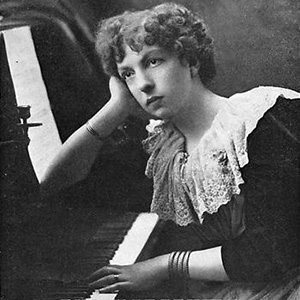 On May 19 the Chaminade Music Club in Yonkers, NY, will present Her/Music; Her/Story, a program featuring women composers that includes two works by Cécile Chaminade. The French composer and pianist “was one of the most popular and most successful composers . . . of her time,” says pianist Donna Weng Friedman, who will perform with soprano Allison Charney at the upcoming concert. When musing about how Chaminade became “so famous, and then so forgotten,” Friedman recalls, “I spent years at Juilliard, and not once did they mention a woman composer.”
Born in 1857 to affluent parents in the village of Le Vésinet just outside Paris, Chaminade numbered Héctor Berlioz among her neighbors. She played throughout Europe, performing before Queen Victoria, among others, and in 1908 gave two highly successful recitals in Carnegie Hall. The French government recognized her musical accomplishments with the Légion d’Honneur in 1913.
The majority of Chaminade’s compositions were what Friedman labels “salon music….It’s not deep, but it’s so charming .”
Her romantic and evocative piano vignettes and songs proved wildly popular and led female amateur musicians to organize hundreds of local Chaminade clubs in England and the U.S.
Critics—no doubt all men—were less impressed. Displaying an extraordinary degree of condescension, one critic wrote of her Carnegie Hall concert: Her music “has a certain feminine daintiness and grace, but it is amazingly superficial . . .. While women may someday vote, they will never learn to compose anything worthwhile.”
Chaminade’s compositions were intended to be performed in the home, the one area in which a 19th-century female composer could thrive, and she made most of her money from selling sheet music and recording piano rolls. Her efforts to compose larger works for the concert hall met with little success.
The dominant place Germans enjoyed in the early 20th-century music world further stifle Chaminade’s career. As one (German) theorist wrote, the French are a “race devoid of any sincerity or intelligence, of all culture, hungry to the point of madness for vain and hollow utterances.”
By the time of her death in 1944, Chaminade was virtually unknown. The record player had replaced the piano as the instrument of home entertainment and her music went unheard. Like so many other women denied a place in the 19th- and early 20th-century music worlds, she remains a largely forgotten figure.

 FEATURED JOBS


 RENT A PHOTO