Reviews
Portrait of an Artist, Evolving
SANTA FE—In Tobias Picker and Aryeh Lev Stollman’s Lili Elbe, a marriage changes faster than either partner can comprehend. First staged at Theater St. Gallen in 2023, the opera is receiving its American premiere. James Robinson’s absorbing production keeps Lili and Gerda’s changing relationship at the center and gathers considerable emotional force by the end.
The opera draws on the lives of Einar and Gerda Wegener, a married pair of early 20th-century Danish artists. As the story unfolds, Einar comes to understand herself and live openly as Lili Elbe. Stollman centers that narrative on Lili’s painful process of self-understanding and acceptance, alongside what Lili’s transformation means for Gerda and the life they have built together.
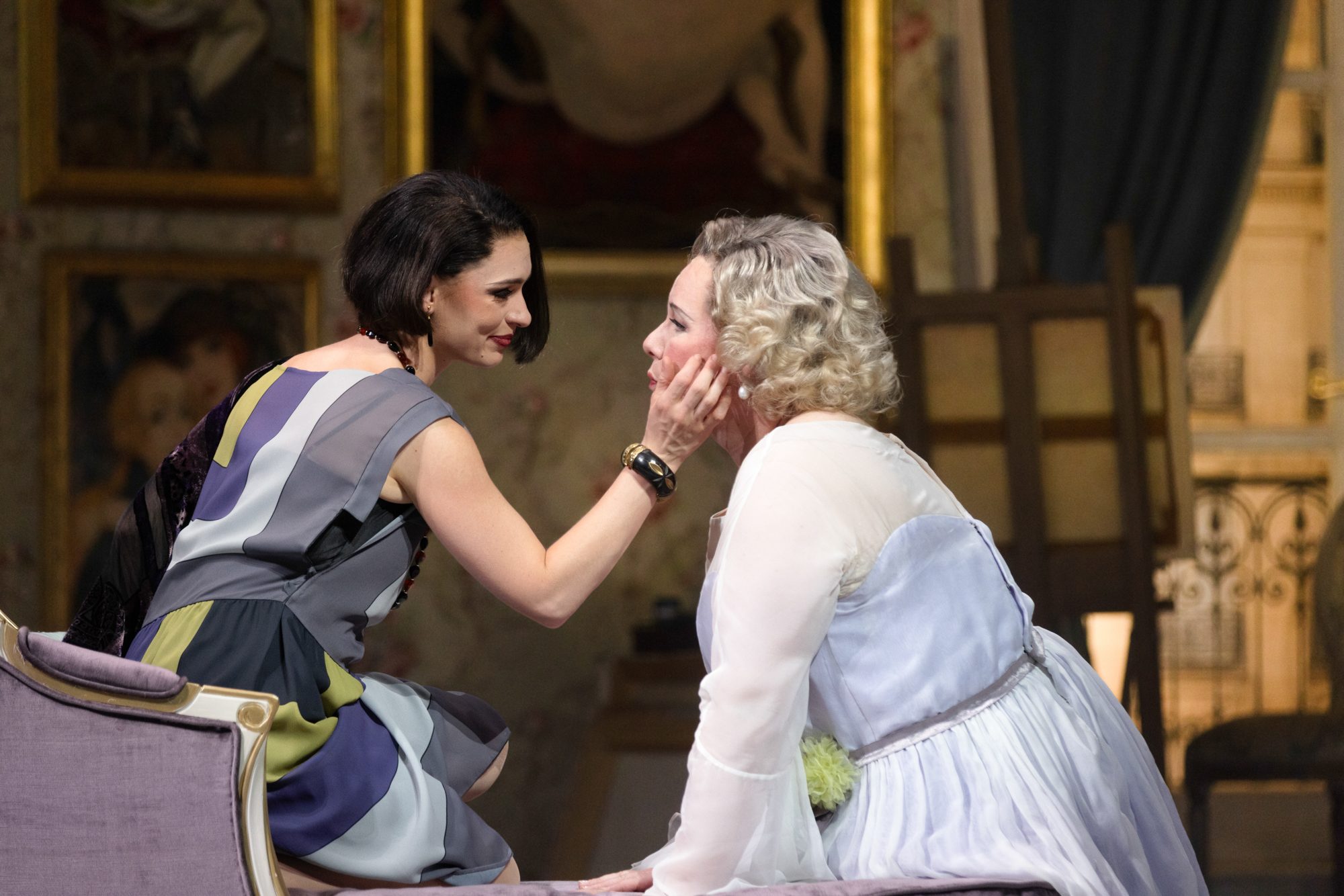
Sylvia D’Eramo and Lucia Lucas as Gerda and Lili in Santa Fe Opera's new staging of Lili Elbe
Picker’s score sustains this intertwined drama with assurance, at times expanding into passages of transporting lyricism. Brisk dance rhythms and rising figures catch the period’s appetite for motion and novelty; motoric patterns generate nervous energy beneath the dialogue. Solo wind lines rise above the ensemble like fine strokes of color catching the light, and passages evoking 1920s party music sparkle.
The opera opens with a play-within-the-play conceit: Einar and Gerda watch their friend, the actress Anna Larssen (Lindsay Martin), play Orpheus in an avant-garde retelling of the myth. Stollman imbues the Orpheus and Eurydice motif with a key dramatic function, weaving it through the opera as an image of lovers divided by an irreversible crossing. Lili cannot look back toward her former self, while Gerda increasingly occupies Eurydice’s place as the beloved left behind. Robinson and projection designer Greg Emetaz extend the idea visually, with haunting images of the pair passing as shadows across the stage during scene changes.
Lucia Lucas*, the transgender baritone for whom Picker wrote the title role, reprises the part she created at St. Gallen. Lili remains in the baritone register throughout, so Lucas traces her emergence through changes in physical bearing and emotional openness.
Lucas commanded the stage while keeping Lili’s vulnerability visible. She conveyed the resistance preceding self-acceptance as convincingly as the exhilaration that followed. Even when surgery offered the possibility of a new future, Lucas allowed hope to coexist with palpable fear. Her resonant baritone had ample presence, while her portrayal gave Lili an individuality that the vocal writing did not always supply on its own.
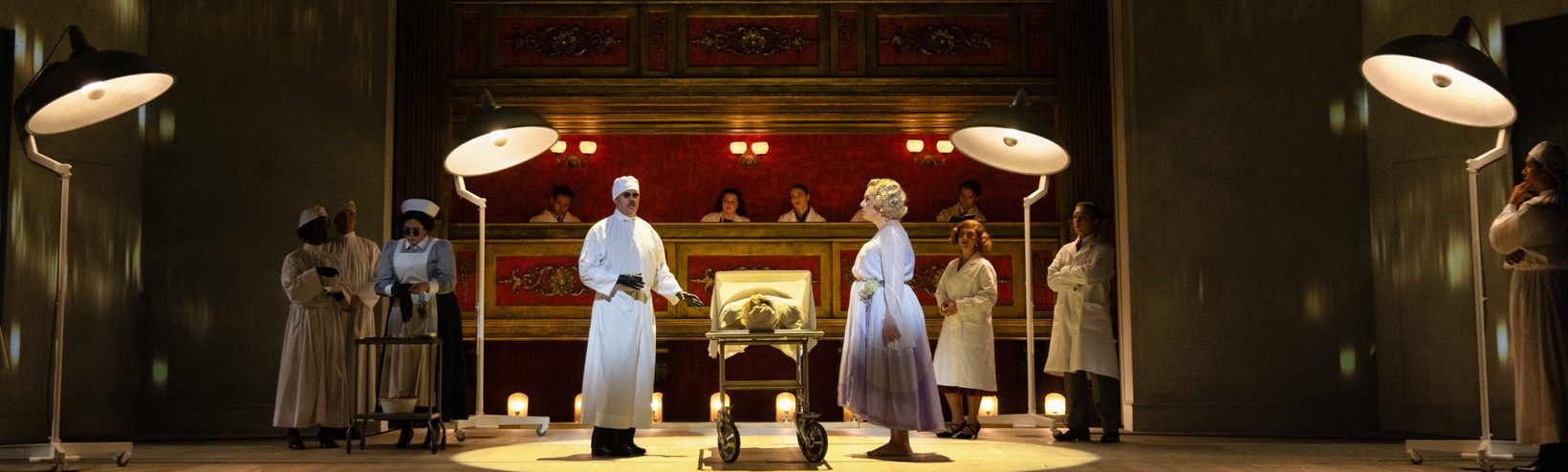
In the operating theater: Andrew Harris, Lucia Lucas, Alexis Seminario as doctor, patient, matron
Lili and Gerda’s move to Paris appears to open a new world in which anything might be possible. Robinson and his designers capture an artistic milieu thirsty for—and intoxicated by—modernity, with Allen Moyer’s interiors crowded with paintings and Marco Piemontese’s sumptuous costumes celebrating fashion and self-invention. Robinson anchors the production in this concrete period world, then allows realism to fracture, opening onto the opera’s mythic and psychological dimensions.
Yet the opera sets that promise against the resistance Lili encounters. Her return to the family home unleashes some of Picker’s most vehement music. Lindsay Ammann’s imposing voice gave Mother Wegener formidable authority, but the scene’s devastation came from the abruptness with which she withdrew every trace of maternal affection. Deanna Ray Eberhart sang Lili’s sister Dagmar with concentrated intensity, clinging to the memory of the baby brother she once knew and refusing to recognize the woman before her.
The opera gives Gerda an equally demanding emotional arc. Sylvia D’Eramo gathered power as the performance progressed. Her acting captured Gerda’s contradictory responses: she encourages Einar’s first appearance as Lili, then confronts the realization that the marriage cannot continue in its former shape. D’Eramo made that foreclosed possibility painfully credible.
Josh Lovell sang with gentle ardor as the perfumer Claude LeJeune, offering Lili a first tentative experience of romantic love after she begins living openly as herself. Their duet inspires one of Picker’s most emotionally soaring moments. Anna Kelly and Kyle White were warmly engaging as Hélène and Eric Allatini, progressive Parisian friends who embrace Lili.
Hélène connects Lili with Professor Warnekros, the physician who performs her operations in Dresden, where the clinic scenes take on an aura of surrealism. Andrew Harris’s booming, sepulchral bass gave Warnekros commanding authority. At first, he made the doctor’s progressive outlook and compassion persuasive, offering Lili—among the earliest people known to undergo gender-affirming surgery—a path toward the life she wants.
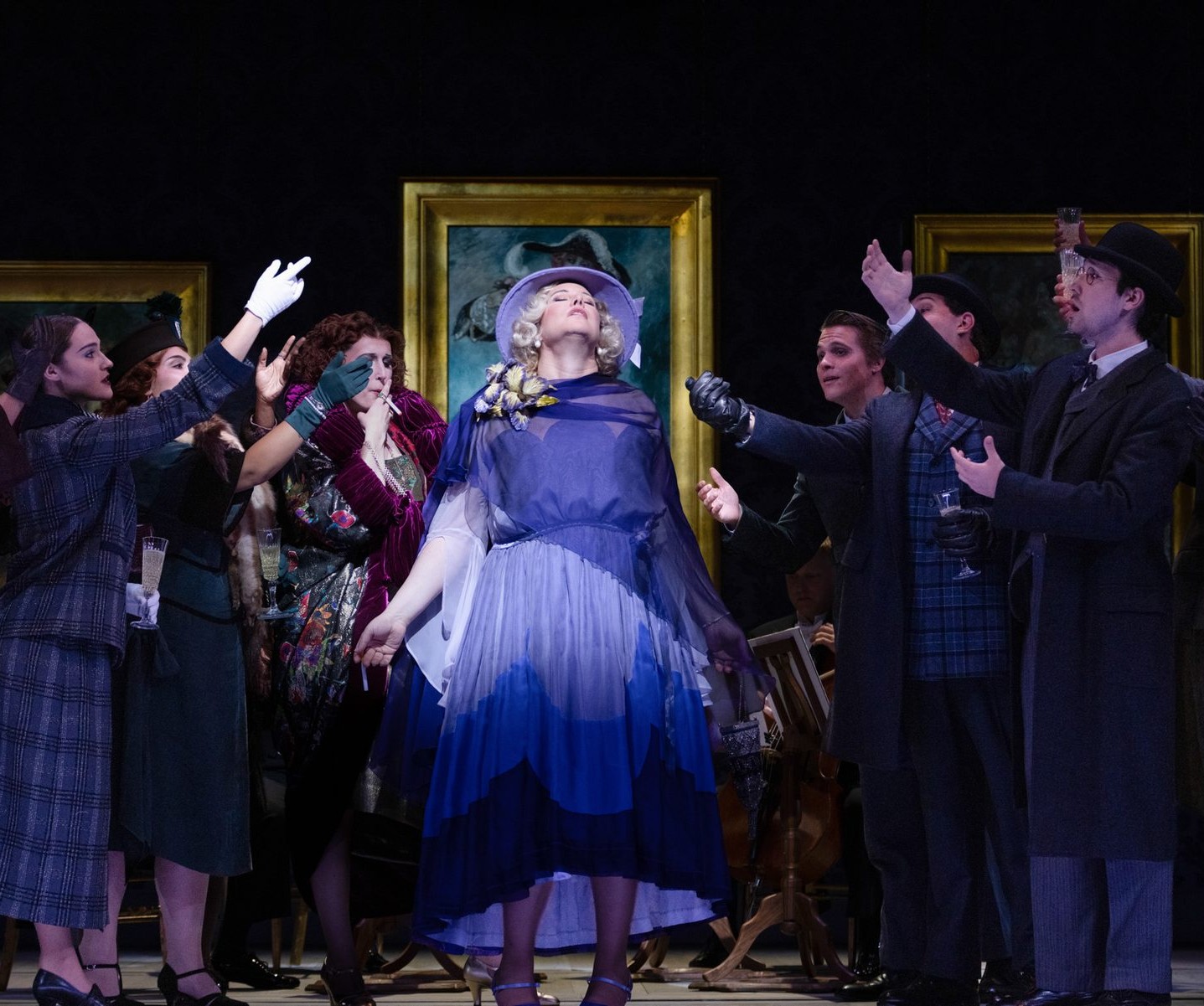
Lucia Lucas as Lili Elbe, with the Santa Fe Opera Chorus
But the ominous undertow in Harris’s voice came to the surface as Warnekros’s ambition took over, culminating in his determination to attempt a uterus transplant. As the young woman he deceives into becoming the donor, mezzo-soprano Audrey Welsh formed a fragile bond with Lili that brought humanity to a horrific episode. The operation ultimately proves fatal for Lili.
Roberto Kalb maintained momentum across the score’s many layers, drawing delicacy as well as power from the orchestra, though Picker’s denser textures sometimes covered the voices and obscured words at crucial moments. If some of the vocal lines share a generalized declamatory style, the cast gave each character an individual profile.
At the close, Picker bridges the physical distance between Lili as she lies dying in the Dresden clinic and Gerda by joining their voices in transfiguring music. Here, his lyrical instinct and sense of dramatic architecture converge. Lili Elbe emerges as an important opera of genuine consequence, and Robinson, Lucas, and D’Eramo made its final sorrow linger.
*Lucia Lucas was a Musical America New Artist of the Month, October, 2019
Photos by Bronwen Sharp for Santa Fe Opera

 FEATURED JOBS


 RENT A PHOTO