Special Reports
MA Top 30 Professional: Makia Matsumura
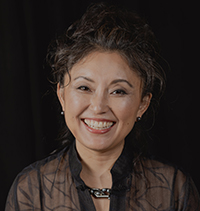
Senior Operations and Technical Specialist
Yamaha Artist Services
Makia Matsumura is a Yamaha lifer. When she started her piano studies in Japan, at four years old, she enrolled at a Yamaharun music school. More than two decades and two composition degrees later, she found herself back at Yamaha again, doing a job she never would have expected: coordinating the arrival and preparation of Yamaha pianos at concert halls around the world.
“I had no intention or dream of joining a corporate, 9-to-5, Monday-through-Friday position. I thought it would be a temporary thing, just a few years,” she says, then chuckles. “I just passed my 20th anniversary in the business.”
Totally behind the scenes, Matsumura’s job is essential for touring Yamaha pianists. She works with a network of trusted, company-approved piano movers to bring the instrument physically to the hall, budgeting enough time for it to acclimate to the space. She’s also responsible for scheduling tuners to ensure the instrument is in optimal condition.
When not juggling day-to-day logistics, Matsumura spends her time on the development of Yamaha’s Disklavier series—a longtime passion project of hers. Produced by the manufacturer since the 1980s, the Disklavier is the 21st-century answer to the player piano: a self-playing acoustic piano that can be programmed to play whatever the user wants. Matsumura worked on the project early on, sourcing New York–based conservatory students to play standard rep pieces pre-programmed in early models. But her favorite memories involve working with composers like George Lewis, Dan Tepfer, and Roberto Sierra, who have all sought out the Disklavier for its superhuman capabilities.
Well, mostly superhuman: the Disklavier is still an acoustic piano, meaning it has the same note decay and key stiffness/ rebound as a normal piano. Matsumura believes those qualities could be helpful for composition students writing for piano for the first time. “It can be a bridge between computerized composition and actual acoustic writing,” she says. “Physical limitation is a great framework for more creativity.”



 FEATURED JOBS


 RENT A PHOTO