Reviews
A Starry Tribute to Alfred Brendel
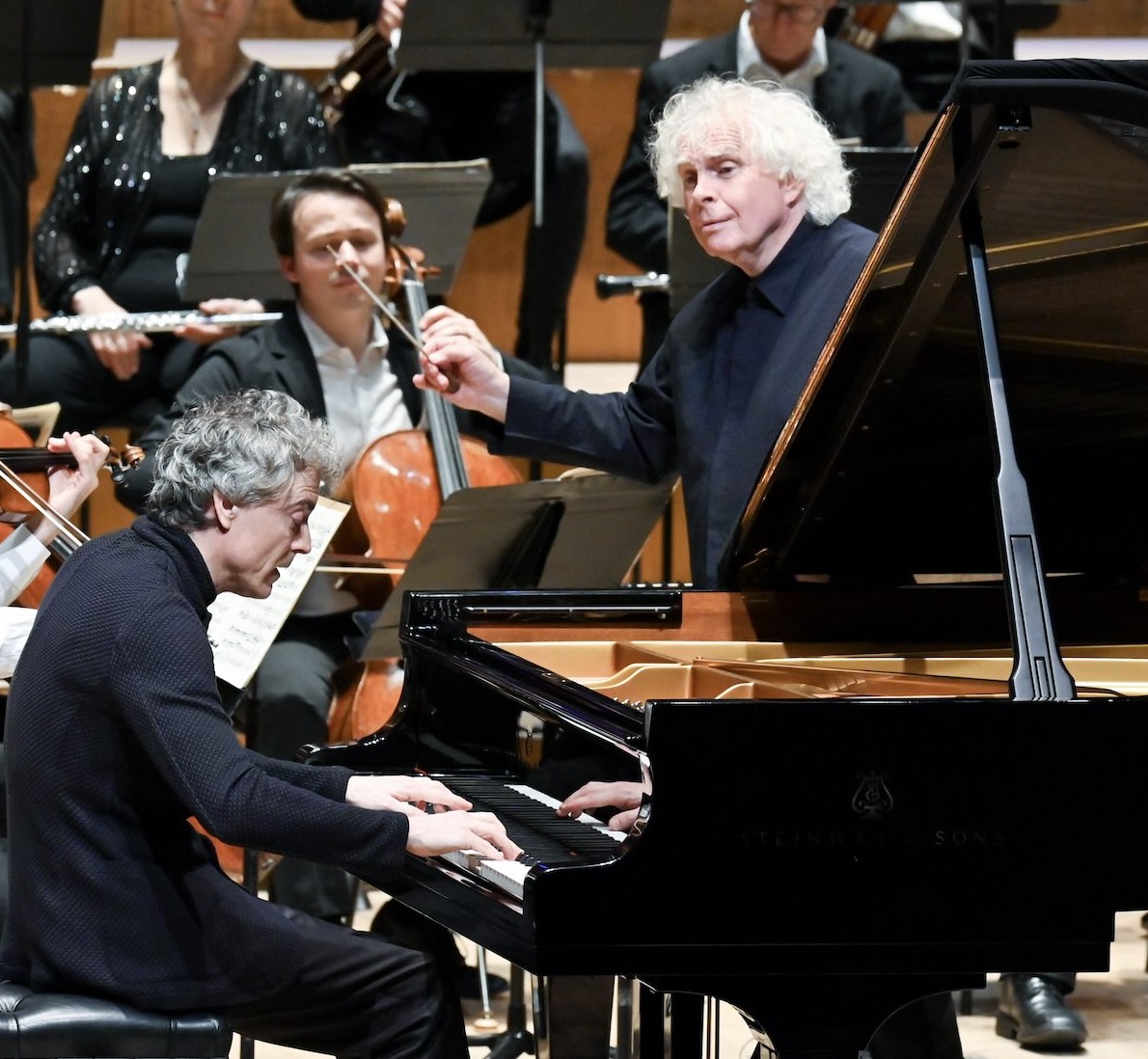 LONDON—Alfred Brendel’s passing in 2025 robbed the world of one of the great 20th-century pianists and a truly original creative artist who impacted the careers of contemporaries and students alike. Czech-born in 1931, though mostly raised in Austrian Graz, he combined an acclaimed concert career with notable sidelines as author, poet, and musical thinker. His 1971 move to London, where he bought a house in the well-heeled borough of Hamstead, cemented a lifelong love affair with Britain and British audiences.
This January 5 concert at London’s Barbican Centre took place on what would have been Brendel’s 95th birthday. It was a chance for friends and colleagues to pay tribute in a wide-ranging program celebrating the breadth of his interests and his ongoing influence on some of the industry’s most admired musicians. And what a starry line-up it was. The ad hoc orchestra, for example—dubbed “The Orchestra of the EnBrendelment”—was conducted by Simon Rattle. Comprised of some of London’s finest players, it also featured Brendel’s cellist son Adrian and Australian composer and violist Brett Dean. Soloists included pianists such as Paul Lewis, Imogen Cooper, Pierre-Laurent Aimard, and András Schiff as well as violinist Lisa Batiasvili and actor Harriet Walter of Succession fame.
 Largely self-taught, Brendel was known for scrupulous interpretations of the works of Mozart, Haydn, Beethoven, and Schubert. Not unsurprisingly, then, there was plenty of core Austro-German repertoire, opening with the percussive wallop that begins “The Representation of Chaos” in Haydn’s The Creation. Rattle, whose fondly penned tribute in the program described Brendel as “the very definition of integrity,” brought their shared love of Haydn to an atmospheric reading that reveled in gossamer string textures with dramatic upward swoops and the patter of hard sticks on period kettledrums. The rip-roaring finale of the composer’s Symphony No. 90 with its two false endings managed to trick the slightly bemused audience to the conductor’s evident delight.
Other snippets were more tenuous. Batiashvili’s delicate, silvery top and rich middle register graced the “Andante” from Mozart’s Fourth Violin Concerto, but the impression remained of an awkward fillet. Imogen Cooper’s pearlescent pianism in Mozart’s concert aria “Ch’io mi scordi di te?” was entirely lovely, but the music—often the preserve of mezzos—didn’t quite suit Lucy Crowe’s bright, emotive soprano.
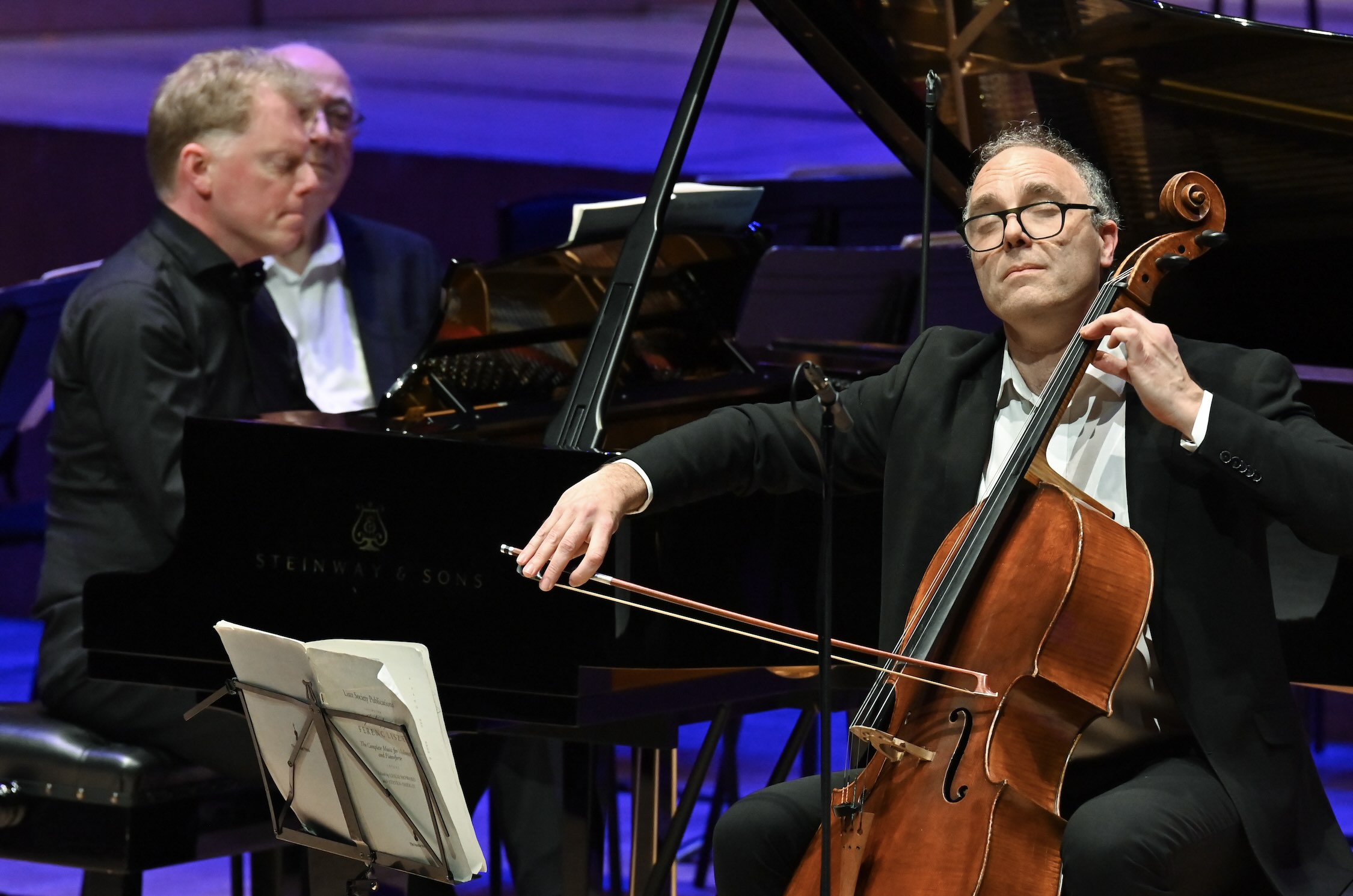
The second of the evening’s three parts felt more valedictory. The fluidity, lightness, and sheer elegance of the Takács Quartet suited the fleeting opening movement of Haydn’s F major String Quartet Op. 77, No. 2—a masterclass in communal listening. Brendel junior joined them as extra cellist for the great “Adagio” from Schubert’s String Quintet. Brisk, as if determined not to wallow in sentiment, and with tensile playing that was almost modernist, Brendel senior would doubtless have approved. Adrian Brendel then gave a lovely account of Liszt’s forward-thinking Elegie No. 2 with Tim Horton’s rippling piano accompaniment revealing the music’s visionary impressionism.
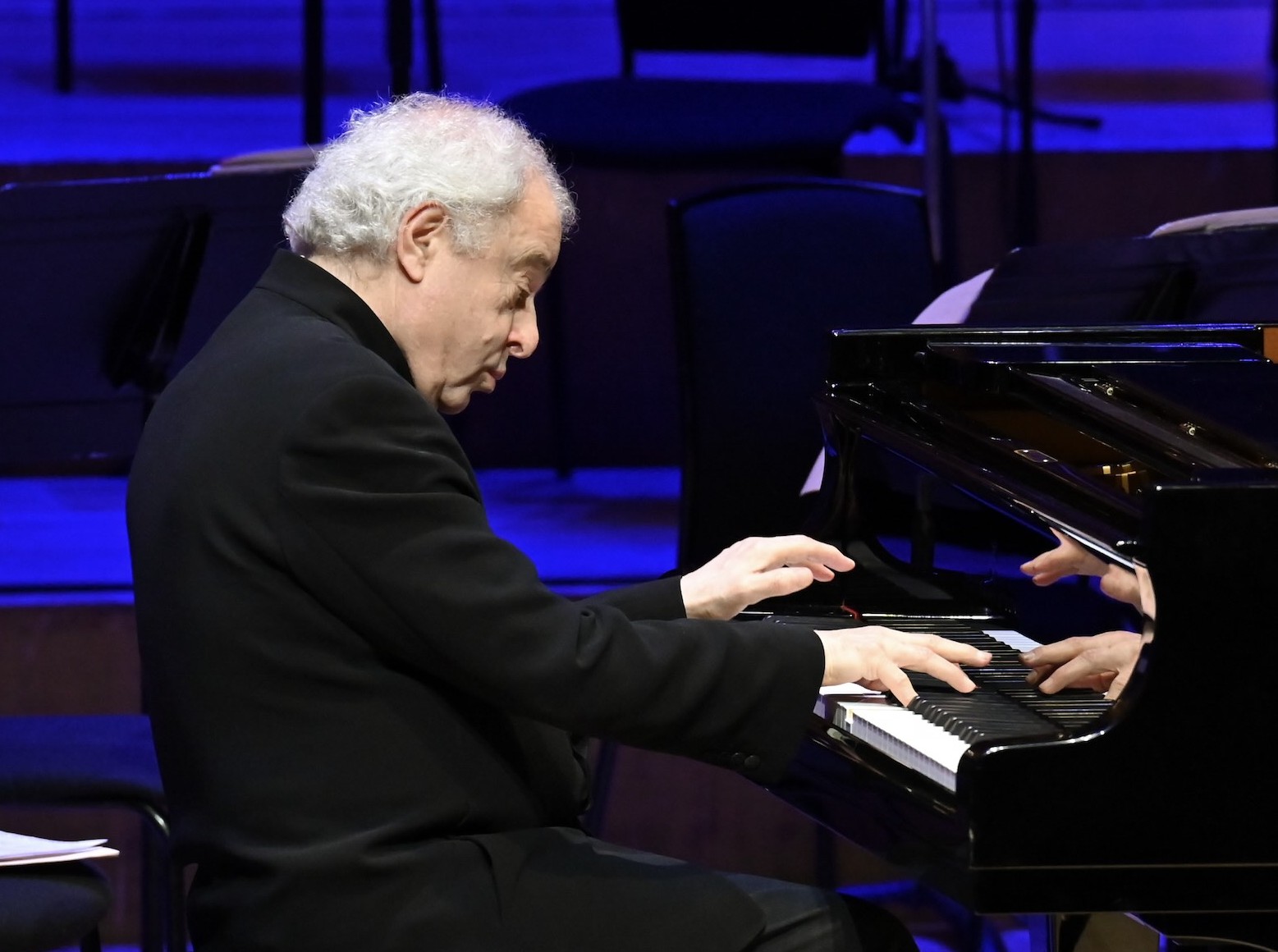
András Schiff performs Bach at the Alred Brendel tribute
More Schubert followed, with Paul Lewis joined by Till Fellner, both of them Brendel students, for the posthumously published Allegro in A minor for piano duet. Crisp and buoyant though it was, the musical partnership felt insufficiently lived in. It was left to András Schiff to round things off with Bach: first, delivering an unannounced and shimmering account of the “Aria” from the Goldberg Variations, and then bringing his peerless touch and musical sensibilities to the poignantly appropriate Capriccio on the Departure of a Beloved Brother.
Despite his serious on-stage demeanor and famously probing intellect, Brendel was also blessed with a Puckish wit encapsulated in Rattle’s recall of an occasion where the curmudgeonly pianist, annoyed by a restaurant’s piped music, pulled a pair of wire cutters out of his pocket and gleefully nobbled the sound system.
It’s perhaps less well known that he published several volumes of poetry, a selection of which kicked off the first half of the evening’s third part. A pair of Mauricio Kagel’s tongue-in-cheek Marches to Fall Short of Victory—the brass ensemble kitted out in bright red uniforms and bearskin hats—framed seven poems, interspersed by miniatures from Kurtág’s Játékok and a fragment of Ligeti’s Tenth Etude.
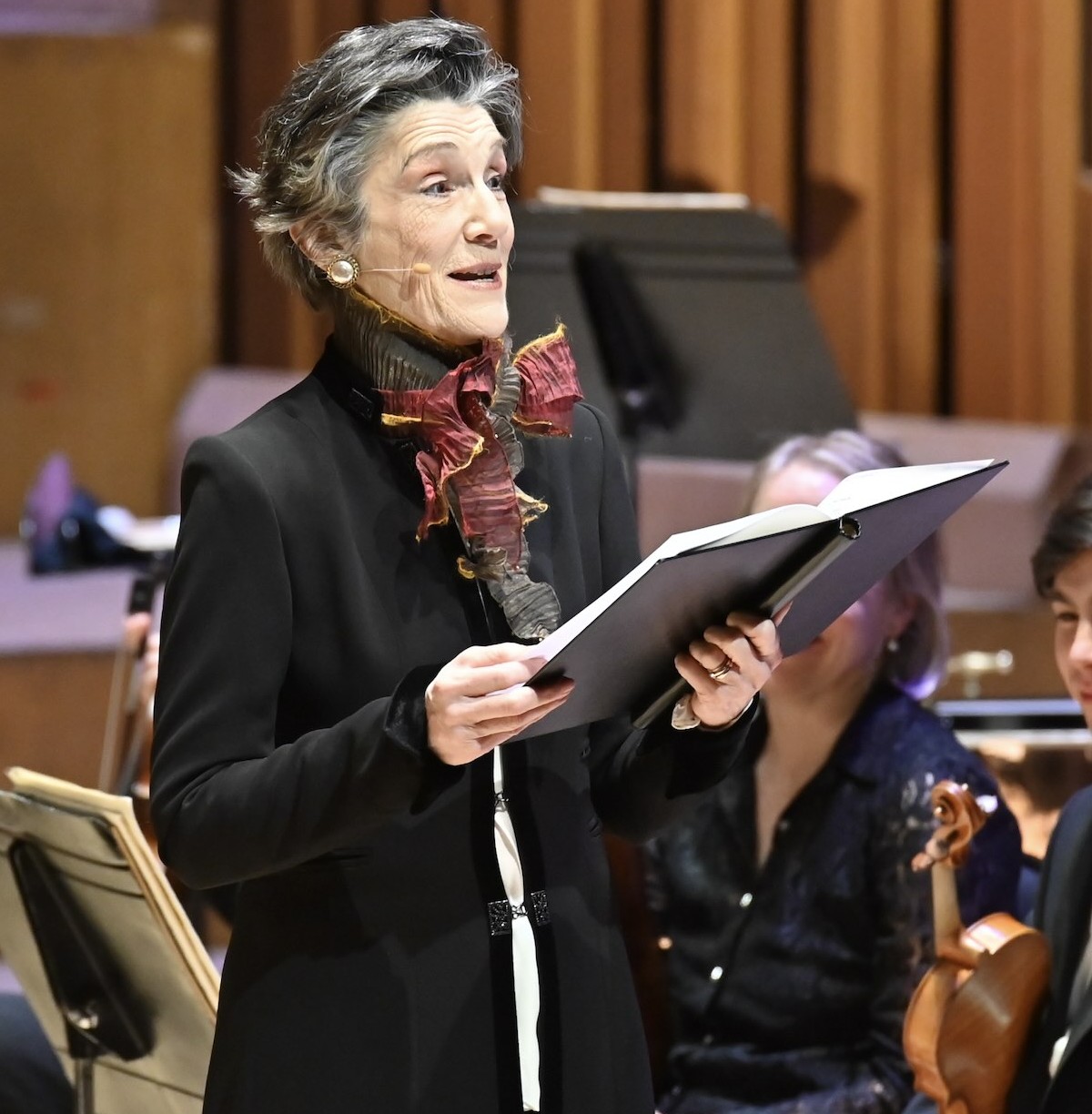 Aimard was the pianist here, his incisive yet cheeky readings spot on. He was especially enjoyable in the more esoteric numbers: In Pantomine, for example, he cast mystical gestures over the keyboard with never a note played, while Fundamentals called on him to chatter like a monkey. Harriet Walter relished Brendel’s offbeat verses: Cologne, an ode to the coughers and excessive clappers in German concert halls, ends with the Teutonic miscreants merging with the New York Sneezers and the London Whistlers. Godot is a suitably absurdist account of the eventual appearance of Becket’s eponymous absent hero, while Woody Allen sees the writer determinedly mistaken for the U.S. filmmaker before shrinking with embarrassment and being carried off in a shopping bag.
The evening concluded with Lewis as poetic protagonist in a spectacular account of Beethoven’s Third Piano Concerto. Rattle’s elastic phrasing ensured everything came up fresh and new, while Lewis emerged as very much his former teacher’s heir in an urgent, multihued account of the solo part. If there was a testament to the late, lamented master, it was their way with the deeply felt, bittersweet central movement.
Brendel retired from the concert stage in 2008, though he continued to share his knowledge through lectures and masterclasses. His legacy, of course, lives on through his extensive discography and enduring influence on future generations, but this was a wonderful opportunity to remember a musical giant in all his wit and wisdom.
Photos from the top: Pianist Paul Lewis with Simon Rattle and "The Orchestra of the EnBrendelment”; cellist Adrian Brendel and Tim Horton; Harriet Walter reads selected Brendel verses
Photos by Chris Christodoulou

 FEATURED JOBS


 RENT A PHOTO