People in the News
New Artist of the Month: Mezzo-soprano Jingwen Cai.
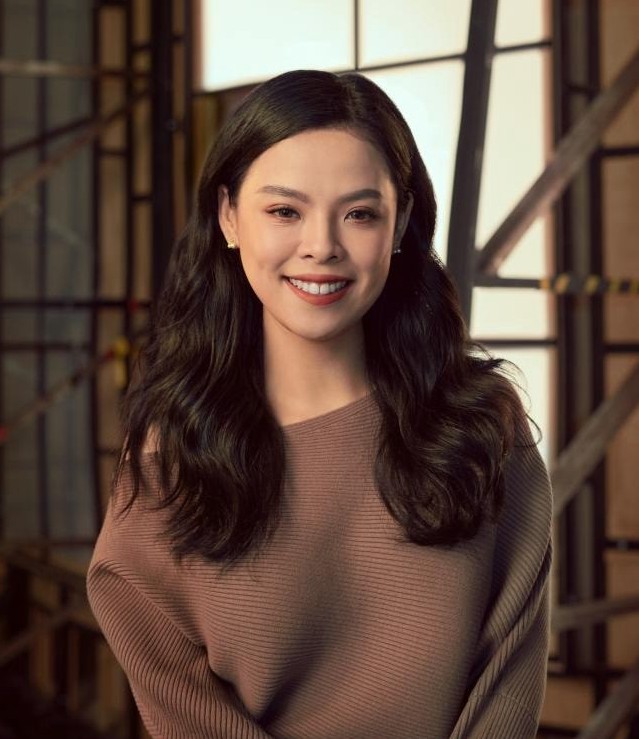 LONDON—The Royal Ballet and Opera’s prestigious Jette Parker Artists Programme has produced some remarkable talents over the years so it should come as no surprise that its showcases are a hangout for artist managers and critics alike. This year’s offering, a triple-bill dubbed Tales of Love and Loss, offered a typical array of talent, but few as arresting as Chinese mezzo-soprano Jingwen Cai.
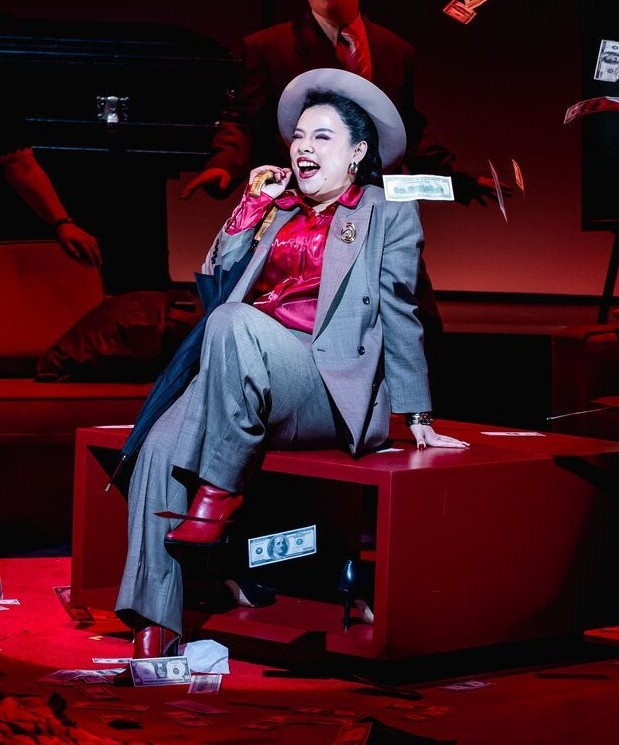
Reviewing the production, I was struck by how she managed to stand out in a dramatically superfluous role in Charlotte Bray’s Making Arrangements, “displaying a substantial, velvety voice with a thrilling lower register.” Later, in the hilarious Four Sisters by Russian-born British composer Elena Langer, she revealed a fine comic talent while almost stealing the show. “Cai was perfect as the mean-spirited Olga, wielding bottom notes like battering rams,” I wrote.
Born in Guangzhou, China’s third-largest city and the capital of Guangdong Province, Cai is an engaging interviewee who smiles easily and often, her silvery laugh belying a voice that can pump out the decibels at the flick of a switch. We’re meeting at the Royal Opera House where she informs me that after two years living in nearby Waterloo, she plans on retaining London as her home base.
Cai, who turns 30 this month, was raised in a bustling, business-oriented family, making her choice of career somewhat unusual. “I’m really lucky that when I was around four years old, I got my first birthday gift and it was a piano,” she says, her command of English not quite complete. “I also played the violin, and I joined a children's choir at around four or five years old as well.”
Early ambitions included becoming an astronaut or alternatively an interpreter (she has a deep love of languages), but then, around the age of 14, her choral teacher informed her that she had something special. “I came to her, and she was like, ‘You have a voice,’ and maybe you can try to sing with more of the right technique. And that started my enthusiasm.”
Given her youthful predilection for belting out pop songs, Cai’s voice seemed an unlikely fit for traditional Chinese song. On the other hand, her first teacher saw at once that she was a potential mezzo-soprano in the Western bel canto mold and so she was taught according to her voice type from day one. Her first encounter with opera—a school trip to see Rigoletto in Italian at the Guangzhou Opera House—was a window onto a brand-new world.
 Studies at South China Normal University and then at the Xinghai Conservatory of Music deepened her love of opera and the stage. “I was not sure if I could be a professional singer—it’s not a path for everyone—but I think I was lucky to have coaches and teachers who saw my potential. It was like, ‘You can do this,’ and that always gives me more energy.”
With that energy, came ambition: “I always want to be in the center of the stage. So, I always work hard and I want to be the voice that can sing out and be noticed,” she admits. “And so, I found that, yes, I have the voice, I have the possibility, and I have the ability to sing and be right in this career.”
Back then, vocal heroes included Jessye Norman and mezzo-soprano greats like Janet Baker, Christa Ludwig, and Anne Sophie von Otter. As for roles, “From the very beginning it is Carmen and Dalila,” she enthuses. “It’s interesting for my voice that I have the lower part, but I don't want to lose my higher part. So sometimes I will sing the trouser rolls and mix with the feminine rolls. So, when I started, I learned [Bellini’s] Romeo, and also then Cherubino.”
As with many of her generation, the conclusion of her Masters degree coincided with the pandemic, a time of temporary jobs and artistic introspection, after which she gradually built her profile through a series of significant competition wins in China. Work with orchestras followed, including Verdi Requiems and Strauss’s Four Last Songs (bold repertoire for a mezzo). It was while she was in Beijing singing at the NCPA that a chance encounter changed her life. “The baritone I was working with on a contemporary Chinese opera was a Jette Parker alumnus and he heard my voice and said, ‘You should apply.’”
Arriving in London in 2024 turned her world inside out, in the very best of ways. “Every day I wanted to absorb new things. Everything is so fresh for me,” she recalls. “The most important thing was the opportunity to sing on the main stage and work with these amazing casts. The people who I watched on YouTube before, they were alive. Juan Diego Flórez was in the first production after I came here—I covered Nicklausse in Tales of Hoffmann. Last week, when I was at lunch, I saw Lisette Oropesa behind me. I thought, ‘Oh, that’s Lisette. But no, I can't shout.’”
ROB opportunities duly arose. Cai sang Siebel in David McVicar’s Faust, Mércèdes in Damiano Michelotti’s Carmen, Ninetta in Les Vêpres siciliennes, and Flora in La Traviata. She also gained her first experience of Janácek, appearing in both Jenufa and The Makropulos Case, the latter under the company’s new Music Director Jakub Hruša. It led directly to an offer to sing a series of Beethoven Nines on a European tour this autumn with Hruša and the Bamberg Symphony. “After The Makropulos Case, he said, ‘If we have the opportunity, we can work together.’ And I’m so lucky. After one month I got [the offer]: Yay! That’s it.”
Next up for Cai is Olga in Eugene Onegin with Opera North, Flosshilde in Das Rheingold with NCPA in Beijing, and then? What would be her dream role? “Carmen. I really want my Carmen,” she says with an assuring degree of steely resolve.
Above: Caid in ROB's Tales of Love and Loss
Top photo credit: Sebastian Nevols

 FEATURED JOBS


 RENT A PHOTO