People in the News
New Artist of the Month: Pianist Élisabeth Pion
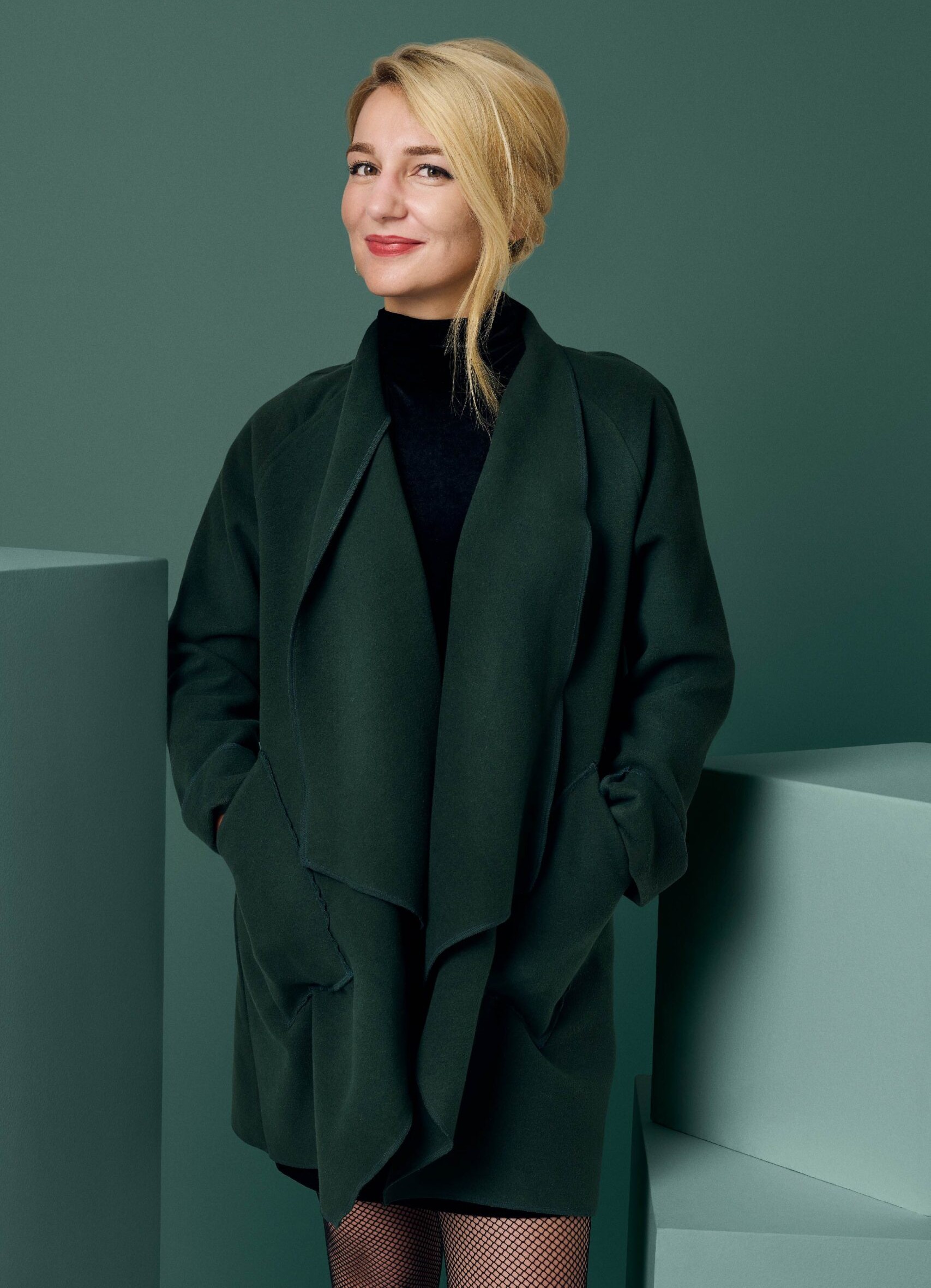 Last October, when the 2025 Honens International Piano Competition in Calgary was heading into the concerto finals round, there were no foregone conclusions, though contrasts in the personalities of the three finalists had steadily sharpened.
Hearing Élisabeth Pion’s account of the Third Prokofiev Concerto with the Calgary Philharmonic, I was struck by her bright but controlled energy—dazzling without strain, lyrical yet spiced with attitude and wit. She moved easily among Prokofiev’s contesting moods without resorting to mannerism. The technique never drew attention to itself but was simply there, in service of a personal way of playing that convinced me she had something to say about this ultra-familiar score.
It also convinced both the jury and audience: Pion was named Gold Laureate and took the Audience Award. The coveted Honens Gold carries a C$100,000 prize along with a three-year artist development program designed to launch an international career.
Recently turned 30, Pion grew up in Saint-Hyacinthe, Québec, and began piano early, but only committed to it professionally in her late teens, after pursuing interests beyond music. She went on to study in Montréal before moving to London, where she is now based, completing her training at the Guildhall School of Music & Drama.
Pion is already seeing the effects of her Honens victory in a rapidly expanding schedule. May brings an especially full calendar, including several recitals in Canada, Mendelssohn’s First Concerto with the Orchestre symphonique de Québec, and a program of Beethoven concertos with the Arion Orchestre Baroque—a collaboration that will culminate in a complete Beethoven concerto cycle on disc, to be released by the end of 2027. More immediately, June brings a recording of Ravel’s G major Concerto and a solo album on the Steinway & Sons label.
But the decisive shift in recognition brings its own pressures—not only for Pion’s calendar but in the expectations that come with that new visibility. Reiterating a concern she articulated when we spoke during the competition, Pion sees the danger of letting “perfection” narrow the field of what matters. “It’s a constant battle,” she says. “Such a big weight is put on getting every pitch right. But if I obsess about perfection in that one parameter, everything else suffers until I get back into the frame of mind where I'm focused on storytelling, the imagination, the structure. The paradox is that I’m actually less note-perfect when I obsess about the notes—but when I focus on the right things, the music comes more to life. Otherwise, it can be beautiful but very empty—sound without meaning.”
Pion’s sense of musical priorities also points toward a broader way of thinking about her career. “My identity is not totally linked to the fact that I’m a pianist,” she says. “Of course, it’s a very important part of my identity. But first and foremost I’m a human being. All the curiosity I’ve fed over the last few years—the interests that are part of my day-to-day life and my practice—informs my playing: literature, nature, friendships, the psychology of how humans relate to each other. All of that is fascinating to me.” Pion is involved with the International Liberty Association, which advocates for human rights in Iran and the Middle East, particularly for women and children.
Currently, she is increasingly focused on the Beethoven Piano Concerto project. At first the proposal to record them all took her by surprise. Though she has performed the piano sonatas, as well as the violin and cello sonatas, the concertos did not yet feel as fully at home in her hands as her Prokofiev and Ravel.
Beethoven refreshed
But the intense study has brought new insights. “We’re often taught to think of Beethoven in quite black-and-white terms,” she says, “but he’s such a nuanced figure—playful, even mischievous, but also capable of real darkness.” Jan Swafford’s biography has proved especially revealing: “It’s a work of art in itself and has completely changed my perception of Beethoven,” she notes, with its multifaceted portrayal of the composer’s contradictions—including his “playful and even trickster” side.
What draws Pion to add her voice to such extensively recorded repertoire? While she is deeply familiar with a wide span of the cycle’s legacy on disc, Pion believes the period instrument perspective—she plays on an 1826 Broadwood fortepiano—“can bring something new and fresh and serve this music particularly well.”
Her partners are conductor Mathieu Lussier and Arion Baroque Orchestra, with whom she previously recorded an album pairing Mozart’s K. 491 with works by his pioneering French contemporary Hélène de Montgeroult on the Broadwood label.
Even as she turns to core repertoire, Pion is alert to the risk of giving way to routine. “I just don’t want to fall in the trap of playing always the same things and becoming a kind of bored jukebox,” she says.
One way she resists that is by maintaining space for creation. Pion also composes and is intent on making more space for the practice; she describes it as essential to her artistic equilibrium. She included one of her pieces in the solo recital round at Honens and has recorded another on her debut album, Femmes de Légende, devoted to music by women composers. “Composition helps create an equilibrium with the demands of learning and deepening repertoire,” says Pion. “I need a place where it’s a kind of playground.”
Looking back on the past year, Pion admits: “You win a big competition, and honestly, you feel a bit lost. After so many years in the circuit, you wonder: what did you aim for?” What matters most, she suggests, is maintaining a sense of development: “If I don’t have the feeling that I’m learning and that I have more to offer to audiences, I don’t feel fulfilled.” For her, performance ultimately depends on connection. “It doesn’t make sense until there is that connection to the other."
Photo by Jeremy Fokkens

 FEATURED JOBS


 RENT A PHOTO