Industry News
Top 10 Pandemic Pivot No. 6: Wigmore Hall's Pioneering No-Audience Concerts
When Wigmore Hall Artistic Director John Gilhooly announced on May 12, 2020, that London’s premiere chamber music venue would be mounting a series of 20 lunchtime concerts to be broadcast from an empty hall throughout June, the classical music world gave a unanimous cheer. With the U.K. in a lockdown that would last until mid-June, and with restrictions on indoor gatherings expected to stretch well into the fall, Gilhooly didn’t just show himself to be a pioneer, he proved adept at negotiating a path bristling with logistical hurdles.
The impressive line-up of British-based talent was headed by pianist Stephen Hough who opened the series with Busoni and Schubert and included singers Iestyn Davies and Roderick Williams as well as pianists Benjamin Grosvenor, Angela Hewitt, and Paul Lewis. All concerts were filmed in HD and livestreamed around the world on the Wigmore Hall website and social media, as well as being broadcast on BBC Radio 3—the first live music the station had presented since the March shutdown.
An Easter epiphany
Gilhooly’s inspiration came on Easter Sunday as he watched a Catholic mass broadcast by the BBC comprising two priests, an organist, and a singer—all behind closed doors. If they can do it so can we, he thought. “I went to the BBC with a concept and suggested to them that if we did it, it couldn’t just be one or two events, it had to be a big statement,” he told Musical America in a One to One interview in May [see below]. “The controller there, Alan Davy, got back to me straight away and we talked at length about the risks we would have to manage and came up with a mutually agreeable list of performers.”
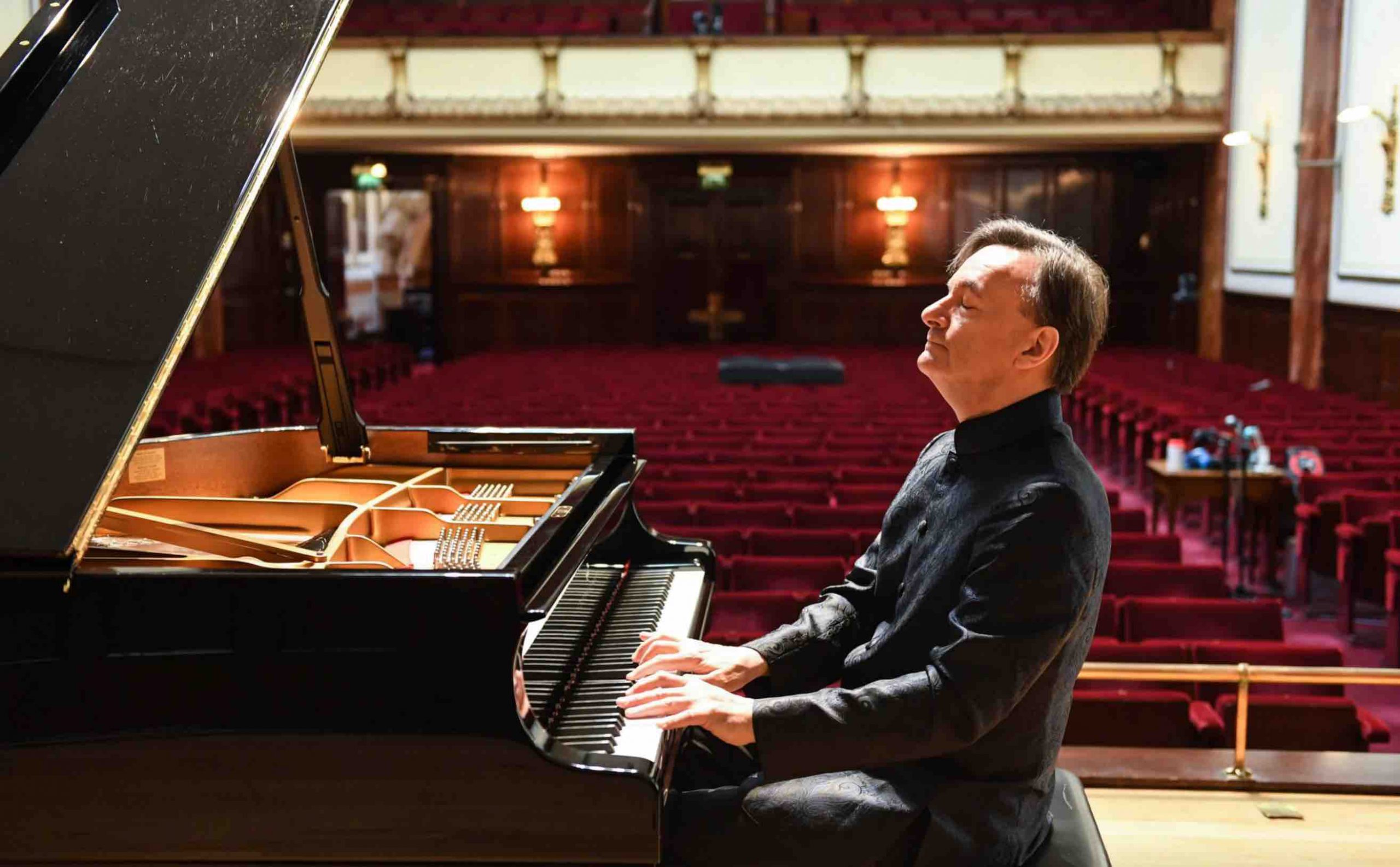 Pianist Stephen Hough plays to an empty Wigmore Hall
With two-meter social distancing rules in place across the U.K., concerts would not only have to play to an empty auditorium but use only performers who lived in or near central London. Ideally they would be able to either walk or cycle to Wigmore Hall.
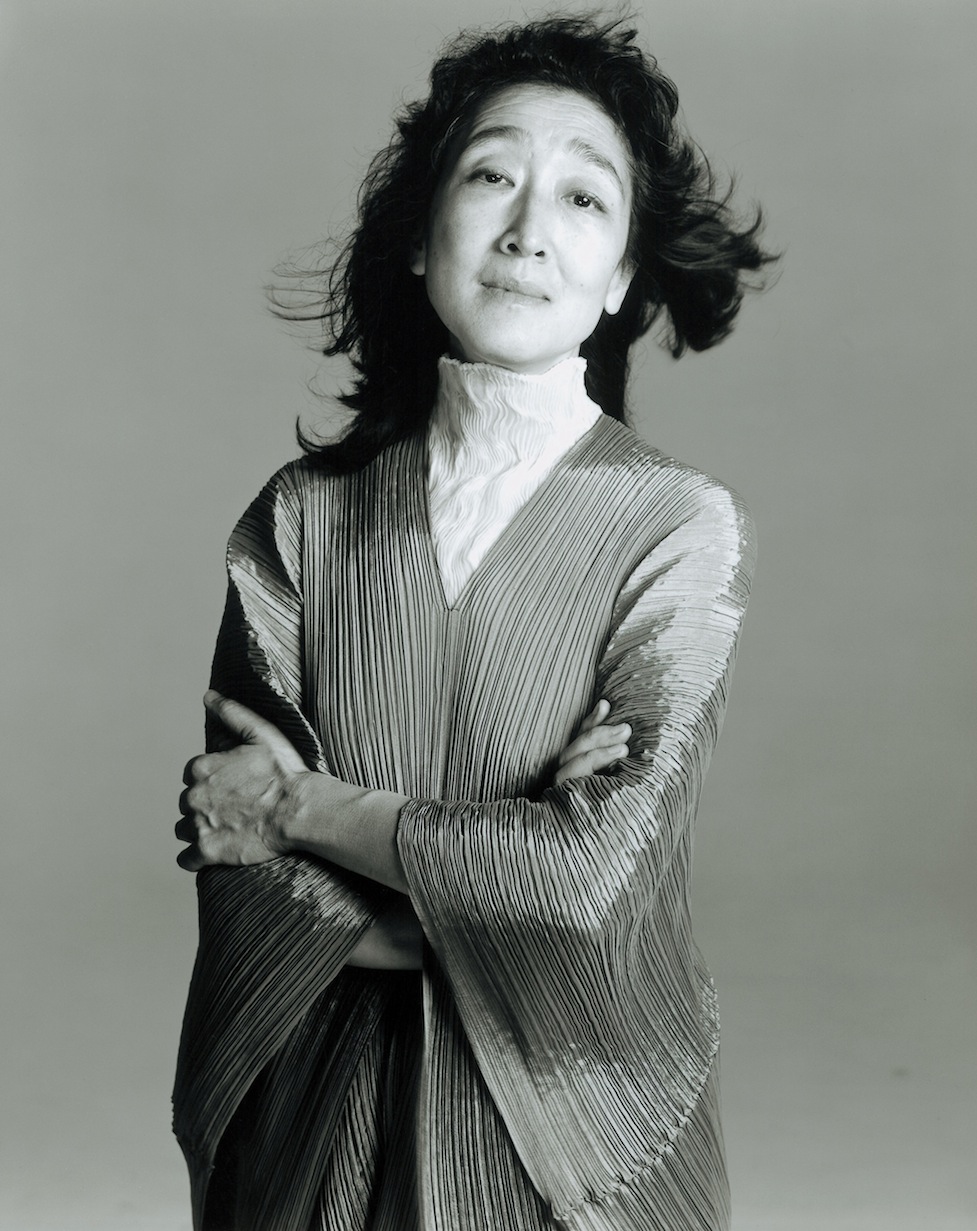
“Musicians weren’t quite crying down the phone, but they were very emotional,” said Gilhooly. “One of the first I called was Mitsuko Uchida who immediately said yes. I thought she’d sleep on it, but she lives quite close to the Hall and said she’d like to do Winterreise with the tenor Mark Padmore. Despite it being high summer in June, this is a bit of a winter journey for all of us, so I suppose it’s appropriate.”
Built next door to its piano showrooms by the German firm Bechstein, the Renaissance- style, 522-seat Wigmore Hall opened in 1901. In pre-pandemic days it presented nearly 500 concerts per year, many of them broadcast internationally, as well as sponsoring international chamber music and song competitions, and running a substantial education program. With a staff of around 100—around three-quarters of whom are part-time ushers, cleaners, etc.—like most arts venues, Wigmore by May had been forced to furlough most of the part-time and half its fulltime staff. Despite being one of Arts Council England’s National Portfolio Organisations, its only three percent funded making the financials extremely delicate. “We couldn’t have done it without the BBC or the generous financial support,” said Gilhooly, explaining how the program had been underwritten by both the public broadcaster and an anonymous private donor.
Remote control captures the moment
With a degree of foresight, cameras and a single piano had been left in place when the Hall closed in March. The ability to control cameras remotely meant that Gilhooly and a single BBC presenter would be the only non-performers in the Hall. All communication would be by email or text backstage. “We have a permanent link to the BBC, which means they don’t have to bring along any broadcasting vans,” said Gilhooly.
 Logistics included only two musicians on stage, with a page turner ideally coming from the same household as the pianist. Steps were taken to decontaminate the piano after tuning and ensure that only the tuner and the pianist would touch it. Otherwise, just two people ran each show from backstage—one from the BBC, one from Wigmore Hall. “We do have a four-hand piano recital—not two pianos—but those two pianists share a household,” he explained.
By August 10, when Gilhooly announced that Wigmore Hall would be mounting a further 100 concerts from September 13 to December 21, it was clear that the first venture had been a success. Detailed plans would be in place to ensure the venue was able to react quickly and appropriately to changes in government guidelines, but most concerts aimed to include an audience in the Hall, initially restricted to 56 people (i.e. 10 percent capacity). In the event, although the U.K.’s second lockdown in November cancelled a significant amount of audience attendance, and several international artists were forced to cancel because of changing travel restrictions, the series played without significant interruption.
For Gilhooly, this was never about the money and always about the classical music “ecology” of artists, management, presenters, and promoters keeping in touch and being there for each other. “This is not about coming first; this is not about just preserving ourselves,” he said. “We know we’re not going to come back 100 percent, but hopefully we can come back in a way that won’t permanently damage that ecology.... Now is not the time to complain about the industry. We need to salvage the livelihoods, particularly of freelance musicians. Music will be poorer if we don’t get through this together.”
Stephen Hough photo by Doug Peters; right: Mitsuko Uchida

 FEATURED JOBS


 RENT A PHOTO