All material found in the Press Releases section is provided by parties entirely independent of Musical America, which is not responsible for content.
Press Releases
Nov. 14: Jacksonville Symphony Announces The Flying Ace, World Premieres Live with Historic Film

FOR IMMEDIATE RELEASE
Contact: Katy Salomon | Primo Artists | VP, Public Relations
katy@primoartists.com | 646.801.9406
The Jacksonville Symphony Announces the
World Premiere of The Flying Ace Concert, November 14
Celebrating the 100th Anniversary of the Only Surviving Film from Norman Studios,
the First U.S. Studio Dedicated to Portraying African Americans in Leading Roles
Led by Music Director Courtney Lewis, the Jacksonville Symphony has Commissioned
Six of Today’s Top Composers to Create a New Score to be
Performed Live with Film:
Carlos Simon (Lead Composer), Jongnic Bontemps, Kathryn Bostic,
Nathalie Joachim, Allison Loggins-Hull, and Levi Taylor
Watch The Flying Ace Concert Trailer!
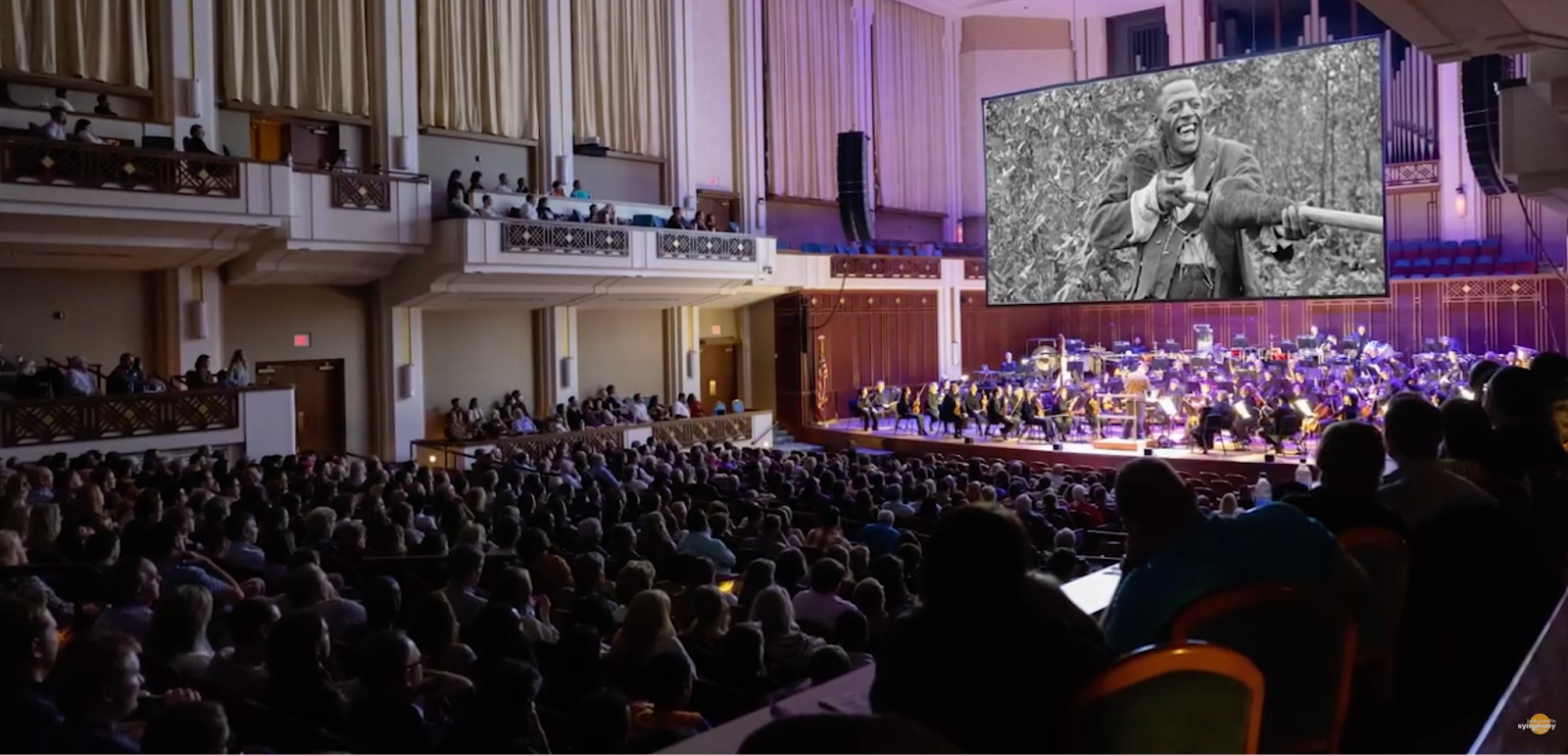
Jacksonville, FL (April 14, 2026) – On Saturday, November 14, 2026, the Jacksonville Symphony will present the world premiere of a newly commissioned orchestral score for the silent film The Flying Ace (1926), performed live with a screening of the film in celebration of its 100th anniversary.
Conducted by Music Director Courtney Lewis, the Jacksonville Symphony has commissioned six leading composers to create the new score, each writing music for one of the film’s six reels. GRAMMY® nominee Carlos Simon serves as lead composer, creating the concert's musical themes and composing the score for the film’s opening reel. The remaining composers – Jongnic Bontemps, Kathryn Bostic, Nathalie Joachim, Allison Loggins-Hull, and Levi Taylor – will each compose approximately 10 minutes of music for the remaining reels, drawing on Simon’s thematic material while bringing their own musical voices to the work. Advanced silent-film synchronization techniques, including a click track and “punches and streamers,” will allow the conductor and orchestra to precisely align the live performance with the film projected above the stage. This is made possible with support from Sync Technology Development & Playback Technician Grant O’Brien.
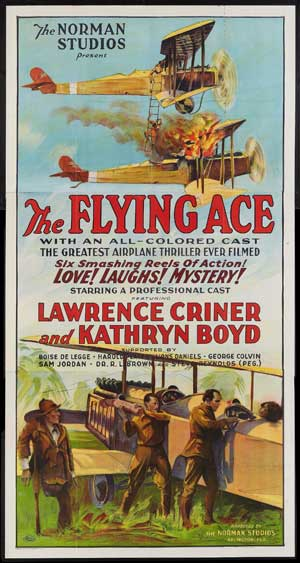 The concert revives a remarkable artifact of American cinema history. The Flying Ace is the only surviving feature-length film of the nine produced by Jacksonville’s Norman Studios, one of the first studios in the United States dedicated to films featuring Black actors in leading roles portrayed with dignity and heroism rather than the stereotypes common in mainstream films of the era.
Filmed in Jacksonville’s historic Old Arlington neighborhood and in nearby Mayport, The Flying Ace stars Laurence Criner as Capt. Billy Stokes, a decorated World War I pilot, who returns home to resume his work as a railroad detective. When a payroll agent disappears along with a satchel containing $25,000, Stokes must solve the mystery and rescue the heroine, Ruth Sawtelle, played by Kathryn Boyd, in a dramatic aviation showdown.
Billed at the time as “the greatest airplane thriller ever filmed,” the film’s story was inspired in part by aviation pioneer Bessie Coleman, the first Black woman to earn a pilot’s license in the United States. Filmmaker and Norman Studios founder Richard E. Norman, also a noted inventor, had discussed the idea of an aviation film with Coleman before her tragic death in a 1926 plane crash in Jacksonville. Norman later modeled the character of Ruth Sawtelle on Coleman and released The Flying Ace later that same year. Historians have suggested that the film helped inspire young African American audiences who would later become the Tuskegee Airmen.
Norman produced the film at his studio complex in Arlington, Florida (now part of Jacksonville), a five-building facility originally constructed in 1916 as Eagle Film City. After purchasing the property in 1923, he transformed it into the headquarters of the Norman Film Manufacturing Company.
At the beginning of the twentieth century, Jacksonville had briefly emerged as the “Winter Film Capital of the World.” The warm climate and easy rail connections to New York and Chicago made Northeast Florida an attractive destination for early film companies seeking better working conditions than those available in northern cities. By 1916, more than thirty motion picture companies operated in Jacksonville.
Norman distinguished himself among these filmmakers by producing “race films” – movies made for Black audiences and starring Black actors in positive and complex roles. Working during a period when such representation was almost nonexistent in mainstream American cinema, Norman’s films offered an alternative vision of Black life and heroism on screen.
Although most of Jacksonville’s film industry had relocated to Hollywood by the early 1920s, Norman continued producing films in the city for nearly another decade. Today, the Norman Studios Silent Film Museum complex remains one of the few surviving silent film studio sites in the United States, preserving a remarkable chapter of both film history and African American cultural history.
With the commissioning of a new score and the live orchestral presentation of The Flying Ace, the Jacksonville Symphony reconnects the city with this extraordinary legacy, bringing a landmark of early American cinema back to life for contemporary audiences.
The Flying Ace concert also reflects the Jacksonville Symphony’s broader artistic identity and its role within the cultural life of Northeast Florida and the American orchestral landscape: as one of the region’s leading arts institutions, the Symphony serves as a central cultural hub for Jacksonville, presenting a broad range of programming in Florida’s most populous city, one that lacks the concentration of major cultural institutions found in many larger metropolitan areas.
In recent seasons, the orchestra has seen strong momentum in audience development. Over the past five years, it has attracted younger and more diverse audiences while shortening the path from first-time ticket buyers to long-term subscribers, an achievement that stands out at a time when many orchestras nationwide are still rebuilding audiences.
The orchestra itself reflects that vitality, with a youthful roster of high-caliber musicians and a growing commitment to commissioning new work. As artistic innovation increasingly emerges from cities beyond the largest cultural capitals, Jacksonville offers a compelling example of how regional orchestras are shaping the future of the field.
This premiere takes place as the Symphony celebrates its 77th Season, marking more than three-quarters of a century as one of Florida’s longest continuously operating professional orchestras. Through economic shifts, cultural change, and even the disruptions of a global pandemic, the organization has remained resilient, continuing to commission new music, nurture emerging talent, and serve its community.
Today, Jacksonville Symphony musicians regularly go on to positions in major orchestras across the country, reflecting the organization’s role not only as a cultural leader within Florida but also as an important contributor to the broader orchestral community.
About the Jacksonville Symphony
The Jacksonville Symphony is Northeast Florida’s leading nonprofit performing arts organization, offering live performances at Jacoby Symphony Hall in the Jacksonville Center for the Performing Arts and other venues throughout the area. Led by President and CEO Steven B. Libman and Music Director Courtney Lewis, the Jacksonville Symphony reaches over 155,500 individuals through over 95 performances each season. In addition, the Symphony provides music instruction for youth and operates the Jacksonville Symphony Youth Orchestras. For more information about the Symphony, visit JaxSymphony.org.
# # #

 FEATURED JOBS


 RENT A PHOTO