All material found in the Press Releases section is provided by parties entirely independent of Musical America, which is not responsible for content.
Press Releases
April 10: Composer Dave Soldier Announces Vipers at the Onyx, Feat. Curtis Stewart, on Bright Shiny Things

FOR IMMEDIATE RELEASE
Contact: Katy Salomon | Primo Artists | VP, Public Relations
katy@primoartists.com | 646.801.9406
Saratoga Schaefer | Primo Artists | Publicist
saratoga@primoartists.com | 646.470.4456
Composer and Neuroscientist Dave Soldier
Announces Vipers at the Onyx
The Premiere Album of Soldier’s Symphonic Works,
performed by the Prague Filmharmonic Orchestra led by Adam Klemens
Featuring the World Premiere Recording of Stuff Smith’s
Unfinished Concerto Performed by Violinist Curtis Stewart
Out April 10, 2026 on Bright Shiny Things

Pre-order the Album: brightshiny.ninja/vipers-at-the-onyx
"Dave Soldier is an iconoclast, trying to expand our idea of what music can be."
– The New Yorker
“When Dr. Sulzer takes off his lab coat and leaves New York-Presbyterian Hospital in upper Manhattan, he becomes Dave Soldier, a prolific composer and arranger and a busy violinist, guitarist and banjo player.” – The New York Times
New York, NY (March 3, 2026) – American musician and neuroscientist Dave Soldier releases Vipers at the Onyx, his first album of symphonic works, on Bright Shiny Things on April 10, 2026. Performed by the Prague Filmharmonic Orchestra led by Adam Klemens, the album’s centerpiece is the world premiere recording of Stuff Smith’s Unfinished Violin Concerto, Soldier’s expansion of a home tape of themes by the 1960s jazz violin legend gifted to the composer, featuring the brilliant seven-time GRAMMY® Award-nominated violinist and composer Curtis Stewart. Framed by symphonic tributes to influences from the jazz canon, the salsa bandleader Eddie Palmieri, nueva canción, and the rural music of Korea, the album distills Soldier’s adventurous and exceptionally cross-genre musical life.
Pre-release singles will be available on March 13 (New York Bars at Dawn), March 27 (Kumiho), and April 10 (Jaleo).
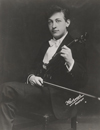
Stuff Smith (1909-1976) was one of the greatest of the American jazz violinists, with a career that spanned from Jelly Roll Morton to Dizzy Gillespie. He is perhaps best known for the songs If You’re a Viper, I’se a Muggin’, and Here Comes the Man with the Jive. Soldier’s version of Stuff Smith's Unfinished Concerto: Music Starts When Words Leave Off was premiered in its chamber version by violinist Miranda Cuckson in NYC in 2017, while the expanded orchestral version on this album is slated for future premiere.
“I first heard Stuff Smith when I was thirteen and was inspired to learn the violin by his records, including his duos with Stéphane Grappelli,” Soldier explains. “Imagine my excitement when I heard that Stuff had home-recorded about six minutes of themes on violin intended for a future concerto on a lo-fi tape sometime in the first half of the 1960s in Los Angeles. Stuff gave the tape to a friend, Mary Lee Hester, for safekeeping before leaving for Europe at the beginning of 1965, but he never returned to the USA. Around 1990, Mary Lee sent the tape to the Stuff Smith scholar, Anthony Barnett, and Anthony sent the recording to me. With the endorsement of Stuff’s grandson, John, I transcribed the themes and expanded them to 18 minutes, added new themes, harmonies, orchestration, and sections I imagine Stuff would have liked. After loving his music for so long, I would like to think I have some insight. I call it Stuff Smith’s Unfinished Concerto: Music Starts When Words Leave Off, a phrase Stuff used. Curtis Stewart—with whom I have worked with for over a decade with his PUBLIQuartet—has an extraordinarily broad experience in classical music and jazz and is the perfect violinist to realize this work.”
The album also features Soldier’s Jaleo, which is dedicated to McCoy Tyner and Eddie Palmieri, whose music Soldier heard at age 15 and whom he credits for inspiring him to become a composer. Originally for solo piano, Jaleo was recorded by Steven Beck, and Soldier sent a copy to Palmieri. On this album, he expands the music for symphony orchestra. Soldier adds, “Special thanks to conductor Adam Klemens: I scored the rhythms as conceived by flamenco and salsa musicians (in 12), and he
showed me that for his orchestra, whose players include members of the Czech Philharmonic, it is sometimes more natural for phrases to be cast in different meters (often 7 plus 5), which kind of makes sense from the Spanish Caribbean vs. Eastern European traditions.”
SamulNori is dedicated to master percussionist Kim Duk-Soo, who developed the SamulNori style from Korean farmers’ music. It was commissioned and performed by Kristjan Järvi and the Absolute Ensemble for a Korean tour. Now expanded for full orchestra, the music portrays thunder, clouds, rain, and lightning during a night storm on the Korean coast. The only suggestion of a human presence is an English horn solo portraying a lone shepherd.
The six shorter pieces on the album are from Soldier’s collection Aventuras, originally written for saxophone and piano duo and recorded by Todd Rewoldt and Jai Jeffryes.
New York Bars at Dawn uses quarter tones and deceptively complex rhythms to portray an early morning ramble through the streets of Manhattan and Brooklyn after a long evening of libation. A brisk waltz appears, but not for long, as the waltz becomes loping and uneven, and the quarter tones pile up as the sun rises.
Rahsaan was written for Rahsaan Roland Kirk, and also uses microtones, inspired by Kirk’s ability to perform on three wind instruments simultaneously and his love for Duke Ellington. The entrance and exit of the piece scores the orchestra in intonation that arises when an alto saxophone is overblown to produce multiphonics—two or three tones at once—a device used by Roland Kirk and John Coltrane, among others, to give the piece a threatening feel. The central part of the piece is essentially a ballad Soldier wrote that reflects on the great Ellington orchestral ballads of the 1940s and 50s, such as Mood Indigo with Ivie Anderson. Soldier remembers listening to these 78s for hours with fellow composer friend Phill Niblock.
Lorette Velvette is dedicated to the punk rock Mississippi/Memphis riot grrrl singer of the same name, a star in a unique musical subculture on her own, who has also played with Soldier for about thirty years in their cult “Delta punk” band, The Kropotkins. The sweet and sour nature of the piece is a portrait of both Lorette’s own music and her awe-inspiring character.
El Amanecer is based on the melody of a nueva canción song about the beauty inspired by the dawn, written by the Argentine-New York protest songwriters Bernardo Palombo and Fernando Otero, combined with the bird calls Soldier heard when writing this piece in Paris. “The late Palombo is a well-known songwriter in Argentina via singers Mercedes Sosa and Atahualpa Yupanqui, and was a central figure in bringing Latin American culture to the States,” Soldier says. “Palombo taught Paul Simon El cóndor pasa (If I Could), brought Philip Glass to South America for their work on Powaqqatsi, put together David Byrne’s group for Rei Momo, and taught Spanish songs to Pete Seeger, his long-time collaborator.”
Kumiho is a nine-tailed Korean fox demon who lures men to their deaths. It was first recorded by the Korean piri virtuoso Gamin with Jai Jeffryes on piano. Here, the principal horn of the Czech Philharmonic, Jan Voboril, plays the concerto-esque solos.
Albayzin was composed to represent the ancient Gitano, Jewish, and Muslim quarter across the Darro River from the Alhambra in Granada, a neighborhood where medieval wells bring drinking water, and some still live in caves carved into the hillside.
Vipers at the Onyx Tracklist
1. El Amanecer [5:25]
2. Rahsaan [6:20]
3. New York Bars at Dawn [3:40]
4. Albayzin [3:40]
5. Kumiho [5:07]
6. Jaleo [10:10]
7. Stuff Smith's Unfinished Concerto: Music Starts When Words Leave Off [16:58]
8. Lorette Velvette [2:19]
9. SamulNori [8:15]
Total Time: [01:01:54]
Prague Filmharmonic Orchestra conducted by Adam Klemens
Featuring solo violinist Curtis Stewart and horn virtuoso Jan Voboril
Music Composed by Dave Soldier
Tracks 2-6, 8, 9 Published by Rigglius Music ASCAP
“Stuff Smith’s Unfinished Concerto: Music Starts When Words Leave Off” is Composed By Hezekiah “Stuff” Smith and Dave Soldier
“El Amanecer” is Composed by Bernardo Palombo, Fernando Otero, and Dave Soldier, and Published By Warner-Tamerlane BMI and Americanto ASCAP.
Conductor on SamulNori: Paul Schrage
Engineer: Jan Holzner
Executive Producer: Petr Pycha
Recorded and Mixed at Smecky Music Studio, Prague, Czech Republic
Tracks 6 and 9 mixed by Dan Perez
Mastered by Gene Paul
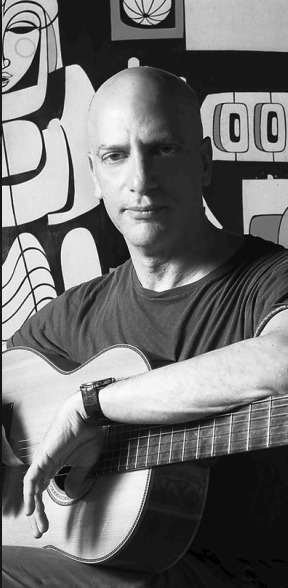
Photo of Dave Soldier: J Maya Luz
About Dave Soldier
Dave Soldier leads a double life as a musician and a neuroscientist. Growing up in Carbondale, Illinois, he toured with country and rock bands as a violinist and guitarist in his teens and early twenties, including a stint as guitarist with rock n’ roll pioneer Bo Diddley. Inspired to be a composer by Eddie Palmieri’s records, he studied composition at age 17 with Roscoe Mitchell of the Art Ensemble of Chicago, and in his twenties with Otto Luening, an electronic music pioneer who co-invented the synthesizer, as well as at night school at Juilliard. He studied violin with Anahid Ajemian, leader of the Composer’s String Quartet, the principal contemporary string quartet at the time. Moving to New York in 1981, he rapidly became involved in the “downtown” rock, jazz, and classical scene, performing with most of the performers in those styles. In 1984, he formed the Soldier String Quartet, a group that played amplified instruments with drums at venues like CBGBs and Lincoln Center and toured widely with members including Regina Carter, as well as others who then started their own contemporary quartets. The Soldier String Quartet helped usher the use of hip-hop, R&B, and punk rock into composed classical music in the 1980s and was John Cale’s touring and recording band from 1992-1998, performing Soldier’s arrangements of Cale’s songs. The group further performed and recorded with each of the members of the Velvet Underground, David Byrne, Ric Ocasek, Guide by Voices, Van Dyke Parks, Henry Threadgill, Amina Claudine Myers, Tony Williams, Teo Macero, and premiered quartets by dozens of composers, recording many albums, including several of Soldier’s compositions.
Beginning to feel stifled in the contemporary classical and downtown worlds, Dave Soldier began to explore alternative ways of creating music. In 2000, he cofounded, with conservationist Richard Lair, the Thai Elephant Orchestra, a group of 14 elephants for whom he built giant instruments and recorded three commercial albums. He transcribed one of their improvised pieces, The Ganesha Symphony, as his Symphony No. 1, which was recently recorded by David Cossin and the MassMOCA percussion ensemble. Continuing on the idea of collaborating with non-professional musicians, he created recording projects with children, including in rural Guatemala (Yol Ku: Mayan Mountain Music) and New York's East Harlem (Da HipHop Raskalz), and with songbirds and bonobos. Returning to his roots in country and blues music in the Midwest and South, he formed a long-running Memphis/New York Delta punk band, the Kropotkins. Most famously/infamously, he composed The People's Choice Music: the most wanted and unwanted songs following poll results of likes and dislikes of the American population with the Russian protest artists Komar & Melamid. Ironically, the Least Wanted Music is his most frequently streamed piece. He composed two cycles/oratorios in collaboration with Kurt Vonnegut, and a broad array of chamber, opera, and classical works, in addition to jazz, rock, and flamenco recordings. Vipers at the Onyx is Soldier’s first album of his music for symphony orchestra and reflects all of these extraordinary experiences and passions.
While participating in all of these artistic projects, Soldier received a PhD in biology at Columbia University, where, in his day job, he is David Sulzer, a neuroscientist and Professor at Columbia University in the Departments of Psychiatry, Neurology, and Pharmacology. His lab investigates the synapses of the cortex and dopamine system in habit formation, planning, and decision making. His lab has made major contributions to understanding the action of addictive drugs and the causes of diseases and neurodivergence, including Parkinson's, Huntington's, ALS, schizophrenia, and autism. They developed the first methods to directly measure the fundamental unit of neurotransmission (quantal neurotransmitter release) and the first optical method to visualize neurotransmission at the synaptic level in the brain. Soldier is a leader in the fields of neuroimmunology and the brain processes involved in learning.
A few projects unite these personalities. In 2022, Dave published Music Math and Mind (Columbia University Press), a book that explains the math, physics, and biology underlying music, and he teaches an annual college course on the topic. Dave recently realized Johannes Kepler’s instructions from the year 1619 for the music of the spheres, recording Motet: Harmony of the World with the microtonal vocal ensemble Ekmeles. With computer musician Brad Garton, he initiated the Brainwave Music Project, which allows people to perform using their brain's electrical activity and teaches audiences about the nervous system. With the Nobel laureate chemist Roald Hoffmann, Dave ran the original science cafe, Entertaining Science, at the Cornelia Street Cafe. He has a series of pieces that use mathematical transformations, including fractals and calculus, to create new repertoire, such as a 20-minute version of Chopin's Minute Waltz. Learn more at www.davesoldier.com.
About Curtis Stewart
Praised for “combining omnivory and brilliance” (The New York Times), seven-time GRAMMY® Award-nominated violinist and composer Curtis Stewart translates stories of American self-determination to the concert stage. Tearing down the facade of “classical violinist,” Stewart is in constant pursuit of his musical authenticity, treating art as a battery for realizing citizenship. As a solo violinist, composer, Artistic Director of the American Composers Orchestra, professor at The Juilliard School, and member of award-winning ensembles PUBLIQuartet and The Mighty Third Rail, he realizes a vision to find personal and powerful connections between styles, cultures, and musics. He was awarded a 2025 Sphinx Medal of Excellence in recognition of extraordinary leaders in the classical music field who are transforming lives while addressing systemic obstacles within Black and Latino communities.
As a soloist, Curtis Stewart has been presented by Carnegie Hall, Lincoln Center, The Kennedy Center, the Chicago Symphony Orchestra, Cal Performances, Washington Performing Arts, Virginia Arts Festival, The Juilliard School, and the 2022 GRAMMY® Awards, among many others. He has made special appearances with Los Angeles Opera and singer-songwriter Tamar Kali; as curator and guest soloist with Anthony Roth Costanzo and the New York Philharmonic “Bandwagon,” touring performance installations from NYC’s Whitney Museum, Guggenheim Museum, and Museum of Modern Art; to MTV specials with Wyclef Jean; and sold-out shows at Madison Square Garden with Stevie Wonder, Bruce Springsteen, and Seal.
In celebration of his prolific discography, Stewart has been nominated for multiple GRAMMY® Awards for Best Classical Instrumental Solo, including the world premiere recording of his arrangement of Samuel Coleridge-Taylor’s 24 Negro Melodies, performed by the National Philharmonic under Michael Repper and released in August 2025 on AVIE Records; his recording of Julia Perry’s Concerto for Violin and Orchestra with the Experiential Orchestra (Bright Shiny Things); his album of quarantined song cycles and art videos, Of Power (Bright Shiny Things); and his album of Love. – a tribute to his late mother, Elektra Kurtis-Stewart. Stewart received further nominations in the Best Chamber Music/Small Ensemble Performance category for PUBLIQuartet’s albums What Is American and Freedom and Faith, both released on Bright Shiny Things.
Stewart has been commissioned to compose new solo, chamber, and orchestral works by the Seattle Symphony, Virginia Symphony Orchestra, Phoenix Symphony Orchestra, Carnegie Hall’s Play/USA, countertenor Anthony Roth Costanzo and members of the New York Philharmonic, American Composers Orchestra, Juilliard Prep, The Knights, La Jolla Music Society, Sybarite5, the New York Festival of Song, Newport Classical Festival, the Royal Conservatory of Music, the Eastman Cello Institute, Orlando Philharmonic, Chicago Symphony Orchestra, and more. In 2022, he was named Artistic Director of the American Composers Orchestra, a national organization dedicated to the creation, celebration, performance, and promotion of orchestral music by diverse and innovative American composers.
An enthusiastic educator, Curtis Stewart currently teaches at The Juilliard School and the Perlman Music Program, and for ten years led all levels of music theory and orchestra at the LaGuardia High School for Music & Art and Performing Arts in NYC. Learn more at www.curtisjstewart.com.
About Jan Voboril
Jan Voboril serves as Principal Horn of the Czech Philharmonic, where he leads the horn section and has contributed to the orchestra’s artistic board. He previously held principal horn positions with the State Philharmonic Brno (from 1991) and PKF – Prague Philharmonia (1994–2004), and was Principal Horn of the Prague Chamber Orchestra from 1999 to 2004. Since 2005, he has been Solo Horn of Solistes Européens Luxembourg.
As a soloist, Voboril has appeared throughout Europe, Asia, and the United States, collaborating with conductors including Jirí Belohlávek, Sir John Eliot Gardiner, Petr Altrichter, and Jakub Hruša. He has performed concertos and featured works with the Czech Philharmonic, Prague Radio Symphony Orchestra, Prague Symphony Orchestra, Prague Chamber Orchestra, PKF – Prague Philharmonia, State Philharmonic Brno, Slovak Philharmonic, Bavarian Youth Orchestra, and Suwon Philharmonic Orchestra.
An active recording artist, Voboril has recorded for Czech Radio and Television, Supraphon, ARD, Octavia Records, and Classicprint. Between 2008 and 2010, he collaborated closely with horn virtuoso Radek Baborák, appearing at the Prague Spring Festival and on tour in Japan, and recording several acclaimed CDs. He is also a frequent guest principal horn with leading international ensembles, including the NDR Elbphilharmonie Orchestra (Hamburg), Seoul Philharmonic Orchestra, Saito Kinen Orchestra, Gyeonggi Philharmonic Orchestra, and Bamberger Symphoniker.
A dedicated chamber musician and pedagogue, Voboril is regularly invited to the Kuhmo Chamber Music Festival in Finland, where he also teaches. He gives masterclasses internationally, including in France, China, Japan, Korea, and the United Kingdom, and participates in the International Horn Courses in Broumov (Czech Republic). Since 2008, he has served on the faculty of the Academy of Performing Arts in Prague.
Born in the Czech Republic, Voboril studied at the Brno Conservatory (1986–1992) with Professor František Psota and later at the Academy of Performing Arts in Prague with Professor Zdenek Tylšar. A laureate of seven national competitions, he received an Honorable Mention at the Prague Spring International Music Competition in 1992 and at the Geneva International Music Competition in 1993. In 1991, he was appointed Principal Horn of the Gustav Mahler Youth Orchestra under Claudio Abbado, performing in Prague at the festival commemorating the 200th anniversary of Wolfgang Amadeus Mozart’s death.
# # #

 FEATURED JOBS


 RENT A PHOTO