Reviews
Dudamel's First Missa Solemnis
Gustavo Dudamel conducted Beethoven’s Missa solemnis with the Los Angeles Philharmonic last weekend in Disney Hall, his maiden voyage with the composer’s most demanding work, and arguably the summit of his farewell season.
When Klaus Mäkelä conducted the Missa solemnis last month in Paris, it was also one of the young Finn’s (he just turned 30) first encounters with the piece, also deemed a highlight of a final season (penultimate as music director of the Orchestre de Paris). The two performances placed arguably the most celebrated conductors in their adjoining generations under the spotlight with the Beethoven Year of 2027 just around the corner.
I heard them both. For Mäkelä it was a near triumph. For Dudamel it was a first reckoning.
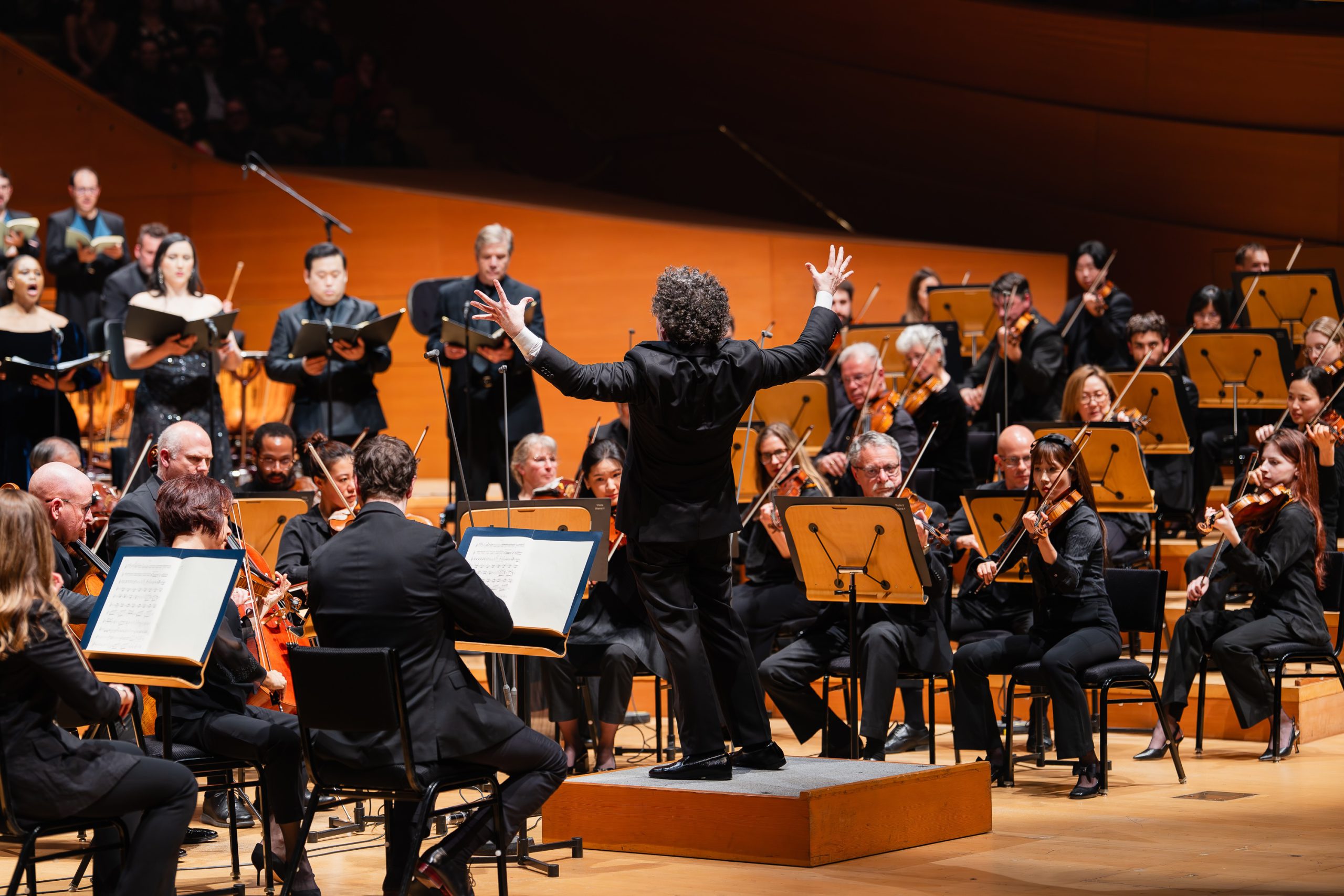
Gustavo Dudamel conducts the LA Philharmonic and soloists n Beethoven's Missa solemnis
The Missa solemnis live is a reality check for the performers and the audience. The sopranos in the chorus have to sing impossibly long, loud, and high passages, the fugues for both chorus and orchestra are relentless, the counterpoint is unyielding in its density. Effective interpretation of the work requires a knowledge of its architecture so secure that all components come together to reveal Beethoven’s vision with authenticity.
Dudamel’s reading emphasized sweep and immediacy. His two Barcelona-based choruses produced a blended, cohesive sonority that favored massed sound over rhetorical dialogue—an approach shared by Mäkelä. Soloists Pretty Yende, Sarah Saturnino, SeokJong Baek, and Rod Gilfry functioned largely as a quartet within the sonic fabric rather than as sharply profiled protagonists. Perhaps because of their placement mid-orchestra behind the violas and in front of the timpani, they had less presence and force than their French counterparts who sang from the front of the stage. But the overall impression was physically and emotionally splendid.
After a tentative start to the opening Kyrie, Dudamel showed an easy control over the assembled forces, then launched the Gloria with a furious shake of his mane, urging it forward with assertive tempos and expansive gestures, and the orchestra played with polish and discipline. Fugue entries held together securely and climaxes arrived cleanly, generating genuine excitement. The momentum, however, sometimes felt urged forward rather than collectively breathed.
The Credo unfolded in similar fashion. Exchanges between winds and soloists were carefully managed, though not always seamlessly integrated, and in the densest contrapuntal passages Dudamel appeared to work hard to maintain cohesion. The real-time labor required to hold Beethoven’s immense structure together is something audiences rarely see so plainly.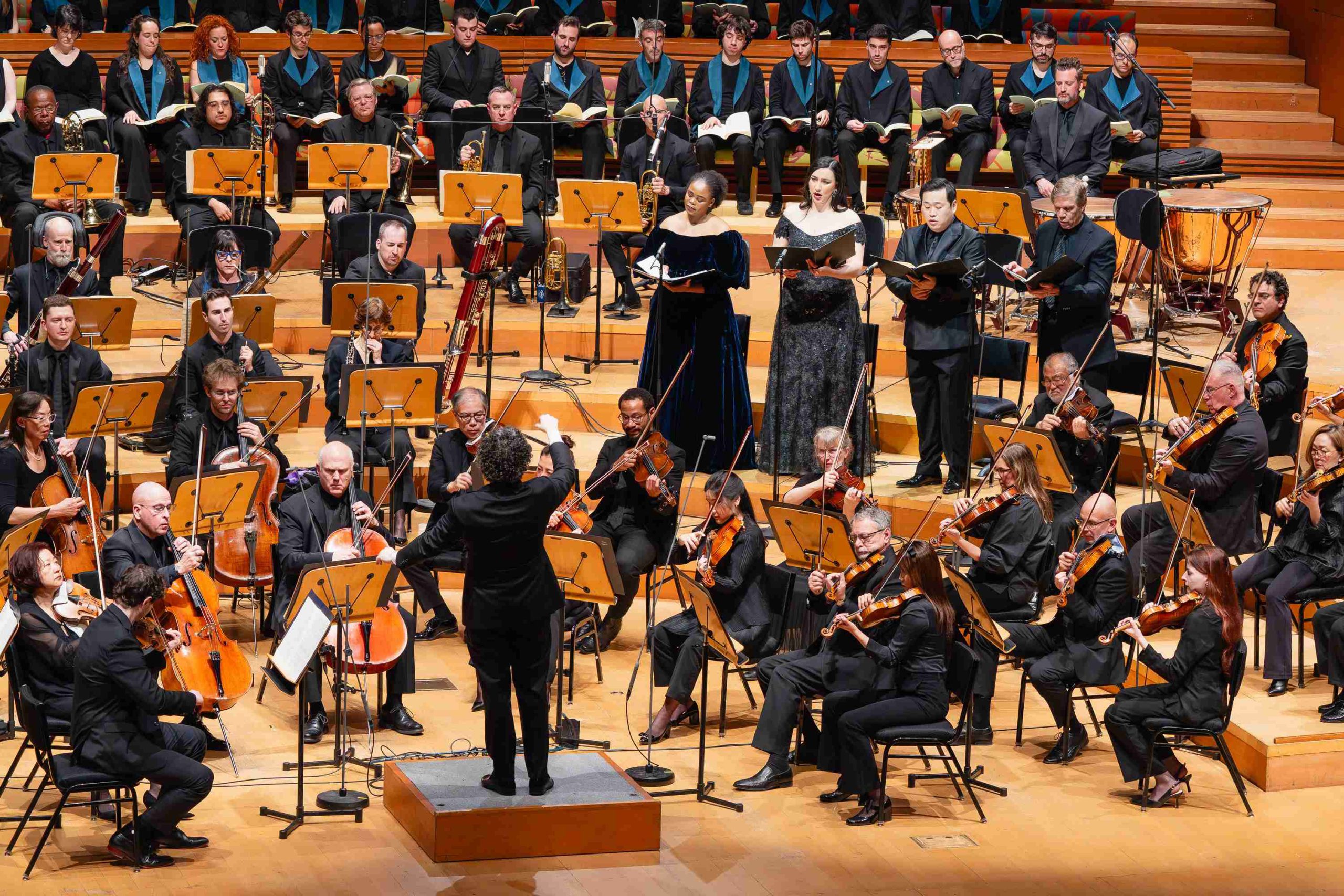
After an introductory Praeludium to the Benedictus that lacked a sense of mystery and physical weight—the organ was barely audible — guest concertmaster Alan Snow, associate concertmaster in Minnesota, brought a sweet and soaring tone to the iconic solo part, though projecting through the shifting, massive performing forces proved difficult as it so often does—never a problem on recordings, of course.
The Agnus Dei was vivid, athletically directed, and strongly shaped, yielding to an ending of fragile equilibrium and a Dona nobis pacem poised between anxiety and hope, a glimpse of the final, elusive peace Beethoven was after.
Where Mäkelä’s recent Paris performances suggested the collective pulse of conductor and musicians already thinking and reacting to each other, Dudamel was still processing Beethoven’s vast design—still testing its scale, pacing, and proportion.
In orchestral character, the Orchestre de Paris woodwinds — heirs to a long lineage shaped in part by Daniel Barenboim and players such as principal clarinetist Pascal Moraguès — colored Beethoven’s textures with individualized timbres, phrases passing seamlessly across the orchestra. In Los Angeles, the winds offered a more homogeneous, less emotional blend: beautifully controlled yet less inclined toward the conversational interplay with other sections.
In either case, the opportunity to hearing Missa solemnis live—with all its risks, ambitions, and challenges intact—whets the appetite for what is to come, not only in the Beethoven Year of 2027, but from these two maestros, poised to fulfill Great Expectations.

 FEATURED JOBS


 RENT A PHOTO