Reviews
The CSO at Carnegie: Muti Warns of Fascism, Then Offers a Balm
Throughout his six-decade career, Riccardo Muti has worked to confer dignity on Italian opera, banishing spurious traditions and approaching the music with absolute seriousness of purpose. The first half of the January 21 Chicago Symphony Orchestra concert at Carnegie Hall, given over to Bellini and Verdi, attested to his dedication.
The overture to Bellini’s Norma, the opening selection, is hardly standard concert-hall fare. It is usually heard in the opera house, where it can seem like a bit of throat-clearing, a way of marking time until the curtain rises and the real business of the evening commences. But on this occasion, the overture became a musical statement in its own right. From the opera pit, the 16th-note figures of the main strain sometimes fly by in a blur; here, every note in the CSO strings sang out with meaning. The sudden shift in rhythm at the maggiore section registered as an audacious romantic gesture. Muti and his players gave Bellini the weight and urgency of Beethoven; the overture became a drama in itself.
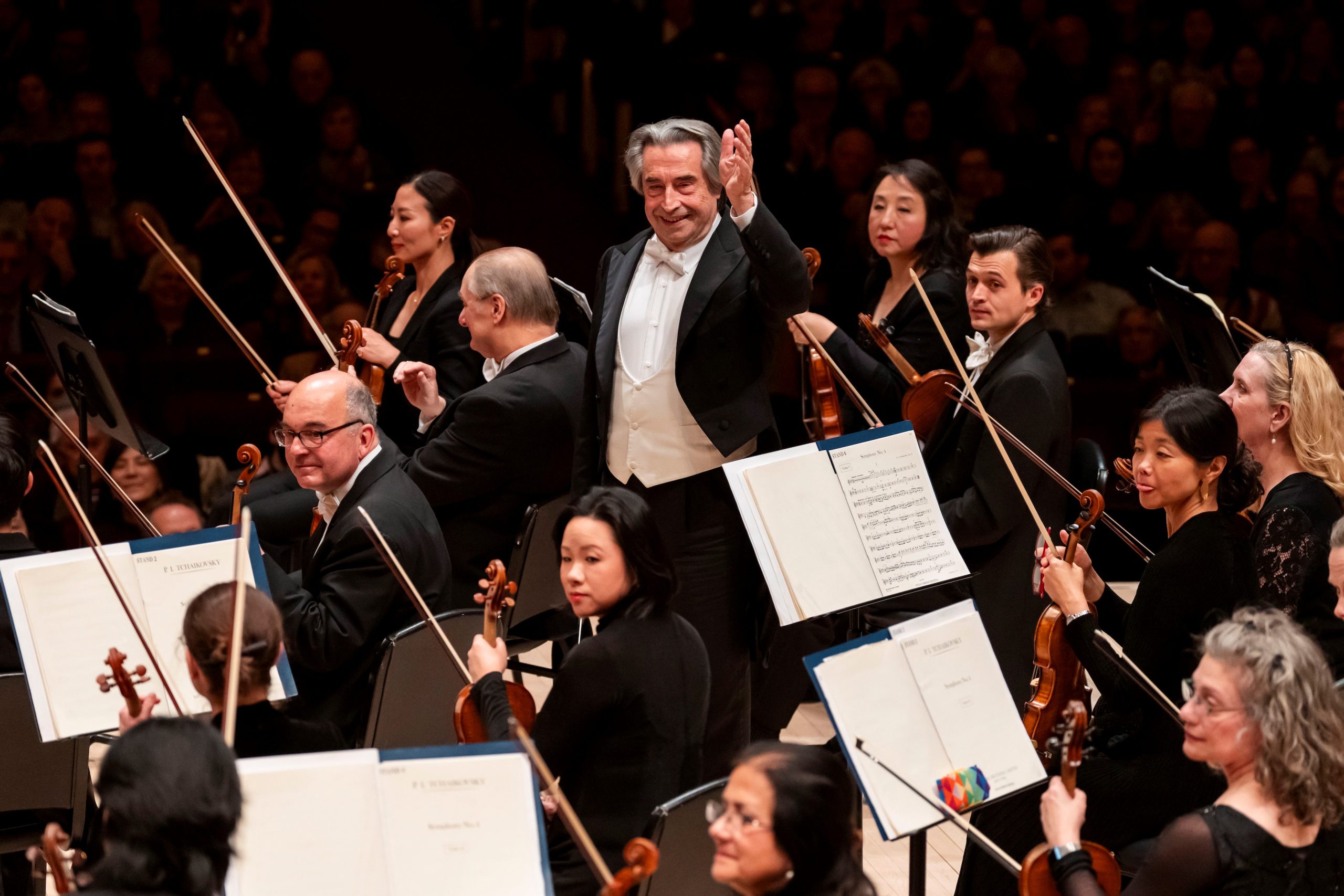
Muti heralds a section of the CSO on the Carnegie Hall stage
Verdi, the composer who has most consistently been the object of Muti’s ministrations, was here represented by the ballet music from Les vêpres siciliennes (I vespri siciliani,) most often played locally as the score for Jerome Robbins’s New York City Ballet perennial The Four Seasons. In Muti’s reading, the piece retained its status as a divertissement, while serving as a vehicle for a particularly high-spirited form of the CSO’s accustomed virtuosity.
Verdi built two mini-concertos into the score: for clarinet in the “Spring” movement; for oboe in “Summer.” At the 1855 premiere of Les vêpres, Hector Berlioz praised these passages for giving “the virtuosi of opera orchestra a chance to display their talent.” If he were alive today, he might well have applauded clarinetist Stephen Williamson and oboist William Welter. Together with principal flute Stefán Ragnar Höskuldsson, whose birdsong announced the coming of spring, the three brought sterling technique and supple phrasing to create joy in their work.
Tchaikovsky’s Fourth Symphony rounded out the printed program. Just two weeks earlier, Daniele Rustioni, 42 years Muti’s junior, led the piece in his New York Philharmonic debut. Charged with youthful ardor, it could hardly have been less like Muti’s interpretation, especially in its opening movements. The elder conductor, who in his early years developed a reputation for speed and impulsiveness, has very much become the eminence grise. His reading was quite grand, even slower than the norm. The principal waltz theme in the first movement, which can seem like a plunge into youthful passion, here became a lament: a contemplation of lost love. The wistful second movement, ravishingly played, was a reminder of the fleetingness of beauty.
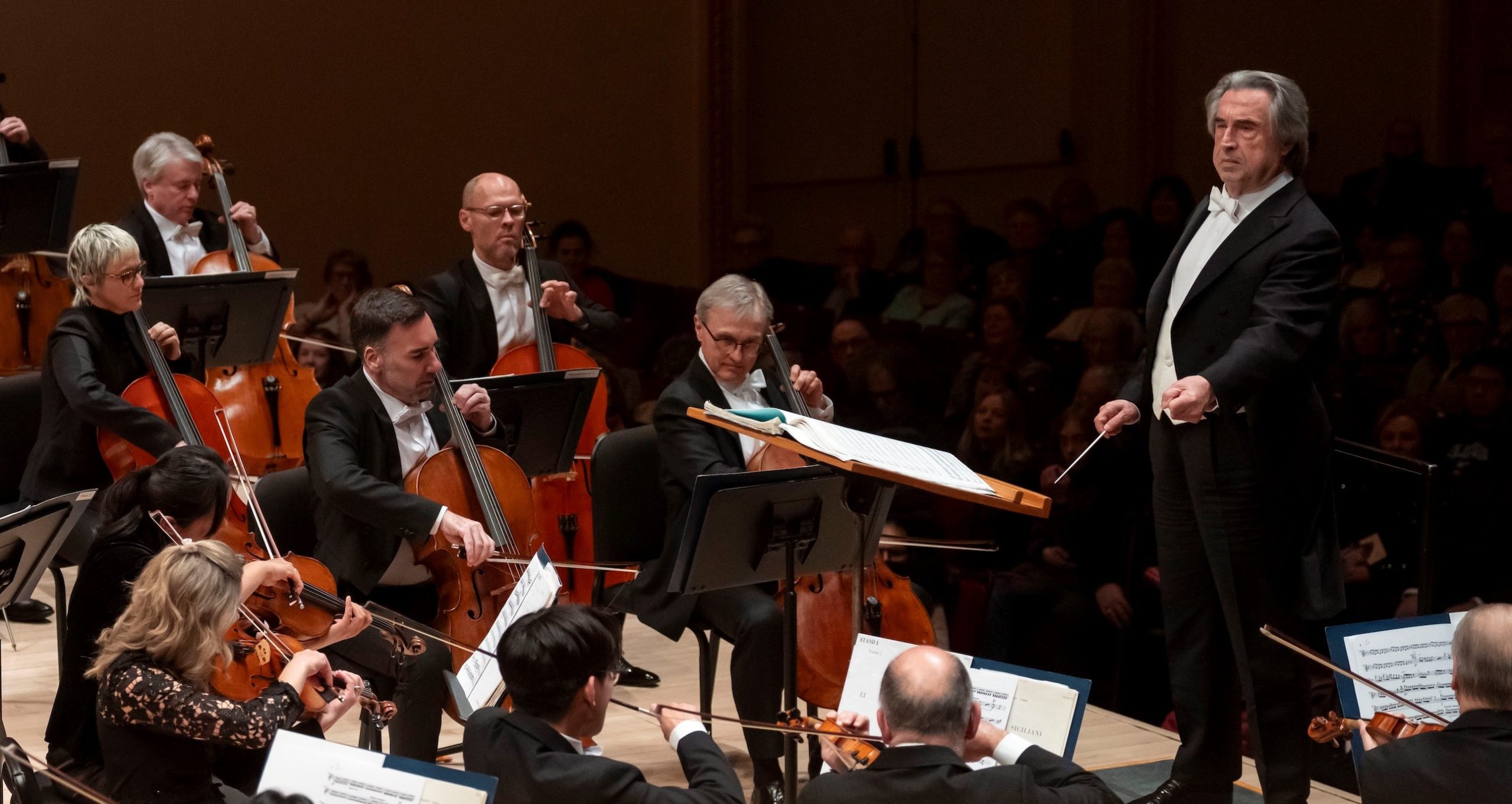 Throughout the length of the symphony––and indeed, the evening––it was instructive to watch the conductor, achieving his effects with the most economical of gestures, no trace of grandstanding, his movements clearly aimed at the players, not the audience. The results were often astonishing; never more so than in the third movement of the symphony, where the pizzicato playing was remarkable not just for its rhythmic precision, but for its detailed dynamic shading, each swell and diminuendo brought off with absolute unanimity.
After that crowd-pleaser, an encore was inevitable. Muti obliged with the Notturno by Giuseppe Martucci (1856–1909), a composer he has long championed. Before he began, though, he offered an eye-opening introduction, all-but-explicitly addressing the previous day’s presidential inauguration. He related how Arturo Toscanini in 1931, conducting an all-Martucci concert at Bologna’s Teatro Comunale, had refused an order to play the Fascist anthem Giovinezza. The conductor’s defiance earned him a beating from a gang of Blackshirts, and prompted his precipitate departure to the U.S., where he stayed in exile for 15 years, returning to his home country only after the end of World War II.
Muti presented the story as a fable of artistic engagement, and of the role of art under dictatorship. He declared “Culture is the enemy of dictators!,” making clear the identity of the “dictator” he had in mind, before leading the orchestra through the Notturno. For an audience reeling from the shift in presidential administrations, the gentle seven-minute piece served as the sweetest of balms. Bravo Muti.
Photos by Todd Rosenberg

 FEATURED JOBS


 RENT A PHOTO