Competitions & Awards
A Storied Competition Turns 100
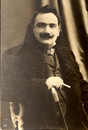
A little over a hundred years ago, banker and music-lover Walter Naumburg met a young singer who told him of her difficulties in financing her New York debut recital, and how she had been forced to importune her friends for donations. A recital and its attendant publicity were necessary for her career: Without this boost, no manager would consider representing her. Her plight planted an idea in Naumburg’s mind. In 1925, he set up a series of auditions for young musicians. Out of an initial pool of 37 artists, three of them, all violinists, took the honors. All of them were awarded a Town Hall debut.

The late Robert Mann and his wife Lucy Rowan Mann, longtime overseers of the Naumburg Competition
The success of the initiative convinced Naumburg to formalize his idea, and on June 8, 1926, the Walter W. Naumburg Foundation was born. As it celebrates its centennial, Naumburg is today the world’s oldest competition. It is also (in the words of onetime New York Times critic Bernard Holland) “the most prestigious of them all.”
Naumburg celebrates its centennial on May 17 with a gala concert at Jazz at Lincoln Center’s Rose Theater, featuring an all-star lineup of competition winners and friends, including flutist Carol Wincenc, clarinetist Charles Neidich, and violinist Leonidas Kavakos. The Emerson String Quartet will reunite for its first public performance since disbanding in 2023. Soprano Lucy Shelton, a two-time winner, will join the Brentano String Quartet to narrate the world premiere of Stephen Mackey’s The Frog Prince or Iron Henry.
Initially, Naumburg competitions were for pianists and violinists in alternating years; eventually vocalists and chamber music ensembles were added to the rotation. More recently, it has expanded to include violists, cellists, and wind players; in 2022, Naumburg held its first saxophone competition. In the early years, the prize consisted mainly of the Town Hall debut recital. In 1960, it added a $500 cash prize. Today’s Naumburg winners receive two fully subsidized debut recitals, one each in New York and San Francisco, and $25,000.
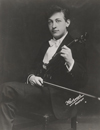
Winners receive cash prizes, along with a recital opportunity, now at Weill Recital Hall. The list is studded with boldface names like pianist Jorge Bolet (1937), violinist Elmar Olivero (1975), contemporary ensemble Eighth Blackbird (2000), and soprano Julia Bullock (2014). Not all have gone on to careers as soloists; some, like the New York Philharmonic’s concertmaster Frank Huang (2003), have proceeded to first-chair slots in great American orchestras.

Robert Mann with the four 1980 vocal competition winners (l to r):
Irene Gubrud, Jan Opalach, Lucy Shelton, and Faith Esham
Significantly, the recitals all include a commissioned piece from an American composer—a way for the Foundation to foster the American repertory while benefitting the winners. The foundation also makes video recordings of the winners playing the commissioned works. Over the years, these commissions have won two Pulitzer prizes and called on A-team composers like Milton Babbitt, John Harbison, Joan Tower, and Frank Zappa.
The competition is remarkable not only for identifying outstanding talent, but for the particular kind of talent it has recognized. “We aren’t the Van Cliburn,” notes violinist Nicholas Mann, the foundation’s president. “I love the Cliburn, but that’s about grandeur. The kind of artists that Naumburg picks aren’t always the great virtuosos like Bolet and Kavakos, but also musicians who have a different quality.”
A shining example of that “different kind” is Mann’s father, Robert Mann, who was president of Naumburg from 1971 until his death, at age 97, in 2018, the year his son took over. He won the solo violin competition in 1941 but went on to achieve fame not as a soloist, but as a teacher and composer, and particularly as a founding member of the Juilliard String Quartet. He was asked to take over Naumburg by William Schuman, president of the foundation from 1958 to 1962. (Schuman was president of the Juilliard School at the time that the string quartet that bears its name was founded, in 1946, so the two men had a shared history.) At first the violinist was reluctant: he questioned whether he could fit his Naumburg duties in with his busy life as a performer, composer, and educator.
But when he realized he could share his duties, he agreed. His partner would be his wife, Lucy Rowan Mann, who had administrative experience as the Juilliard concert manager. Lucy became Naumburg’s executive director—a role she filled until her death in 2022. “It became a passion of mother’s, and my father was the visionary,” says Nicholas Mann. “I grew up with constant dinner-table conversations about Naumburg.”
The word “family” often comes up when Naumburg participants talk about the foundation, in large part because of Lucy’s influence. She not only made the competitions run smoothly, but served a quasi-maternal role, soothing artists’ nerves during the competition, nurturing their careers afterwards with her husband.
“She knew the business so well,” says Debra Kinzler, Naumburg’s successor as executive director. “She was key at hooking up the right artists with the right manager. She would invite different artists over for omelets, and she and Bobby would talk to them about what they should do next. And whenever a Naumburg artist was playing in New York, she’d be there front-and-center.”
Competitions can be nerve-wracking for the entrants. But Naumburg’s juries—formerly selected by Robert Mann and now under the guidance of his son—work to act as the entrants’ collaborators rather than antagonists. Lucy Shelton recalls their beneficence when she was in the 1977 Chamber Competition as part of the piano-flute-voice Jubal Trio. “We got backstage, and I realized I had forgotten to bring my music!” she recounts. “I told the jury, and they asked ‘How long will it take you to get it?’ I took a taxi and got back a half-hour later thinking “I’ve blown it.’ So I went out there thinking, ‘We’re can’t possibly win; we’re just going to have a good time!” They did, and they also won, having abandoned all performance anxiety.
Mezzo-soprano Erin Wagner, who won the Vocal Competition in 2021, remembers the warmth of the judging panel as a key component of her Naumburg experience. She and her piano collaborator, Shawn Chang, had assembled two deeply personal programs: one focusing on female empowerment; the other featuring Chang’s own songs. “We put our hearts and souls into both our programs, and the panel was really supportive of that,” Wagner says. “When you sing for people, whether it’s an audition or a competition, you feel an air of anxiety. But when I walked into that room, it was like an open invitation to be myself. It felt like a hug.”
In 2022, urged on by composer John Corigliano, the foundation staged its first Saxophone Competition. “When I found out that Naumburg had a competition for saxophone, of course I applied immediately,” says Valentin Kovalev, who emerged as one of the competition’s two co-winners. “It’s a huge recognition of our instrument. Naumburg has helped us secure equal rights in the classical-music world.”
Like all Naumburg wins, Kovalev’s came with a commission: Ratcatcher, a 17-minute Steven Mackey work for sax and piano inspired by the Pied Piper fable. The saxophonist premiered it at his 2024 debut recital and further promulgated it in a Naumburg-produced YouTube video. “When I travel to universities for recitals and masterclasses, I always have people come up to me with the score, asking for my signature,” Kovalev says. “Saxophone is such a young instrument, we need more and more literature for students to enjoy and perform. It warms my heart that the piece is being found by so many other people.”
Mackey’s own Naumburg connection continues with The Frog Prince premiere at the centennial concert; it’s been some 40 years since he first encountered the foundation—the Lydian Quartet played his first string quartet and took top prize. “It was a huge step for me, having that quartet played at the Naumburg,” he says. “It brought my music to new audiences, which brought other commissions, which brought a publishing deal. And it wouldn’t have happened if I hadn’t written a piece for a Naumburg-winning ensemble.”
Pictured: Soprano Julia Bullock, 2014 winner; Valentin Kovalev, 2022 co-winner
Photos credits, from the top: Mann Family; Naumburg Foundation; bottom: Brian Hatton


FEATURED JOBS

RENT A PHOTO