People in the News
New Artist of the Month: Director Ruth Knight
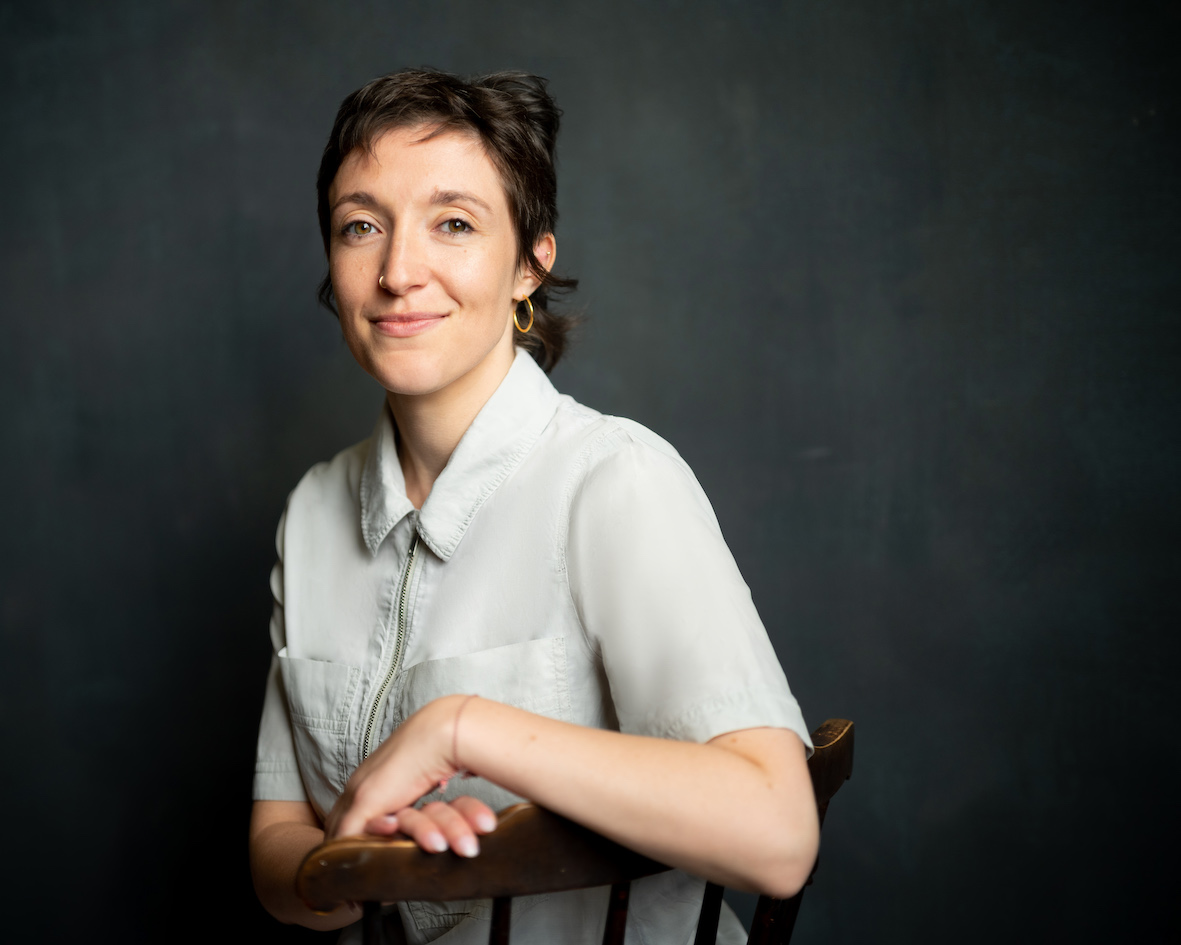 LONDON—Among a crop of young opera directors making their mark in the U.K., Ruth Knight stands out, not just for her intelligence and imagination, but for a determination to make the most out of whatever opportunities arise. The first two qualities were immediately apparent in her sumptuous and surprisingly witty 2025 staging of Handel’s Rodelinda for Garsington Opera. Reviewing it for Musical America, I picked her out as “a directorial rising star” and the staging as “pure operatic gold.”
Her resourcefulness was on full display a month or so later when she staged a visceral account of Shostakovich’s Lady Macbeth of Mtsensk on and around the Royal Albert Hall stage as part of the BBC Proms. Her smart directorial thinking and a committed cast meant made the storytelling clear and at least as illuminating as a full staging.
Her brief had simply been to give it a concert staging, but the opera’s graphic elements posed a problem. “I told them if they wanted any sort of drama, they would need to go further,” Knight tells me over Zoom from her home in Southeast London. “The violence is so integrated into the music that you either do it, or you don't.” And do it she certainly did.
Instinct and practicality are assets Knight has picked up during a varied career that only latterly has meant creating her own work. Born in Cambridge in 1988, she grew up in Frome, a town in England’s West Country famous for its thriving artistic community. Learning the cello and singing the role of Jenny Lind in Barnum (“I had to pretend to sing opera even though I couldn't,” she laughs) sparked an interest in the art form. Her first live opera was The Magic Flute in David McVicar’s Covent Garden production, which by happy coincidence Knight revived for the Royal Opera in 2025.
Despite a growning passion for the arts, she opted to study Arabic at London University. “I thought it would be a really good idea to go into the diplomatic service,” she smiles, “which now seems completely ridiculous.”
An unsatisfactory stint teaching English in Africa’s Mauritania caused her to alter course, working first for the Department of Education and then a dispiriting period working for the U.N. on the Kyoto Protocol. Her musical enthusiasms led to a job fundraising for the Philharmonia Orchestra, which is where she met director Joe Austin. “When I said I was interested in directing—because opera had been one of the only constants in my life—he let me assist him. It was a fantastic fit and it snowballed from there really.”
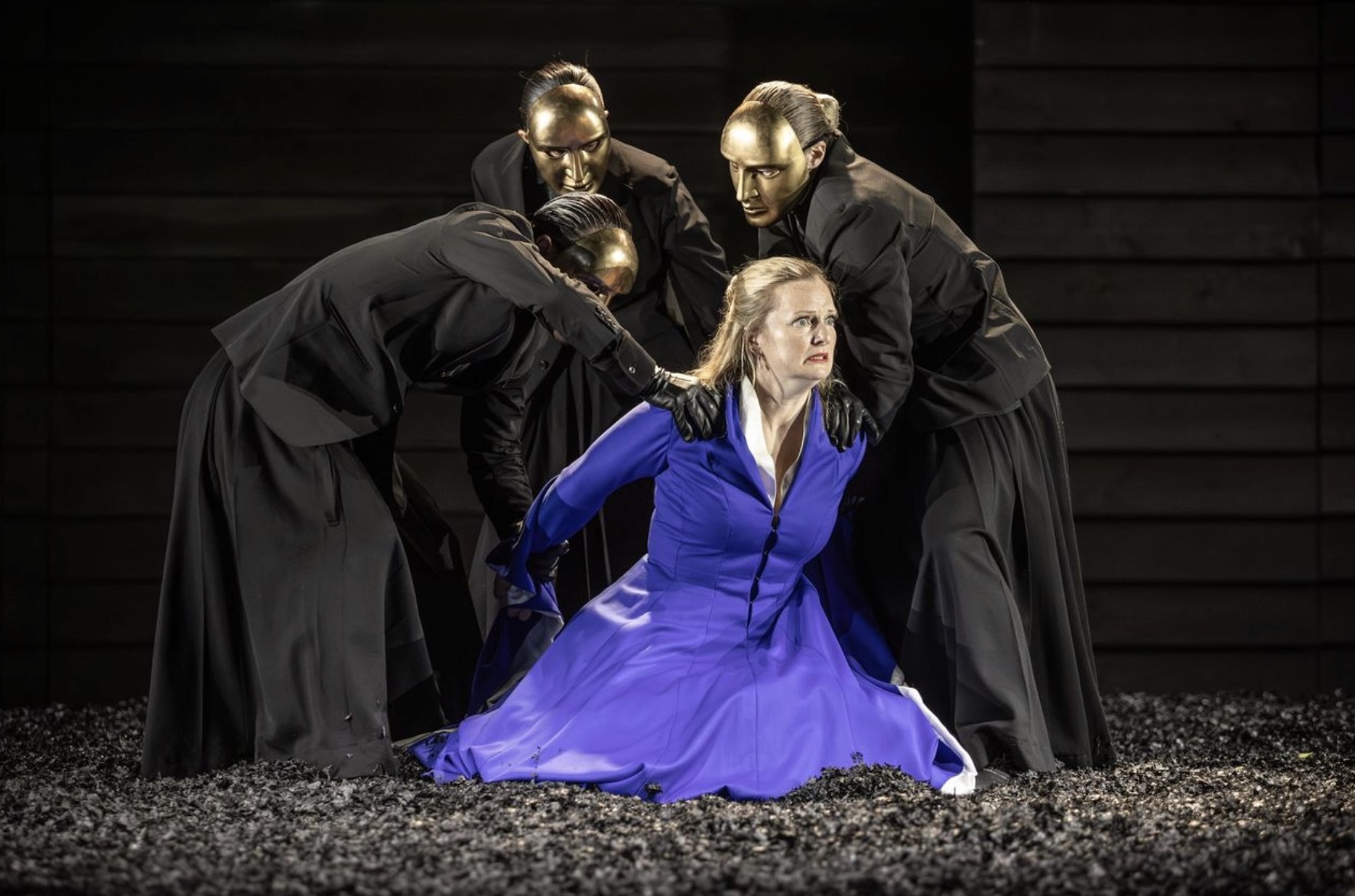
Lucy Crowe in the title role of Lucinda as staged by Ruth Knight at Garsington Opera
Her first job was on Britten’s Albert Herring at Hampstead Garden Opera in 2014. Over the following decade she has honed her craft assisting a starry list of directors, including Bruno Ravella, Annilese Miskimmon at English National Opera, Netia James, and Barrie Kosky. “Netia is committed to promoting the work of other women in a way I have never experienced from any other director, be they female or male,” she volunteers. “She's so hard-nosed and so clear, and she's one of the few directors in the world whose shows you can recognize immediately.”
“Barrie I've only assisted once, but it was an absolutely joyful experience,” she adds. “I started Rodelinda three days after I finished assisting him on Die Walküre at Covent Garden and I felt the joy from that process kind of carried over.”
With her own career blossoming, she’s careful now about what else she will say yes to. “When I first started assisting, I loved it so much I felt I would be happy doing that forevermore,” she explains. “That's not the case now, but I think the reason I'm good at my job is because I have always been happy to learn from people who have been doing it longer than me.”
Knight’s career-defining moment came when Miskimmon asked her to direct Britten’s Gloriana at ENO. “It was going to be a very basic concert staging—entrances and exits and a bit of lighting—but it became this enormous opportunity,” she explains. “I remember being in the stalls with my partner and he was like, ‘This is massive, isn't it?’ And I said, ‘Yeah, I don't know how it's come to this.’ We'd done it in just three days, and the audience reception was amazing. I've never felt so surprised and elated. And then Garsington called and asked if I wanted to pitch to direct Rodelinda.”
Whatever the project, she insists on taking a deep dive into the work and composer, listening to as many versions as she can, and mining academic journals for insight. “It’s not really a hot take,” she smiles, “but if I feel like I’m an expert then I feel comfortable going into the room.”
This month she directs a concert version of Così fan tutte for ENO in Manchester with La bohème at Waterperry Opera Festival in August. June will be a busy month as she tackles Maxwell Davies’s Eight Songs for a Mad King with Manchester Camerata while making her U.S. debut directing Rigoletto at the Baltimore Symphony Orchestra alongside her good friend, Jonathan Hayward. “On my first assisting job at Hampstead Garden Opera, Jonathan was assisting on the music side,” she says, clearly delighted.
Top of her dream projects list are the two other operas from the bumper London season in which Handel wrote Rodelinda: Tamerlano and Giulio Cesare. “Ambitious as it sounds, I really want to do a Ring Cycle one day,” she adds. “I don't know that many women have done one and working with Barrie on Walküre I can see it’s so open to feminism.”
She’d also like to spend more time with Outland Opera, her site-specific grassroots company. “Being from the rural Southwest, I know opera is cut off for most people,” she explains. “If we can get it properly funded, we can start providing work to people outside of towns.”
As they say, watch this space.
Photo credits: Top, Harry Livingstone; middle, Craig Fuller

 FEATURED JOBS


 RENT A PHOTO