|
By
Shirley Fleming
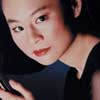
She is living proof that prodigies can cross that dangerous divide from childhood to mature artistry while keeping their personalities and their musical gifts intact. In the year 2001 she turned 30, she celebrated the 20th anniversary of her professional debut, and she was presented with the Avery Fisher Prize for outstanding achievement and excellence in music.
Where, you might ask, would you be most likely to find a renowned violinist during the peak of the summer music months? Hitting the festival circuit? Teaching in bucolic surroundings far from Carnegie Hall? In retreat to study new scores or play chamber music?
The quick answer is, none of these places if you happen to be looking for Midori. You would, in fact, have found her during the summer of 2001 in residence at Oxford University's St. Edmund Hall, working on a master's degree in psychology and gender studies. And for those who know Midori well, this pronounced detour from the customary path of an international virtuoso comes as no surprise. "She is just so brilliant," says a colleague. And that seems to sum it up most succinctly.
The pivotal points of this violinist's career are well known, for in a very real way she set the pace for prodigies and-far more important-has shown that prodigies can cross that dangerous divide from childhood to mature artistry while keeping their personalities and their musical gifts intact. Since her debut with the New York Philharmonic under Zubin Mehta at age 11, she has hardly been out of the spotlight; the famous incident of her two broken strings during a Tanglewood concert with Leonard Bernstein in 1986, when she coolly switched violins twice without losing a beat, made front-page news. It is a story rich in human interest, but its most revealing point is how centered Midori's innate self-confidence appears to have been, from very early on.
She was born in 1971 in Osaka, Japan, and began violin study with her mother at age 4; at 8, a scholarship took her to Aspen and study with Dorothy DeLay, whom she then followed to Juilliard. She decided to leave Juilliard at 15 and took up the full-fledged career of a concert artist. Four years later she made her first decisive turn away from the typical soloist's path.
In a move extraordinary for any 19-year-old, the violinist established Midori & Friends, a foundation devoted to bringing music into a number of schools of New York City. It has grown into a carefully designed three-tiered program, sending conservatory-trained musicians into the city's most needy schoolrooms for 26 weeks of instruction, music-making, family concerts, and after-school programs that have proved hugely successful. ("Thank you for allowing to have violin class [sic]," wrote a fourth-grade admirer. "Thanks to you I know how to play the violin now. My favorite song was bumblebee.")
Midori herself takes part each year and has set up a similar program in Japan. "She has a wonderful way with kids offstage," says the U.S. foundation director Judi Linden. "She's gracious and kind and warm. She really understands what it is to be a child." Midori, when pressed to put her finger on just what prompted her to this exceptional philanthropic move, says that she was influenced by Leonard Bernstein ("He really made an impact on me"), as well as by a good friend of 20 years, now a lawyer, who has always been deeply involved in volunteer work. "She doesn't think of it as `helping others,'" Midori says, "it's just organic."
And just as organic, it would seem, is Midori's lively and questing nature, currently reaching well beyond the horizons of an international concert career. Having deliberately cut off her formal education at 15, she turned back to academia in her mid-20s and took a degree in psychology at New York University (she does not mention the fact that it was awarded magna cum laude-"nothing special," she says when asked). The master's degree is now all but completed, and the subject of her thesis is somewhat startling.
"I am writing about pain," she said one morning, sitting in her spacious and tidy New York living room with her two small dogs ("Franzi" for Haydn, "Willa" for Willa Cather), snoozing at her feet. "At first I wanted to write about psychology. I've always been interested in people-why they are who they are, what makes people who and what they are, so I guess it makes sense that I stumbled on psychology. Once I started with it, I never turned back-no doubts, no second thoughts. I just fell in love with it. But the field is too broad, so I decided to write about pain-its mechanism, its function-for children in middle school, around the fifth grade. Children deal with pain, they are fascinated by pain."
Over the summer of 2001, in a series of e-mails squeezed in between study at Oxford and a trip to Japan, Midori expressed a number of the thoughts that reveal much about who she herself is. "I study for the pure nourishment of my intellect," she wrote, "and not for the benefit of my musical career. However, I must add that having been at NYU has had an immense impact on me as a person.... I believe that everything I am eventually comes out in my music. Something is different because of my education. I was always encouraged to think broadly and to go beyond my own field. Such thinking patterns have influenced me a great deal in my views on the arts in general." (This particular e-mail ended, "I think I better go now for I'm about to fall asleep.")
Midori currently gives about 95 concerts a year, and her playing invariably elicits remarks on its eloquence, its thoughtfulness, and-as a New York Times critic remarked-its "soundness and seriousness of musicianship." The year 2001 is a watershed of sorts, as Midori turned 30, her foundation turned 10, she celebrated the 20th anniversary of her professional debut, and she was presented with the Avery Fisher Prize for outstanding achievement and excellence in music. Her designation as Musical America's Instrumentalist of the Year is as timely as it is appropriate.
Shirley Fleming covers music for the New York Post and MusicalAmerica.com and is classical music editor of the American Record Guide.
|



 INSTRUMENTALIST OF THE YEAR


 RENT A PHOTO