|
By
Mark Swed
He has been called new music's Santa Claus. While his music, art, and myriad activities have a global stretch, they are fully grounded in the American experience. And when audiences discover Harrison and his music, they react with sudden love. Once one of these fresh, insinuating melodies gets under your skin, you are hooked.
Lou Harrison is irrepressible. He is a large man with a ready, encompassing embrace; he is a big artist whose music embraces all the world. He exhibits a wonderful laugh, a contagious sense of excitement, an emotional directness, a child-like glee that makes people take to him instantly. He has many mottoes, and one of them is that you don't have to destroy to create, but just go about creating-the more (old and new) that we have around us, the merrier. He often explains the unprecedented scope of his multicultural musical enthusiasms as spreading out his toys on a large acreage. He is a physical composer and hedonist, his music regularly grounded in the dance, be it stately or erotic. He has a Schubertian gift for melody, which he calls the audiences' take-home pay. In a darker mood, he might tell you that it is our task to entertain ourselves nobly on the march to death.
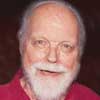
On May 14, Harrison will turn 85, making him one of America's great musical patriarchs. From the front he looks the part with his bushy white beard, which has caused Michael Tilson Thomas to call him new music's Santa Claus. From the rear, you notice the gray hair tied in a ponytail, a sign of Harrison's ferocious independence, something he hasn't given up even as the world has begun to catch up with him. That catching up will include a celebration of Harrison's music as part of the Lincoln Center Festival this summer. But there is a lot more catching up to do.
Musical America's Composer of the Year is not unknown, but he remains a marginal figure to America's musical establishment. That will inevitably change, given what happens, again and again, when audiences discover Harrison and his music. They react with sudden love. Once one of those fresh, insinuating melodies gets under your skin, you are hooked.
San Francisco is the perfect example. Although Harrison grew up in the city and has spent most of his life in the Bay Area, he was systematically ignored by the San Francisco Symphony until Michael Tilson Thomas corrected the slight when he became music director of the orchestra in 1995. Now the Bay Area simply can't get enough of Harrison. And thanks to the long-time championing by conductor Dennis Russell Davies, and the visibility accorded by choreographer Mark Morris, we have proof that this need not be a local phenomenon.
While Harrison's music, art, and activities (he paints, draws, writes poetry, practices calligraphy, builds and tunes instruments, studies Esperanto and sign language, designs type fonts, undertakes musicological explorations) have a global stretch, they are fully grounded in the American experience. Influenced by Henry Cowell and aided by John Cage, Harrison was a pioneer of California percussion music in late '30s and early '40s.
Studying with Schoenberg at UCLA followed, and then a decade on the East Coast. The 1940s were spent in New York, where Virgil Thomson included Harrison among the stable of composer-critics at the Herald Tribune. He edited Ives scores and conducted the world premiere of Ives's Third Symphony in 1946, and when Ives won the Pulitzer Prize he insisted upon sharing it with Harrison. "We both feel," Harmony Ives wrote Harrison, "that if you had not done so much in behalf of the `3rd,' this prize might have gone to Vickey Herbert `et al.'"
But the city overwhelmed Harrison, leading to a nervous breakdown, with a slow recovery helped by teaching at Black Mountain College in North Carolina for two years. In 1953, Harrison moved to a rustic house in Aptos, California, overlooking the Santa Cruz Bay, and there he has remained.
Back on the West Coast, Harrison developed an increasing closeness to Asian culture, with a special fondness for the Javanese gamelan and a passion for investigating tuning systems. And everything found its way into his music; his immediate response to hearing something he likes is always, "me too."
The wealth of music, from the early percussion works through Harrison's most recent multicultural ones, is staggering in quantity and in diversity. Every kind of music seems to be able to work with every other kind in Harrison's universe. Take the Elegiac, the second of his four symphonies. It moves from somber meditations on the Apocalypse to Epicurean delight; it mixes Islamic culture with Buddhist tradition; it employs modes derived from the ancient Greeks and the Far East to express joy and sorrow; it includes the sounds of Persian and Arabic music; it treats a celeste and two harps as if they were a gamelan; it recalls its dedicatee, Serge Koussevitzky, in beautiful writing for two double basses. And yet it all sounds of one voice, one indomitable spirit.
He has a special way with the concerto. The Piano Concerto, which was commissioned by Keith Jarrett, begins with one of the most alluring melodies in all modern music. The Suite for Violin and American Gamelan ends with a passacaglia so piquant that Tilson Thomas once said it is what he sings to himself to keep going on long hikes.
Harrison is a combinatorial composer, and there is little that he hasn't tried. Take the Concerto in Slendro, in which exuberant American know-how meets the subtleties of Asian melody, as a solo violin (with Indonesian tuning) squares off against an ensemble of specially tuned celeste, two tack pianos, and percussion (including iron garbage cans).
But then just about everything in Harrison's enormous body of work has some kind of surprising combination. The meeting of Western and Eastern instruments is a specialty; in the short work for French horn and gamelan, Main Bersama-Sama, the horn makes a seductive Javanese-tinged melody all the more loveable with its clumsy charm. The ground-breaking 1963 Pacifica Rondo is written for an orchestra of instruments from West and East, and each movement employs them to evoke a different Pacific Rim culture-be it Korean court music, Buddhist temple music, an Aztecan homage to Carlos Chávez, a siesta in the California shade-with peaceful global sentiments underscored by a climactic movement, "A Hatred of the Filthy Bomb." No one but Harrison would or could end a beautiful, elegant symphony (No. 4) with an American Indian chant that includes a description of an epic case of diarrhea.
This extraordinary suppleness of thought and technique is found throughout Harrison's vast catalogue of works in all genres. A rhythmic tala from classical Indian raga and the dance rhythms from Renaissance England are brothers. Dance, in fact, is the thread throughout Harrison's career, the primary inspiration for the vivid corporeality of his music. He has lately become a favorite composer of the choreographer Mark Morris, who commissioned Rhymes with Silver four years ago. A 50-minute chamber piece, with a prominent cello part written for Yo-Yo Ma, it is one of the supreme examples of how Harrison's rhapsodic melodic exuberance can encompass an unprecedented wide range of musics.
If Harrison has slowed down in recent years, he shows no sign of stopping. A tremor in his hand makes the physical act of writing difficult, but he can't keep away from his gamelan. He lost his partner of 35 years, William Colvig, two years ago, but he has continued with projects they had begun, including building an environmentally innovative house made from straw bales outside the Joshua Tree National Monument in the Mojave Desert. He has just revised and expanded his controversial 1970 opera, Young Caesar, about an early homosexual episode in the life of the Roman leader, and the new version will have its premiere at Lincoln Center this summer.
But then there has never been any stopping Harrison. His music asks us to open the borders and travel freely, to find what unites our far-flung cultures, not what divides us. As the globe fractures in unexpected ways, Harrison's music becomes more relevant, not less. There is comfort to be found in hearing, with our own ears, how excellent our different cultures sound together.
Mark Swed is the music critic for the Los Angeles Times. His biography of John Cage for Simon & Schuster will be published in 2002.
|



 COMPOSER OF THE YEAR


 RENT A PHOTO