|
By Barbara Sand
A generation ago, the index of the Musical America International Directory of the Performing Arts included the now startling category, “Chamber Music and Jazz Ensembles.” Roughly 220 names appeared under this umbrella, with ensembles like the Juilliard, Guarneri, Amadeus, LaSalle, Fine Arts, and Végh quartets nestled in with Chuck Spies and His American Jazz Septet, the Max Roach Quintet, the Thelonius Monk Quartet, and Art Blakey’s Jazz Messengers. By contrast, the current edition of Musical America lists close to 700 chamber ensembles in a classification all their own—surely a confirmation of the now hackneyed “boom” of the genre. Whatever the significance, Jazz Combos, now also a separate heading, number about 150.
Several of the string quartets listed 20 years ago, including those mentioned above, are either still performing or have retired from the concert stage comparatively recently. However, only one piano trio of the early list has survived to the present, and it not only survived but continues to draw devoted audiences all over the world. The Beaux Arts Trio, founded in 1955, remains the standard by which all other piano trios are judged, both in live performance and on record.
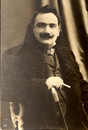
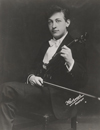
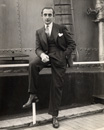
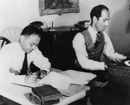
Much of the strength and success of the Beaux Arts stems from its total dedication to its identity as a trio. While the individual members have always done a certain amount of solo or guest-artist work, the Trio is their home, their basic commitment, and their life. The famous trios of the past, such as Cortot-Thibaud-Casals, Balsam-Heifetz-Kroll, and Istomin-Stern-Rose, were composed of artists who played trios together on occasion but who were soloists rather than ensemble players who rehearse together, perform together, and virtually live together, as do the great quartets—and the Beaux Arts Trio.
In terms of artist members, there have been four different Beaux Arts Trios, but, like the farmer’s favorite ax that had its head replaced four times and its handle twice, it has maintained its preeminence through all the changes. Over the years, the Trio has had three different violinists and two different cellists. It has, however, had only one pianist, Menahem Pressler, who, as a founding member and guiding inspiration, has served as the ensemble’s heartbeat for the 41 years of its existence.
“Our first incarnation was with Daniel Guilet, who was a chamber-music master—I consider myself a student of his—and Bernard Greenhouse, that noblest of cellists,” recalls Pressler. “We had our debut in Tanglewood on July 13, 1955, which was very successful, and then went on tour. Instead of the nine concerts we were supposed to have, we had 70, which is a lot of concerts, but they were mostly in small towns, which gave us an opportunity to restudy and redo the program for the next day, and to arrive at one real conception—to form what you might call the face of a trio. It is not easy for people of strong views to bend—I hate to use the word ‘compromise’—they have to be convinced by the other. That takes doing, that takes rehearsing, that takes trying, that takes wanting, and that takes respect. And all of that was there. Every good group has to have a personality, and ours was formed during that period.”
Daniel Guilet retired in 1969 and was replaced with Isidore (“Izzy”) Cohen, formerly second violinist of the Juilliard String Quartet. Cellist Peter Wiley took over from Bernard Greenhouse in 1987, and in 1992, when Cohen retired, Ida Kavafian became the Beaux Arts’ violinist.
“Each group that I have been part of has had something special,” says Pressler. “The new group did not replace the previous, but had its own quality, so I have had the luxury of having had a complete meal. When Izzy—a wonderful chamber musician—came in, he entered into the spirit of the group and slowly exerted his own personality, his own way of approaching pieces. When Peter Wiley came in, the same thing happened, and now it is Ida’s turn. She is exceptionally wonderful in contemporary music, and the Trio is younger and more daring. There is a tremendous change from what used to be. I don’t know how important it is for the listener—it’s more internally important, like how you breathe.
“When we first started the Beaux Arts Trio, piano trios were the bastards of chamber music. Nobody wanted to engage them. Trios were seen either as the poor man’s piano concerto, or as two soloists, or two instruments with an accompanist. One time we were playing at a Midwest college, and the dean said, ‘Oh, Mr. Pressler, you are a marvelous pianist—I know it is difficult to accompany one person, but two at the same time!’ There was no understanding of balance between the instruments. In the beginning I created much of that balance by instinct, and when it didn’t work, Mr. Guilet and Mr. Greenhouse told me so—told me what I was supposed to do. Of course,” laughs Pressler, “they still came from a school of playing where the pianist is always too loud, even when he doesn’t have to play a note, because he looks loud.
“It takes an extraordinary pianist, a pianist who really wants to hear the strings, to make it work, and that’s an enormous problem,” says cellist Peter Wiley, discussing why there are so few big-name trios. “So many times, you will hear a piano trio and you can’t hear the strings, or else the strings have to play loud all the time, so you miss a lot of color. It takes a lot of work as far as balancing goes, and the pianist has the greatest responsibility.”
Violinist Ida Kavafian (whose initiation into the Trio started right at the top, making a recording of the Beethoven Triple Concerto with the Leipzig Gewandhaus and Kurt Masur), describes the special demands of playing in a piano trio as being a little more soloistic—more like a sonata. “In a string quartet, you are all trying to sound like one voice,” says Kavafian. “In a piano trio, you are still trying to sound like one voice, but you get to be an individual.”
The ensemble’s playing remains as fresh as ever—it seems to be in a state of perpetual renewal. “Maintaining the same excitement over the years is the only reason to play,” says Pressler. “If it’s not what you do in order to fulfill yourself—to feel there is a reason for being—then don’t play. The greatest help is in the repertoire, where you see what induced you to become a musician in the first place.” By “restoring the balance” through its profoundly beautiful performances of the rich piano-trio literature during the last 41 years, the Beaux Arts Trio has made an enormous contribution to the world of chamber music.
Barbara L. Sand is a regular contributor to The Strad and American Record Guide. She has written for Musical America and is a former editor of Chamber Music magazine. She is also founding director of the Princeton University Summer Concerts.
|



 ENSEMBLE OF THE YEAR
 RENT A PHOTO